Solving Common Feeding Problems in African Catfish Farming
Posted on: 2025-11-11
By: Yomi Adisa
You've invested in fingerlings, built your ponds, and now you're ready to grow catfish to market size. But without understanding proper feeding rates and schedules, you're essentially guessing with every bag of feed you open. In Nigeria alone, farmers waste thousands of naira monthly on overfeeding or lose growth potential through underfeeding.
- Understanding Common Feeding Problems in African Catfish Farming
- Alternative Feed Sources for African Catfish
- Effective Feeding Techniques to Minimize Waste
- Local Feed Formulation Recipes and Cost-Effective Feed Formulations
- Feeding Equipment and Automation
- Monitoring and Adjusting Feeding Practices
Feed costs typically account for 60-70% of your total production expenses in African catfish farming. When you don't optimise your feeding practices, you're directly cutting into your profit margins whilst potentially harming your fish health.
This guide provides you with practical solutions to common feeding challenges that plague catfish farmers across Africa. You'll learn to identify and solve feed waste problems, explore cost-effective alternative feed sources like duckweed and black soldier fly larvae, and master feeding techniques that maximise growth whilst minimising costs.
You'll also discover how to formulate your own feeds using locally available ingredients, implement proper feeding schedules based on water temperature and fish behaviour, and maintain the water quality conditions that support efficient feed conversion. Whether you're managing a small backyard pond in Ghana or a commercial operation in Kenya, these feeding strategies will help you achieve better growth rates and healthier profit margins.
Understanding proper feed conversion ratio management is crucial for maintaining profitability in your catfish operation, as it directly impacts your bottom line through efficient feed utilisation.
What You Will Learn
- Learn effective feeding rates tailored to each growth stage of African catfish (Clarias gariepinus).
- Discover how to identify and minimise feed waste, enhancing your feed conversion ratio.
- Master the formulation of cost-effective feeds using locally available ingredients for optimal nutrition.
- Understand the impact of water quality on feeding efficiency and how to maintain ideal conditions.
- Implement seasonal feeding adjustments to match temperature changes and improve growth rates.
Understanding Common Feeding Problems in African Catfish Farming
You're not alone if feeding costs are eating into your catfish farming profits faster than you expected. Across Africa, from small-scale farmers in rural Ghana to commercial operations in Lagos, the same feeding problems keep recurring—and they're costing farmers thousands in lost revenue every season.
Most catfish farmers focus on getting their ponds right and sourcing quality fingerlings, but then struggle with the daily reality of feeding efficiently. You might be throwing away money with every handful of pellets, or worse, stunting your fish growth through poor feeding decisions. African catfish (Clarias gariepinus) are forgiving, but even they can't overcome consistently poor feeding practices.
Understanding these common feeding challenges helps you spot problems early and take corrective action before they impact your bottom line. Here are the four major feeding problems that affect catfish farmers across the continent, and what you need to watch for in your own operation.
High Cost of Commercial Feed
Commercial catfish feed typically costs between ₦18,000-25,000 per 25kg bag in Nigeria, KES 3,500-4,200 in Kenya, and GHS 180-220 in Ghana. When you're feeding 1,000 catfish from fingerling to market size (1kg), you'll use approximately 1,500-1,800kg of feed—that's 60-72 bags costing ₦1.08-1.8 million in Nigeria alone.
Feed represents 60-70% of your total production costs, making it the single largest expense in your catfish operation. You need to achieve a feed conversion ratio (FCR) of 1.2-1.5 to remain profitable—meaning every 1.2-1.5kg of feed should produce 1kg of fish weight. When commercial feed prices rise by 20-30% during dry seasons or economic instability, your profit margins can disappear entirely.
The challenge becomes more acute when you consider that most commercial feeds in Africa contain 32-42% protein, but you're paying premium prices for imported fishmeal and soybean components. You need strategies to reduce feed costs without compromising fish growth rates or health.
Feed Waste and Its Consequences
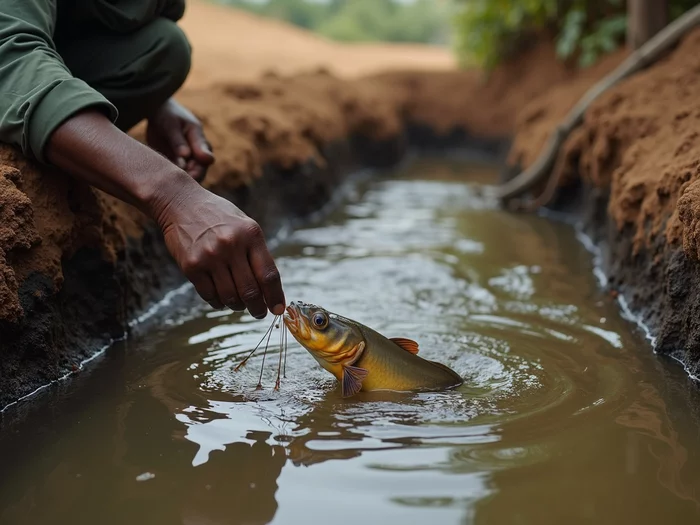
You're wasting feed if you see uneaten pellets floating on your pond surface 30 minutes after feeding, or if your pond bottom accumulates a layer of decomposing feed. Most farmers in Uganda and Tanzania lose 15-25% of their feed to waste, which translates to ₦162,000-450,000 in wasted money for a 1,000-fish operation.
Feed waste creates a cascade of problems beyond the immediate financial loss. Decomposing pellets consume dissolved oxygen, release ammonia and hydrogen sulphide, and create ideal conditions for harmful bacteria growth. Your catfish become stressed, their immune systems weaken, and growth rates slow even when they're getting adequate nutrition.
You need to monitor your feed conversion ratio weekly by weighing a sample of fish and calculating total feed consumed. If your FCR exceeds 1.8, you're likely overfeeding or dealing with water quality issues caused by feed waste. Proper feeding techniques can reduce waste to under 5% and improve your FCR to 1.3 or better.
Nutritional Deficiencies and Their Effects
African catfish require different protein levels at different growth stages—45-50% protein for fingerlings under 50g, 35-40% for juveniles 50-200g, and 30-35% for grow-out fish above 200g. Many farmers use the same feed throughout the production cycle, creating either protein deficiency in young fish or expensive protein waste in mature fish.
You'll recognise protein deficiency through slow growth rates, poor feed conversion (FCR above 2.0), and increased susceptibility to diseases. Essential amino acid deficiencies cause specific problems—lysine deficiency reduces growth and causes fin erosion, whilst methionine deficiency affects liver function and feed utilisation. Vitamin C deficiency leads to poor wound healing and skeletal deformities.
Mineral deficiencies are equally problematic but often overlooked. Phosphorus deficiency causes bone deformities and poor growth, whilst calcium deficiency affects bone development and enzyme function. You need to ensure your feed contains at least 0.8% phosphorus and 1.2% calcium, or supplement with bone meal if using homemade feeds.
Disease Management Linked to Feeding Practices
Overfeeding creates the perfect environment for bacterial diseases like columnaris and aeromonas infections that can kill 30-50% of your stock within days. When you overfeed, uneaten pellets decompose and spike ammonia levels above 1mg/L, whilst reducing dissolved oxygen below 4mg/L—conditions that stress catfish and make them vulnerable to pathogens.
You'll notice disease problems starting with fish gasping at the surface, red patches on skin and fins, or unusual swimming behaviour. Poor feeding practices also lead to nutritional diseases—fatty liver disease from high-energy feeds, swim bladder disorders from rapid feeding, and digestive problems from irregular feeding schedules. These conditions weaken fish immunity and create secondary bacterial infections.
Proper feeding management prevents most disease outbreaks by maintaining stable water quality and supporting fish immune systems. You need to feed at consistent times, remove uneaten feed within 30 minutes, and adjust feeding rates based on water temperature and fish behaviour rather than following rigid schedules.
Alternative Feed Sources for African Catfish
You don't have to rely entirely on expensive commercial feeds to grow healthy, profitable catfish. Across Africa, innovative farmers are discovering that locally available feed alternatives can reduce feeding costs by 40-60% whilst maintaining excellent growth rates in African catfish (Clarias gariepinus).
The key to successful alternative feeding lies in understanding protein requirements and combining different sources strategically. Your catfish need complete amino acid profiles, but you can achieve this through combinations of plant proteins, insect meals, and aquatic plants rather than expensive fishmeal-based commercial feeds. Many alternative feeds also provide additional benefits like improved disease resistance and better flesh quality.
These alternative feed sources aren't just cost-saving measures—they're sustainable solutions that can make your catfish operation more resilient to feed price fluctuations and supply disruptions. Here are three proven alternative feed sources that African catfish farmers are using successfully to reduce costs whilst maintaining production quality.
Utilising Duckweed as a Feed Supplement
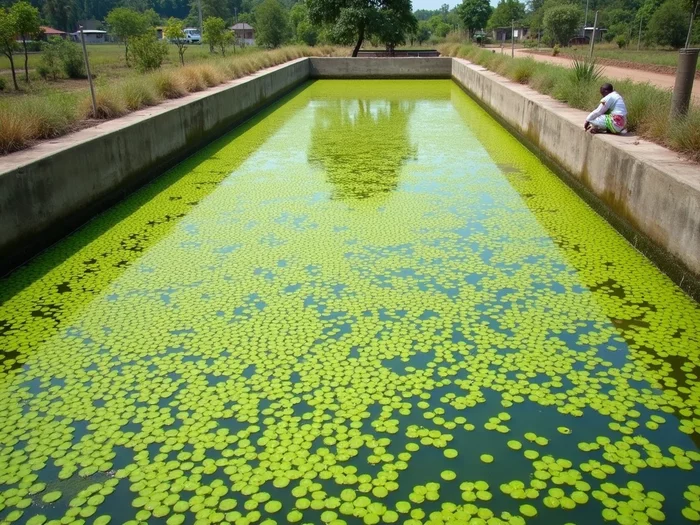
Duckweed (Lemna minor) contains 20-35% crude protein and grows so rapidly that 1 square metre can produce 10-15kg of fresh duckweed monthly in African climates. You can establish duckweed ponds using simple concrete tanks, plastic-lined earthen ponds, or even large containers, making it accessible for small-scale farmers in rural areas of Nigeria, Ghana, and Kenya.
Your duckweed cultivation requires nutrient-rich water with pH 6.5-7.5 and temperatures between 20-30°C—conditions easily achieved in most African locations. You can fertilise duckweed ponds with diluted poultry manure (1:10 ratio), kitchen waste compost, or even treated human waste to accelerate growth. Harvest duckweed every 7-10 days by scooping with fine nets, leaving 20-30% coverage to ensure continuous production.
Feed fresh duckweed directly to your catfish or dry it in the sun for 2-3 days to create duckweed meal containing 25-40% protein. You can replace up to 30% of commercial feed with fresh duckweed or 20% with dried duckweed meal without affecting growth rates. A 100 square metre duckweed pond can supply supplementary feed for 500-800 catfish, reducing your feed costs by ₦200,000-300,000 per production cycle in Nigeria.
Incorporating Black Soldier Fly Larvae (BSF)
Black soldier fly larvae contain 40-44% crude protein and 35% fat, making them an excellent replacement for fishmeal in catfish diets. You can produce BSF larvae using organic waste like kitchen scraps, brewery waste, or poultry manure—turning waste disposal problems into valuable protein sources for your catfish operation.
Setting up BSF production requires minimal investment—a few wooden boxes, wire mesh, and organic waste materials. Adult flies lay eggs in decomposing organic matter, and larvae develop for 14-18 days before pupating. You can harvest 1-2kg of fresh larvae per 10kg of organic waste, providing enough protein supplement for 200-300 catfish weekly.
Fresh BSF larvae can replace up to 50% of commercial feed protein without affecting growth rates, whilst dried larvae meal can substitute 25-30% of total feed. The high fat content provides essential energy for catfish growth, and the calcium from larvae exoskeletons supports bone development. BSF production costs are minimal—mainly labour and organic waste—making this one of the most cost-effective protein sources available to African catfish farmers.
Using Agricultural By-products
Agricultural by-products like rice bran, wheat bran, maize bran, and cassava peels are readily available across Africa and can significantly reduce your feed costs. Rice bran contains 12-15% protein and is rich in B vitamins, whilst wheat bran provides 15-17% protein plus essential minerals. These ingredients cost 60-80% less than commercial feeds whilst providing valuable nutrients.
You need to process agricultural by-products properly to maximise their nutritional value. Ferment cassava peels for 3-5 days to reduce cyanide content and improve digestibility. Steam or boil sweet potato peels to break down anti-nutritional factors. Mix different by-products to create balanced amino acid profiles—combine rice bran (high in lysine) with groundnut cake (high in methionine) for complete protein.
Agricultural by-products work best as partial feed replacements rather than complete feeds. You can replace 30-40% of commercial feed with properly processed by-products without affecting catfish growth. A typical mixture might include 40% rice bran, 30% groundnut cake, 20% fish meal, and 10% vitamin/mineral premix, costing 50-60% less than commercial feeds whilst maintaining 32-35% protein content.
Effective Feeding Techniques to Minimize Waste
You can cut your feed costs by 20-30% simply by improving how you deliver feed to your catfish, without changing what you feed them. Most African catfish farmers lose money through poor feeding techniques—throwing pellets randomly across pond surfaces, feeding at wrong times, or using inappropriate pellet sizes that fish can't consume efficiently.
Effective feeding techniques focus on matching feed delivery to catfish behaviour and environmental conditions. African catfish are most active during early morning (5-7 AM) and late evening (6-8 PM) when water temperatures are cooler and dissolved oxygen levels are higher. Feeding during these periods ensures maximum feed consumption and minimal waste.
The key to minimising waste lies in understanding that catfish feeding behaviour changes with water temperature, fish size, and stocking density. You need to adjust your feeding techniques based on these factors rather than following rigid schedules that ignore environmental conditions and fish responses.
Optimal Feeding Times and Frequencies
Feed your catfish 2-3 times daily during optimal temperature windows—early morning (5-7 AM), late afternoon (4-6 PM), and evening (7-9 PM) if using three feeding sessions. Water temperatures between 25-30°C provide the best feeding conditions, whilst temperatures above 32°C or below 20°C reduce catfish appetite and feed conversion efficiency.
Fingerlings under 50g require 4-5 small meals daily because their stomach capacity is limited and metabolism is rapid. Juveniles 50-200g need 3 meals daily, whilst grow-out fish above 200g can thrive on 2 meals daily. Space feeding sessions at least 4-6 hours apart to allow complete stomach emptying and maintain consistent appetite.
Monitor water temperature daily and adjust feeding frequency accordingly. During hot season when temperatures exceed 30°C, reduce feeding frequency and feed during cooler periods. During harmattan or cool seasons when temperatures drop below 22°C, reduce feeding rates by 30-50% as catfish metabolism slows and feed conversion efficiency decreases.
Proper Feed Distribution Methods
Distribute feed slowly and evenly across the pond surface, taking 10-15 minutes for each feeding session rather than dumping all feed at once. This technique ensures all fish have access to feed and prevents dominant fish from monopolising feeding areas. Watch for feeding activity and stop when fish interest decreases—continuing to feed inactive fish creates waste.
Use the "handful method" for small ponds—throw one handful of pellets, wait for fish to consume them (2-3 minutes), then throw the next handful. For larger ponds, walk around the perimeter whilst broadcasting feed, ensuring even distribution. Avoid feeding in the same spot repeatedly as this creates competition and uneven growth rates.
Create multiple feeding stations in large ponds by dividing the surface into 4-6 sections and rotating feeding locations. This technique reduces competition, ensures smaller fish get adequate feed, and prevents waste accumulation in specific areas. Mark feeding stations with floating markers to maintain consistency between feeding sessions.
Monitoring Fish Response During Feeding
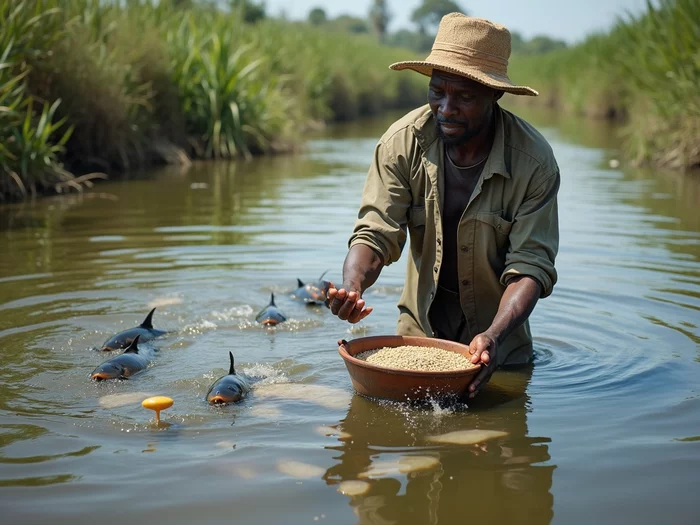
Watch for active feeding behaviour—fish rising to surface quickly, vigorous splashing, and competitive feeding activity. Healthy catfish should consume 80-90% of feed within 15-20 minutes. If feed remains uneaten after 30 minutes, you're overfeeding or dealing with water quality problems that reduce fish appetite.
Learn to recognise satiation signals—fish becoming less aggressive in feeding, slower surface response, and some fish moving away from feeding areas. Stop feeding when 20-30% of fish show reduced interest, even if you haven't reached your planned feeding amount. Overfeeding stressed or sick fish worsens water quality and delays recovery.
Document feeding responses in a simple log—note water temperature, feeding time, amount consumed, and fish behaviour. This information helps you identify patterns and adjust feeding practices seasonally. If fish consistently show poor appetite, check water quality parameters (dissolved oxygen, ammonia, pH) before assuming feed quality problems.
Local Feed Formulation Recipes and Cost-Effective Feed Formulations
You can formulate catfish feeds using locally available ingredients that cost 40-60% less than commercial feeds whilst maintaining the protein and energy levels your fish need for optimal growth. The key lies in understanding ingredient nutritional profiles and combining them to create balanced feeds that meet African catfish requirements at different growth stages.
Successful feed formulation requires calculating protein content, energy levels, and amino acid balance whilst ensuring the mixture is palatable and digestible. You don't need expensive equipment—a simple mixing paddle, weighing scale, and basic binding agents like cassava starch can produce quality feeds that rival commercial products.
These formulations use ingredients readily available across Africa—from groundnut cake in Nigeria and Ghana to fish meal from Lake Victoria in Kenya and Uganda. By sourcing ingredients locally, you reduce transportation costs and create feeds adapted to local conditions and fish preferences.
Many of these feeding principles also apply to other species, and you can learn about cost-effective tilapia feed solutions that use similar local ingredients and formulation techniques for diversified aquaculture operations.
Basic Feed Formulation Principles
African catfish require feeds containing 45-50% protein for fingerlings, 35-40% for juveniles, and 30-35% for grow-out fish. Energy content should range from 3,000-3,500 kcal/kg, with fat content between 8-12%. Essential amino acids—lysine, methionine, and threonine—must be present in correct ratios to support efficient protein synthesis and growth.
Calculate protein content by multiplying each ingredient's percentage in the formula by its protein content, then summing the results. For example: 40% groundnut cake (45% protein) + 30% maize (9% protein) + 20% fish meal (60% protein) + 10% rice bran (12% protein) = (40×0.45) + (30×0.09) + (20×0.60) + (10×0.12) = 18 + 2.7 + 12 + 1.2 = 33.9% total protein.
Balance amino acids by combining complementary protein sources—groundnut cake is high in lysine but low in methionine, whilst maize is low in lysine but adequate in methionine. Fish meal provides complete amino acid profiles but is expensive, so use it at 15-25% of total formula to balance plant proteins rather than as the primary protein source.
Starter Feed Recipe (45% Protein)
This high-protein formula supports rapid growth in fingerlings 5-50g and costs approximately 60% less than commercial starter feeds. Mix ingredients thoroughly and add 2-3% cassava starch as binder, then pelletise using a simple hand-operated pelletiser or form into small balls that break apart easily in water.
Starter Feed Formula (45% Protein)
- Fish meal: 25% (provides complete amino acids and palatability)
- Groundnut cake: 30% (high-quality plant protein, locally available)
- Maize meal: 20% (energy source and binding properties)
- Rice bran: 15% (vitamins, minerals, and digestible energy)
- Soybean meal: 8% (balances amino acid profile)
- Vitamin/mineral premix: 2% (essential micronutrients)
Cost per kg: ₦180-220 in Nigeria, KES 35-45 in Kenya, GHS 8-12 in Ghana
Protein content: 45-47%, Energy: 3,200 kcal/kg
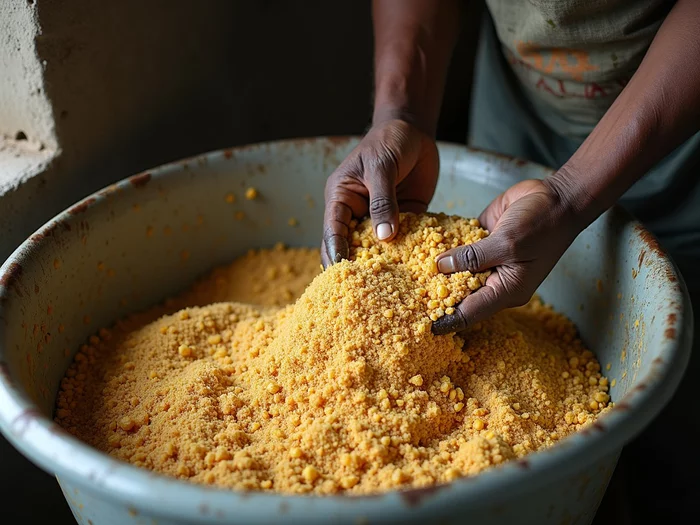
Prepare this feed by grinding all ingredients to fine powder (2-3mm particle size), mixing thoroughly for 10-15 minutes, then adding water gradually whilst mixing until the mixture holds together when squeezed. Form into 2-3mm pellets using a hand pelletiser or break into small crumbs suitable for fingerling mouths.
Store in dry, ventilated containers and use within 3-4 weeks to prevent rancidity and nutrient loss. This formula provides excellent growth rates—fingerlings should reach 50g in 6-8 weeks with proper feeding management and good water quality.
Grower Feed Recipe (35% Protein)
This balanced formula supports efficient growth in juvenile catfish 50-200g whilst reducing protein costs compared to starter feeds. The lower protein content reflects the reduced protein requirements of larger fish, whilst maintaining adequate energy for continued growth.
Grower Feed Formula (35% Protein)
- Groundnut cake: 35% (primary protein source)
- Maize meal: 25% (energy and palatability)
- Fish meal: 15% (amino acid balance and growth factors)
- Rice bran: 15% (vitamins and digestible fibre)
- Wheat bran: 8% (additional energy and binding)
- Vitamin/mineral premix: 2% (micronutrient requirements)
Cost per kg: ₦150-180 in Nigeria, KES 28-35 in Kenya, GHS 7-9 in Ghana
Protein content: 35-37%, Energy: 3,100 kcal/kg
Process this feed using 4-5mm pellet size suitable for juvenile catfish mouths. The reduced fish meal content lowers costs whilst maintaining adequate amino acid balance through the combination of groundnut cake and other plant proteins. Add 3-4% vegetable oil during mixing to increase energy content and improve pellet binding.
This formula supports growth rates of 3-5g daily in juvenile catfish under optimal conditions. Feed conversion ratios should range from 1.3-1.6, making this formulation highly cost-effective for the juvenile growth phase.
Finisher Feed Recipe (30% Protein)
This economical formula maximises growth efficiency in catfish above 200g whilst minimising feed costs during the final growth phase. The lower protein content reflects the reduced protein requirements of larger fish, whilst adequate energy supports continued weight gain to market size.
Finisher Feed Formula (30% Protein)
- Maize meal: 30% (primary energy source)
- Groundnut cake: 25% (plant protein base)
- Rice bran: 20% (energy and nutrients)
- Fish meal: 12% (essential amino acids)
- Wheat bran: 10% (fibre and binding)
- Cassava meal: 1% (binder and energy)
- Vitamin/mineral premix: 2% (micronutrients)
Cost per kg: ₦120-150 in Nigeria, KES 22-28 in Kenya, GHS 5-7 in Ghana
Protein content: 30-32%, Energy: 3,000 kcal/kg
Produce this feed using 6-8mm pellets suitable for market-size catfish. The high carbohydrate content from maize and cassava provides energy for growth whilst the reduced protein content minimises costs during the final fattening phase. Add 4-5% palm oil to increase energy density and improve feed conversion efficiency.
This economical formulation should produce feed conversion ratios of 1.4-1.8 whilst supporting growth rates of 5-8g daily in catfish approaching market size. The lower cost per kilogram makes this ideal for the final 2-3 months of production when fish consume the largest quantities of feed.
Feeding Equipment and Automation
You don't need expensive imported equipment to improve your feeding efficiency and reduce labour costs in African catfish farming. Simple, locally-made feeding tools and basic automation systems can save you hours of daily work whilst ensuring consistent feeding schedules that improve fish growth and feed conversion ratios.
The right feeding equipment pays for itself quickly through reduced feed waste, improved growth rates, and labour savings. A ₦50,000 investment in basic feeding equipment can save you ₦200,000-300,000 annually through better feed efficiency and reduced labour costs on a 1,000-fish operation.
Most feeding equipment can be constructed locally using materials available in African markets—PVC pipes, metal sheets, timers, and basic electrical components. This approach reduces costs and ensures you can maintain and repair equipment without depending on expensive imported parts or specialised technicians.
Manual Feeding Tools and Equipment
A simple feed broadcaster made from a plastic container with holes punched in the bottom allows even feed distribution across pond surfaces. Construct one using a 2-litre plastic bottle, punch 8-10 holes (5mm diameter) in the bottom, attach a handle, and you have a tool that distributes feed evenly whilst walking around pond perimeters. This costs under ₦500 but improves feed distribution significantly.
Build a feed storage system using metal drums or plastic containers with tight-fitting lids to protect feed from moisture, rodents, and insects. Elevate containers 30-50cm above ground level and add desiccant packets (silica gel or rice) to control humidity. Proper storage prevents feed spoilage that can cost you ₦50,000-100,000 annually in wasted feed.
Create measuring tools using plastic containers marked with permanent markers to ensure consistent feeding amounts. A 500ml container marked at 100ml intervals helps you measure precise feeding quantities based on fish biomass calculations. Consistent feeding amounts improve feed conversion ratios and help you track feed costs accurately.
Simple Automation Systems
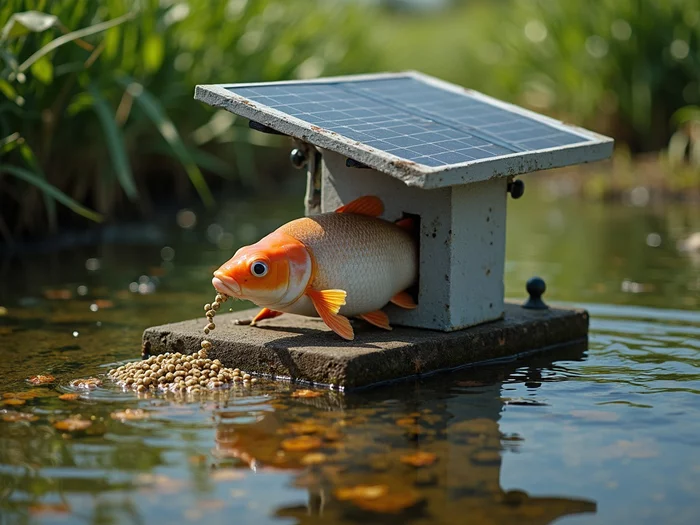
Install a basic timer-controlled feeding system using a 12V timer, small motor, and feed hopper constructed from PVC pipes and fittings. This system costs ₦15,000-25,000 to build but provides consistent feeding times even when you're away from the farm. The timer activates the motor which rotates a disc that releases predetermined amounts of feed into the pond.
Build the feed hopper using a 200mm PVC pipe (1 metre long) with a conical bottom made from sheet metal. Install a rotating disc with adjustable openings at the bottom, connected to a 12V DC motor controlled by a digital timer. This system can hold 10-15kg of feed and operate for several days without refilling.
Power the system using a 12V battery charged by a small solar panel (20-30 watts), making it suitable for remote locations without electricity. The solar panel costs ₦8,000-12,000, battery ₦15,000-20,000, and provides reliable power for automated feeding systems. This investment pays for itself within 6-12 months through improved feed conversion and labour savings.
Maintenance and Troubleshooting
Clean feeding equipment weekly using mild detergent and fresh water to prevent feed residue buildup that can harbour harmful bacteria. Inspect moving parts monthly and lubricate with vegetable oil or grease to ensure smooth operation. Replace worn components immediately to prevent system failures during critical feeding periods.
Common problems include feed bridging in hoppers (solved by adding vibration or agitation), motor failures (usually due to moisture—protect with waterproof housings), and timer malfunctions (keep spare timers and batteries). Document maintenance schedules and keep spare parts inventory to minimise downtime.
Train family members or workers to operate and maintain feeding equipment properly. Simple systems are more reliable than complex ones, so focus on robust designs that can withstand African weather conditions and require minimal technical knowledge to operate and repair.
Monitoring and Adjusting Feeding Practices
You can't manage what you don't measure, and this principle applies directly to catfish feeding efficiency. Most African catfish farmers feed by guesswork—estimating fish weights, assuming feed consumption rates, and hoping for good results. This approach wastes money and limits growth potential in your catfish operation.
Effective monitoring requires simple record-keeping systems that track feed consumption, fish growth, water quality, and environmental conditions. You don't need complex software or expensive equipment—a basic notebook, weighing scale, and water testing kit provide all the data needed to optimise your feeding practices and maximise profitability.
The key to successful monitoring lies in consistency and regular data collection. Weekly measurements and daily observations create patterns that help you identify problems early and adjust feeding practices before they impact your bottom line. Small adjustments based on solid data can improve your feed conversion ratio from 1.8 to 1.3, saving thousands of naira per production cycle.
Key Performance Indicators (KPIs) for Feeding
Monitor your Feed Conversion Ratio (FCR) weekly by calculating total feed consumed divided by total weight gained. Weigh a representative sample of 20-30 fish weekly and multiply by total fish numbers to estimate biomass. Record total feed consumed daily and calculate FCR every 7 days. Target FCRs are 1.2-1.4 for fingerlings, 1.3-1.5 for juveniles, and 1.4-1.6 for grow-out fish.
Track Average Daily Gain (ADG) by calculating weekly weight increases divided by 7 days. Healthy catfish should gain 2-3g daily as fingerlings, 4-6g as juveniles, and 6-10g during grow-out phase. If ADG drops below these targets, investigate water quality, feeding rates, or disease problems immediately.
Calculate feed costs as percentage of total production costs monthly. Feed should represent 60-70% of total costs—if it exceeds 75%, you need to improve feed efficiency or find cheaper feed sources. If it's below 55%, you might be underfeeding and limiting growth potential. Document feed prices and consumption rates to identify cost trends and seasonal variations.
Water Quality Impact on Feeding Efficiency
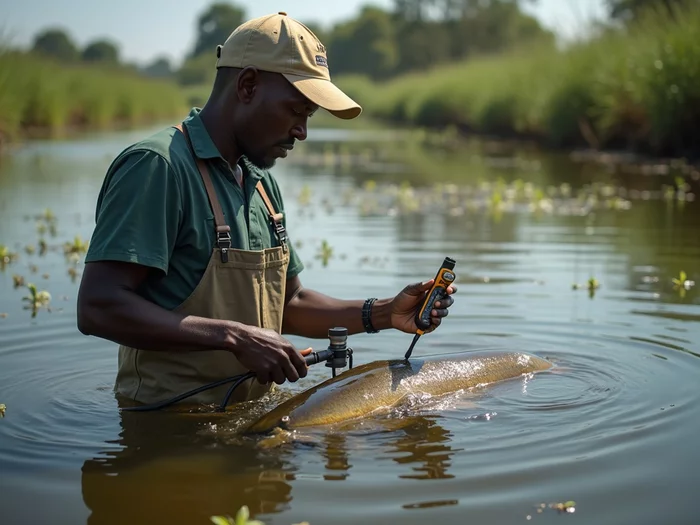
Test dissolved oxygen levels daily using a simple DO meter or test kit—levels below 4mg/L reduce catfish appetite and feed conversion efficiency significantly. Early morning measurements (5-6 AM) show minimum daily DO levels. If readings consistently fall below 4mg/L, increase aeration, reduce feeding rates, or reduce stocking density to improve feeding efficiency.
Monitor ammonia levels weekly using test strips or liquid test kits—levels above 1mg/L stress catfish and reduce feeding activity. High ammonia usually indicates overfeeding or inadequate water exchange. Reduce feeding rates by 20-30% and increase water exchange until ammonia drops below 0.5mg/L, then gradually resume normal feeding.
Check water temperature twice daily (morning and afternoon) and adjust feeding rates accordingly. Catfish appetite decreases rapidly when temperatures exceed 32°C or drop below 20°C. Reduce feeding rates by 30-50% during extreme temperatures and increase feeding during optimal temperature ranges (25-30°C) to maximise growth efficiency.
Seasonal Feeding Adjustments
Adjust feeding schedules based on seasonal temperature patterns in your region. During hot season (March-May in West Africa), feed early morning (5-6 AM) and late evening (7-8 PM) when temperatures are cooler. Reduce midday feeding or eliminate it entirely when temperatures exceed 32°C to prevent stress and feed waste.
Increase feeding rates during optimal growing seasons when temperatures remain consistently between 25-30°C. This typically occurs during late rainy season (August-October) in most African regions. Fish can achieve their best growth rates and feed conversion during these periods, so maximise feeding to capitalise on optimal conditions.
Reduce feeding rates by 40-60% during harmattan or cool seasons when temperatures drop below 22°C. Catfish metabolism slows significantly in cool weather, and overfeeding during these periods creates water quality problems without supporting growth. Monitor fish behaviour closely and feed only when fish show active feeding responses.
Summary Table
| Feeding Challenge | Solution | Cost Impact | Implementation Timeline |
|---|---|---|---|
| High commercial feed costs | Use local feed formulations with groundnut cake, rice bran, and limited fish meal | 40-60% cost reduction | 2-4 weeks to source ingredients and test formulations |
| Feed waste and poor FCR | Implement proper feeding times, portion control, and fish behaviour monitoring | 20-30% feed savings | Immediate implementation, 2-3 weeks to see results |
| Nutritional deficiencies | Stage-specific feeding (45% protein for fingerlings, 35% for juveniles, 30% for grow-out) | 15-25% improvement in growth rates | 1-2 weeks to adjust feed formulations |
| Labour-intensive feeding | Install simple automation systems with timers and solar power | ₦15,000-25,000 investment, 50% labour reduction | 3-4 weeks to build and test systems |
| Seasonal feeding challenges | Adjust feeding rates and times based on water temperature and fish behaviour | 10-20% improvement in seasonal FCR | Ongoing monitoring and adjustment |
| Alternative feed integration | Establish duckweed ponds and BSF larvae production for protein supplementation | 30-50% reduction in protein costs | 6-8 weeks to establish production systems |
Conclusion
You now have the knowledge and practical tools to transform your catfish feeding practices from a cost burden into a profit driver. The feeding challenges that plague African catfish farmers—high commercial feed costs, waste, nutritional deficiencies, and seasonal variations—all have proven solutions that you can implement immediately in your operation.
Start with the quick wins: adjust your feeding times to early morning and evening when catfish are most active, monitor fish behaviour during feeding to prevent waste, and begin sourcing local ingredients like groundnut cake and rice bran to reduce feed costs by 40-60%. These changes require no capital investment but can save you thousands of naira within the first month.
For longer-term improvements, establish duckweed cultivation and black soldier fly larvae production to create sustainable, low-cost protein sources. Build simple feeding equipment using local materials, and implement basic automation systems that reduce labour whilst ensuring consistent feeding schedules. These investments pay for themselves within 6-12 months through improved feed efficiency and reduced operational costs.
Remember that successful catfish feeding is about consistency, observation, and continuous improvement. Keep simple records of feed consumption, fish growth, and water quality parameters. Use this data to fine-tune your feeding practices seasonally and identify problems before they impact your profitability. Small adjustments based on solid data can improve your feed conversion ratio from 1.8 to 1.3, representing thousands of naira in additional profit per production cycle.
The African catfish farming industry is growing rapidly, but success belongs to farmers who master efficient feeding practices. By implementing these proven strategies, you'll reduce production costs, improve fish health and growth rates, and build a more profitable and sustainable catfish operation that can thrive regardless of feed price fluctuations or seasonal challenges.
Frequently Asked Questions
What is the ideal feed conversion ratio (FCR) for African catfish?
The ideal FCR varies by growth stage: 1.2-1.4 for fingerlings, 1.3-1.5 for juveniles, and 1.4-1.6 for grow-out fish. An FCR of 1.3 means you need 1.3kg of feed to produce 1kg of fish weight gain. If your FCR exceeds 1.8, investigate overfeeding, water quality issues, or feed quality problems immediately.
How much can I save by using local feed formulations instead of commercial feeds?
Local feed formulations can reduce costs by 40-60% compared to commercial feeds. For a 1,000-fish operation, this represents savings of ₦400,000-700,000 per production cycle in Nigeria. The key is sourcing quality local ingredients like groundnut cake, rice bran, and fish meal, then formulating balanced feeds that meet protein and energy requirements for each growth stage.
When should I feed my catfish to minimise waste and maximise growth?
Feed catfish during their most active periods: early morning (5-7 AM) and late evening (6-8 PM) when water temperatures are cooler and dissolved oxygen levels are higher. Avoid feeding during hot midday periods (12-3 PM) when temperatures exceed 30°C, as fish appetite decreases and feed waste increases significantly.
How do I know if I'm overfeeding my catfish?
Signs of overfeeding include: uneaten pellets floating 30 minutes after feeding, poor water quality (low dissolved oxygen, high ammonia), fish gasping at surface, and FCR above 1.8. Monitor fish behaviour during feeding—stop when fish show reduced interest, even if you haven't reached your planned feeding amount. Healthy catfish should consume 80-90% of feed within 15-20 minutes.
Can I completely replace commercial feed with alternative sources like duckweed and BSF larvae?
Alternative feeds work best as partial replacements rather than complete substitutes. You can replace up to 30% of commercial feed with fresh duckweed, 50% of protein with BSF larvae, or 40% of total feed with properly formulated agricultural by-products. Complete replacement requires careful nutritional balancing and may not provide optimal growth rates for commercial operations.
What water quality parameters affect feeding efficiency in catfish?
Key parameters include: dissolved oxygen (maintain above 4mg/L), ammonia (keep below 0.5mg/L), temperature (optimal 25-30°C), and pH (6.5-8.5). Poor water quality reduces catfish appetite and feed conversion efficiency. Test DO daily, ammonia weekly, and temperature twice daily. Adjust feeding rates based on these parameters to maintain optimal feeding efficiency.
How do I adjust feeding practices during different seasons?
During hot season (temperatures above 30°C), reduce feeding rates by 20-30% and feed only during cooler periods. During harmattan or cool seasons (below 22°C), reduce feeding by 40-60% as catfish metabolism slows. Maximise feeding during optimal seasons (25-30°C) when fish achieve best growth rates and feed conversion efficiency.
What's the minimum investment needed for basic feeding automation?
A basic timer-controlled feeding system costs ₦15,000-25,000 to build using local materials (PVC pipes, small motor, timer, battery). Add ₦20,000-30,000 for solar panel and battery system for remote locations. This investment pays for itself within 6-12 months through improved feed conversion, labour savings, and consistent feeding schedules that optimise fish growth.


Yomi Adisa Lead Researcher
Yomi Adisa is the lead researcher at Fish Farming Business, where he studies what makes aquaculture ventures profitable across Africa. His research focuses on market patterns, buyer preferences, and the business decisions that determine success or failure in fish farming.