African Catfish: Profile, Biology, and Farming Practices
Posted on: 2025-11-19
By: Yomi Adisa
African catfish represents one of aquaculture's most reliable performers, combining remarkable hardiness with impressive growth rates that have made it a cornerstone species across the continent. From small-scale pond systems in rural Nigeria to intensive commercial operations in Egypt, Clarias gariepinus consistently delivers results that keep farmers profitable and communities fed.
In This Guide
- → The Importance of Clarias gariepinus in African Fish Farming
- → Overview of Aquaculture in Africa
- → Why Clarias gariepinus is a Key Species
- → Species Identification: Recognising Clarias gariepinus
- → Scientific Classification and Common Names
- → Distinguishing Features of Clarias gariepinus
- → Size and Growth Stages
- → Biology & Natural Behaviour of Clarias gariepinus
- → Natural Habitat and Environmental Preferences
- → Temperature and Water Quality Requirements
- → Feeding Behaviour and Diet
- → Reproduction & Life Cycle of Clarias gariepinus
- → Breeding Behaviour and Spawning Conditions
- → Egg and Fry Development
- → Lifespan and Growth Rates
- → Why Farmers Choose Clarias gariepinus
- → Production Advantages in Aquaculture
- → Market Demand and Economic Viability
- → Farming Considerations for Clarias gariepinus
- → Optimal Farming Practices
- → Disease Management and Health Monitoring
- → Integration with Other Species
- → How Clarias gariepinus Compares to Related Species
- → Key Differences with Other Clarias Species
- → Regional Preferences and Farming Practices
- → Key Takeaways for Farmers Considering Clarias gariepinus
- → Summary of Species Benefits
- → Encouragement for Sustainable Practices
The Importance of Clarias gariepinus in African Fish Farming
Aquaculture has become Africa's fastest-growing food production sector, expanding at over 12% annually as traditional fisheries struggle to meet rising demand. With Africa's population projected to double by 2050, fish farming represents a critical pathway to food security and rural economic development.
The success of this expansion depends heavily on choosing species that can thrive under African conditions whilst delivering consistent returns.
This is where understanding your species selection becomes paramount—the difference between a profitable operation and a costly failure often lies in matching the right fish to your specific environment and resources.
Overview of Aquaculture in Africa
African aquaculture produces over 2.3 million tonnes annually, with countries like Egypt, Nigeria, and Uganda leading production volumes. The sector directly employs more than 1.2 million people and supports countless rural livelihoods through value chain activities.
However, African farmers face unique challenges: irregular power supply, limited access to quality feeds, variable water sources, and extreme weather patterns.
These conditions demand fish species that can tolerate stress, grow efficiently on locally available feeds, and maintain health under less-than-ideal management conditions.
Why Clarias gariepinus is a Key Species
Clarias gariepinus addresses these challenges better than virtually any other species available to African farmers. Its air-breathing capability prevents losses during power outages that would devastate tilapia or carp operations.
The species tolerates dissolved oxygen levels as low as 1 mg/L—conditions that would kill most other fish within hours.
Market demand remains consistently strong across Africa, with wholesale prices typically 20-30% higher than tilapia in most regional markets. The fish's firm texture and mild flavour appeal to diverse consumer preferences, whilst its ability to reach 500g market size in just 4-6 months provides rapid cash flow for farmers.
Perhaps most importantly, C. gariepinus converts feed efficiently even with locally formulated diets, achieving feed conversion ratios of 1.2-1.8 when managed properly. This flexibility allows farmers to reduce input costs whilst maintaining profitable growth rates.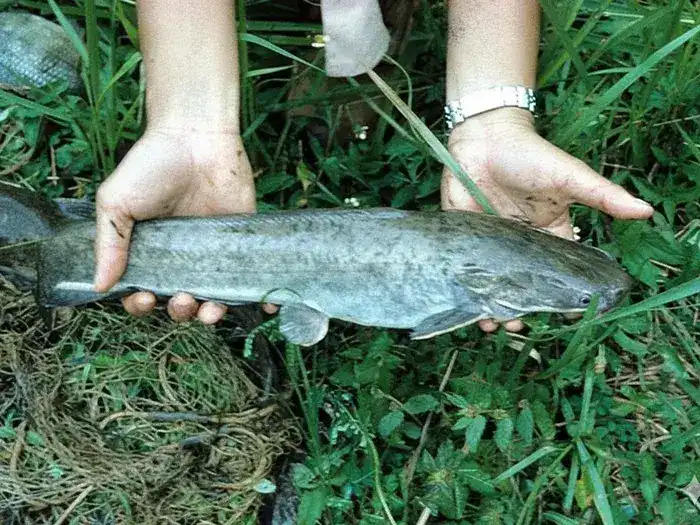
Species Identification: Recognising Clarias gariepinus
Accurate species identification prevents costly mistakes in fingerling procurement and ensures you're working with the superior genetics that C. gariepinus offers. Many suppliers across Africa stock multiple Clarias species, and distinguishing between them requires understanding specific physical characteristics.
The identification skills covered in this section will help you verify fingerling quality, assess breeding stock, and avoid confusion with related species that may have different growth potentials or market values. These visual recognition techniques become particularly valuable when sourcing stock from new suppliers or evaluating wild-caught broodstock.
Scientific Classification and Common Names
Clarias gariepinus (Burchell, 1822) belongs to the family Clariidae, the air-breathing catfishes. This taxonomic classification immediately tells you about the species' unique respiratory adaptations that set it apart from other catfish families.
Common names vary significantly across Africa: "Sharptooth catfish" in English-speaking regions, "Mudfish" in West Africa, "Makumba" in East Africa, and "Barbel" in some areas. Understanding these regional names helps when communicating with local suppliers, extension officers, or fellow farmers about the specific species you're cultivating.
The scientific name remains constant globally, ensuring clear communication in technical literature, research reports, and international trade. When purchasing fingerlings or seeking technical advice, always use the scientific name to avoid confusion with the dozen other Clarias species found across Africa.
Distinguishing Features of Clarias gariepinus
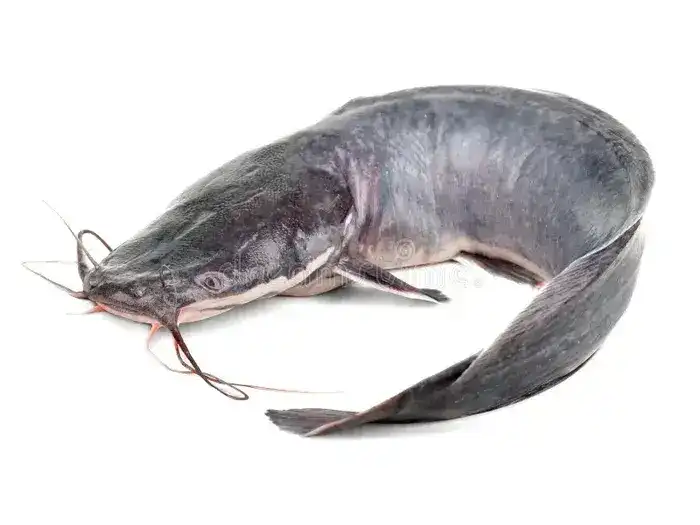
The most distinctive feature is the elongated, cylindrical body with a notably flattened head and broadly rounded snout. Unlike many catfish species, C. gariepinus has four pairs of barbels: nasal, maxillary, and inner and outer mandibular barbels that serve as highly sensitive feeding organs.
The long dorsal fin extends from just behind the head nearly to the tail, containing 58-63 rays—significantly more than related species. This extended fin provides the undulating swimming motion that makes the species so efficient at navigating through vegetation and shallow water.
Sharp, serrated pectoral spines serve both as defensive weapons and identification markers. These spines can inflict painful wounds, so handle fish carefully during grading or harvesting operations. The absence of an adipose fin distinguishes C. gariepinus from many other African catfish species.
Most importantly for farmers, the suprabranchial labyrinth—the air-breathing organ—appears as a tree-like structure in the gill chamber. This adaptation allows survival in oxygen-depleted water and explains the species' remarkable hardiness under intensive culture conditions.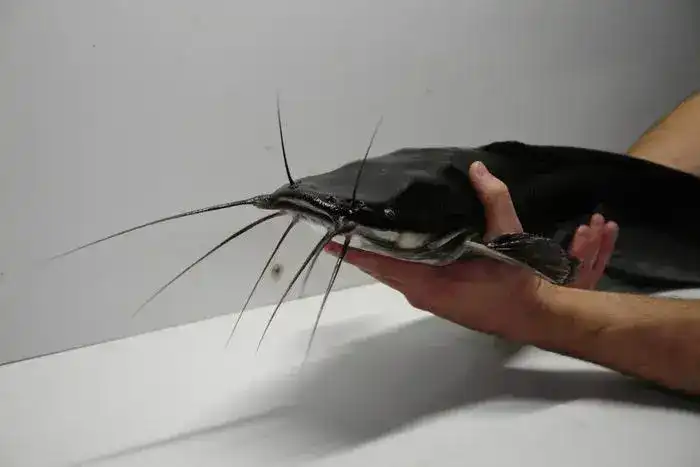
Size and Growth Stages
Understanding size categories helps you plan production schedules and marketing strategies. Fingerlings measure 2-5 cm at 1-2 weeks post-hatch, whilst juveniles reach 10-20 cm by 2-3 months under good management.
Market-size adults typically range from 30-80 cm in aquaculture systems, reaching 500g-2kg depending on your target market. Wild specimens can exceed 120 cm and 20 kg, but such sizes are rarely achieved or desired in commercial farming due to extended grow-out periods.
Growth rates of 2-4g daily under optimal conditions mean fingerlings can reach 500g market weight in 4-6 months. This rapid growth allows multiple production cycles annually, maximising pond utilisation and cash flow compared to slower-growing species.
Biology & Natural Behaviour of Clarias gariepinus
Understanding the natural biology of C. gariepinus provides the foundation for successful farming practices. The species' evolutionary adaptations to Africa's variable aquatic environments explain why it performs so well under the challenging conditions many farmers face.
This biological knowledge directly translates into practical farming advantages. When you understand why the fish behaves as it does, you can design systems that work with its natural tendencies rather than against them, resulting in better growth rates, lower mortality, and reduced management stress.
Natural Habitat and Environmental Preferences
C. gariepinus naturally inhabits rivers, lakes, swamps, floodplains, and temporary pools across Africa—from the Nile Basin through West, Central, and East Africa to Southern Africa. This wide distribution reflects extraordinary environmental adaptability that serves farmers well.
The species thrives in both flowing and stagnant waters, tolerating the turbid, low-oxygen conditions common in African water bodies during dry seasons. This tolerance explains why your fish can survive power outages, equipment failures, or overcrowding situations that would devastate other species.
Natural preference for shallow waters (0.5-3m depth) with muddy or sandy substrates means the species adapts well to typical pond culture systems. The fish actively burrows into substrate when stressed, so providing some mud or sand in pond bottoms can reduce stress-related mortality.
Temperature and Water Quality Requirements
Optimal temperature range of 24-30°C aligns perfectly with tropical African climates, eliminating the need for expensive heating systems required by temperate species. The fish can survive temperature extremes from 10-38°C for short periods, providing a safety margin during seasonal temperature swings.
pH tolerance spans 6.5-8.5 under normal conditions, extending to 5.5-9.0 in emergency situations. This flexibility allows use of various water sources without expensive pH adjustment, whether you're using borehole water, river water, or treated municipal supplies.
The remarkable ability to survive dissolved oxygen levels below 1 mg/L sets C. gariepinus apart from virtually all other cultured species. This adaptation prevents the catastrophic losses that occur when aeration systems fail, power cuts interrupt oxygen supply, or organic loading temporarily depletes dissolved oxygen.
Salinity tolerance up to 10-15 ppt allows farming in slightly brackish conditions, expanding your options for water sources in coastal areas or regions with naturally saline groundwater.
Feeding Behaviour and Diet
The omnivorous feeding strategy in nature—consuming insects, crustaceans, molluscs, small fish, plant matter, and detritus—translates into flexible nutrition options for farmers. This dietary flexibility allows use of locally available feed ingredients without the strict nutritional requirements of carnivorous species.
Nocturnal feeding behaviour means fish are most active during cooler evening hours, reducing metabolic stress during hot African days. Schedule feeding for early morning or evening to maximise feed utilisation and minimise waste from uneaten food decomposing in warm water.
The barbel-assisted feeding mechanism allows efficient foraging in turbid water typical of many African pond systems. Fish can locate food by chemical detection even when visibility is poor, ensuring consistent feeding even in less-than-ideal water clarity conditions.
Protein requirements of 35-45% for juveniles and 25-35% for adults can be met using combinations of fish meal, soybean meal, and other locally available protein sources. The species' ability to utilise plant proteins reduces dependence on expensive fish meal imports.
Reproduction & Life Cycle of Clarias gariepinus
The reproductive biology of C. gariepinus offers both opportunities and challenges for farmers. Understanding these patterns helps you manage breeding programmes effectively, control unwanted reproduction in grow-out ponds, and time fingerling production to match market demand.
Whether you're planning to produce your own fingerlings or simply managing mixed-sex grow-out populations, knowledge of reproductive triggers and timing prevents surprises that could impact your production schedule or pond management routines.
Breeding Behaviour and Spawning Conditions
Sexual maturity occurs at 6-12 months for males (200-400g) and 8-14 months for females (300-600g) under good nutrition. This relatively early maturity means you need to plan for reproductive management in grow-out systems if using mixed-sex stocking.
Natural spawning triggers include rising water levels and increased temperatures following rainy seasons. In farming systems, this translates to spawning activity during periods of water exchange, pond refilling, or temperature increases above 26°C.
The polygynandrous (promiscuous) mating system means multiple males may fertilise eggs from a single female. For controlled breeding, use ratios of 2-3 males per female to ensure high fertilisation rates whilst avoiding excessive male competition.
Spawning occurs in shallow, vegetated areas in nature. Provide spawning substrates like grass bundles, palm fronds, or synthetic materials in breeding ponds to encourage natural spawning behaviour and protect eggs from predation.
Egg and Fry Development
Fecundity ranges from 10,000-100,000 eggs per female depending on size and condition. A well-fed 1 kg female typically produces around 100,000 eggs, providing substantial fingerling production potential from relatively few broodstock.
Eggs measure 1.5-2.0mm diameter and are adhesive, sticking to vegetation or substrate. Incubation requires 18-24 hours at 26-28°C, with higher temperatures accelerating development but potentially reducing survival rates.
Newly hatched fry measure 3-4mm total length and absorb yolk sacs over 2-3 days before requiring external feeding. First feeding should begin with infusoria, micro-worms, or commercial starter feeds with particle sizes under 100 microns.
No parental care occurs after spawning, so artificial incubation and fry rearing systems are necessary for commercial fingerling production. Survival rates from egg to fingerling typically range from 30-60% under managed conditions.
Lifespan and Growth Rates
Lifespan extends 8-15 years in culture systems, with wild specimens potentially reaching 20 years. This longevity allows maintenance of broodstock for multiple years, reducing replacement costs compared to shorter-lived species.
Growth rates under optimal culture conditions reach 2-4g daily, allowing fingerlings to achieve 500g market size in 4-6 months. Superior growth performance compared to tilapia (6-8 months to 500g) provides faster cash flow and higher annual pond productivity.
Maximum culture size typically reaches 60-80cm and 2-5kg, though growth slows significantly after 2kg. Most farmers target 500g-1kg market weights for optimal feed conversion efficiency and market preferences.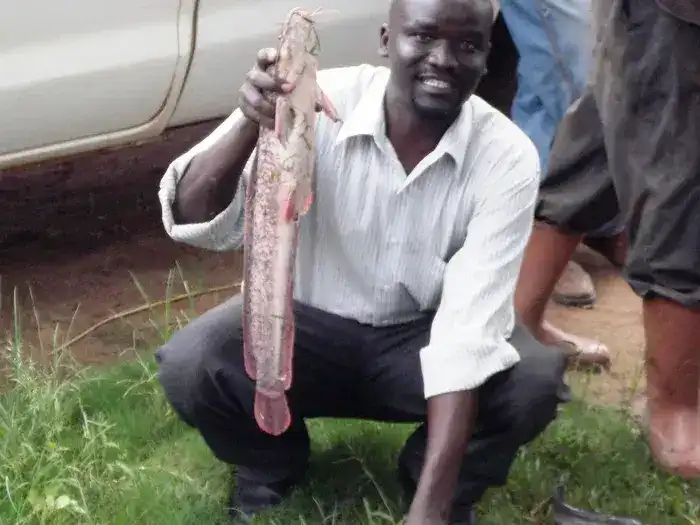
Why Farmers Choose Clarias gariepinus
The practical advantages that make C. gariepinus attractive to farmers stem directly from its biological adaptations to African environments. These aren't just theoretical benefits—they translate into real economic advantages that improve your bottom line and reduce production risks.
Understanding these advantages helps you maximise the species' potential whilst recognising situations where other species might be more appropriate. The key is matching the fish's strengths to your specific farming conditions and market opportunities.
Production Advantages in Aquaculture
Fast growth rates of 2-4g daily under good management allow multiple production cycles annually. Where tilapia requires 6-8 months to reach 500g, C. gariepinus achieves this in 4-6 months, increasing annual pond productivity by 30-50%.
Exceptional hardiness prevents the catastrophic losses that plague other species during equipment failures, power outages, or environmental stress. Survival rates of 80-95% in well-managed systems compare favourably to 70-85% typical for tilapia under similar conditions.
High stocking density tolerance allows intensive production systems. Pond densities of 5-10 fish/m² or cage densities up to 20 fish/m³ maximise production per unit area without compromising growth rates or health.
Feed conversion ratios of 1.2-1.8 under optimal conditions mean efficient protein conversion, reducing feed costs per kilogramme of fish produced. The ability to utilise locally formulated feeds with lower protein levels further reduces input costs.
Low production costs result from reduced need for aeration equipment, backup power systems, or expensive imported feeds. Total production costs typically run 15-25% lower than equivalent tilapia operations.
Market Demand and Economic Viability
Strong market demand across Africa maintains premium pricing, with wholesale prices typically 20-30% higher than tilapia in most regional markets. The firm texture and mild flavour appeal to diverse consumer preferences, supporting consistent demand.
Multiple market options include fresh sales, smoking, processing into fish meal, or value-added products. The species' size flexibility allows targeting different market segments from small 300g fish for household consumption to large 2kg fish for restaurants.
Short production cycles of 4-6 months provide rapid return on investment and improved cash flow compared to longer-cycle species. This quick turnover reduces financial risk and allows faster response to market price changes.
Regional market integration opportunities exist due to the species' wide acceptance across African countries. Successful farmers in Nigeria, Kenya, and Egypt demonstrate consistent profitability across diverse market conditions.
Farming Considerations for Clarias gariepinus
Successful C. gariepinus farming requires understanding how to harness the species' natural advantages whilst managing its specific requirements. The practices outlined here represent proven approaches developed by successful farmers across Africa's diverse aquaculture systems.
These considerations address the practical day-to-day management decisions that determine your operation's success. From stocking densities to disease prevention, each factor builds upon the species' biological characteristics to optimise production outcomes.
Optimal Farming Practices
Stocking densities of 5-10 fish/m² in earthen ponds provide optimal balance between growth rates and production volume. Higher densities up to 15 fish/m² are possible with excellent water quality management and supplemental aeration during critical periods.
Feed types should provide 35-45% protein for juveniles and 25-35% protein for adults. Locally formulated feeds using fish meal, soybean meal, maize, and rice bran can achieve these levels whilst controlling costs. Feed 2-3% of body weight daily, split into 2-3 feeding sessions.
Water quality management focuses on maintaining dissolved oxygen above 3 mg/L when possible, though the species' air-breathing ability provides safety margins during temporary depletion. Weekly water exchanges of 10-20% help maintain water quality in intensive systems.
Temperature management is rarely necessary in tropical African climates, but provide shade structures during extreme heat periods above 35°C. Deeper pond areas (1.5-2m) allow fish to seek cooler water during hot periods.
Grading every 4-6 weeks prevents size disparities that lead to cannibalism and uneven growth. Separate fish into size classes with less than 30% size variation within each group.
Disease Management and Health Monitoring
Common diseases include bacterial infections from Aeromonas hydrophila and Edwardsiella tarda, particularly under crowded or poor water quality conditions. Symptoms include skin lesions, fin rot, and lethargy requiring immediate attention.
Preventive measures focus on maintaining water quality, avoiding overcrowding, and minimising handling stress. Regular monitoring of dissolved oxygen, pH, and ammonia levels prevents conditions that predispose fish to disease outbreaks.
Health indicators include active feeding behaviour, normal swimming patterns, and absence of external lesions or parasites. Daily observation during feeding allows early detection of problems before they become serious.
Treatment options include salt baths (3-5 ppt for 10-15 minutes), antibiotic treatments following veterinary advice, and improved water quality management. Prevention through good husbandry practices proves more effective and economical than treatment.
Integration with Other Species
Polyculture opportunities exist with species occupying different ecological niches. C. gariepinus as a bottom-feeder combines well with surface-feeding tilapia or mid-water carp species, utilising different food sources and water layers.
Stocking ratios of 60% catfish, 40% tilapia often provide optimal production whilst reducing feed costs through complementary feeding habits. The catfish consume uneaten tilapia feed and organic matter, improving pond sanitation.
Size management becomes critical in polyculture systems to prevent predation. Stock similar-sized fish or ensure size differences remain within safe limits throughout the production cycle.
Integrated agriculture-aquaculture systems benefit from C. gariepinus tolerance of organic loading. The species thrives in ponds receiving agricultural runoff or organic fertilisation that might stress other fish species.
How Clarias gariepinus Compares to Related Species
Understanding the differences between C. gariepinus and related species helps you make informed decisions about species selection and avoid costly mistakes in fingerling procurement. These comparisons highlight why C. gariepinus has become the preferred choice for commercial aquaculture across Africa.
Regional availability and market preferences sometimes favour different species, but the biological and economic advantages of C. gariepinus generally outweigh these considerations for serious commercial operations.
Key Differences with Other Clarias Species
Clarias anguillaris, the lesser African catfish, reaches maximum sizes of only 60cm and 3kg compared to C. gariepinus at 120cm and 20kg. Growth rates are correspondingly slower, requiring 6-8 months to reach 500g market size versus 4-6 months for C. gariepinus.
Clarias batrachus, the Asian walking catfish, shows similar air-breathing abilities but smaller maximum size of 50cm and 1.5kg. Its slower growth and lower market acceptance in African markets make it less suitable for commercial farming despite its hardiness.
Environmental tolerance comparisons show C. gariepinus superior performance across all parameters. Temperature tolerance, pH range, and salinity tolerance all exceed those of related species, providing greater management flexibility and reduced risk of environmental mortality.
Market value differences are significant, with C. gariepinus commanding 15-25% premium pricing over C. anguillaris and even higher premiums over Asian species in African markets. Consumer preference for the larger size and superior texture drives this price differential.
Regional Preferences and Farming Practices
West African farmers traditionally used C. anguillaris for subsistence farming, but commercial operations increasingly switch to C. gariepinus for its superior growth and market characteristics. Nigeria's aquaculture expansion relies heavily on C. gariepinus for commercial production.
East African countries including Kenya, Uganda, and Tanzania favour C. gariepinus for both small-scale and commercial aquaculture. Government extension programmes promote the species due to its proven performance under local conditions.
North African aquaculture, particularly in Egypt, demonstrates C. gariepinus potential under intensive management. Egyptian farms achieve growth rates exceeding 4g daily using advanced nutrition and water quality management.
Southern African farmers appreciate the species' drought tolerance and ability to survive in seasonal water bodies. This resilience proves valuable in regions with variable rainfall and limited water resources for aquaculture.
Key Takeaways for Farmers Considering Clarias gariepinus
The evidence clearly demonstrates why C. gariepinus has become Africa's most successful aquaculture species. Its combination of rapid growth, environmental tolerance, and market acceptance provides a compelling case for farmers seeking reliable, profitable production systems.
Success with this species requires understanding its biological advantages whilst implementing management practices that optimise these natural characteristics. The investment in proper techniques pays dividends through improved survival rates, faster growth, and higher market values.
Summary of Species Benefits
Growth performance advantages include 2-4g daily growth rates and 4-6 month production cycles that maximise annual pond productivity. Feed conversion ratios of 1.2-1.8 ensure efficient protein utilisation and controlled production costs.
Environmental tolerance provides security against the equipment failures, power outages, and water quality fluctuations that challenge African farmers. Survival rates of 80-95% under good management reduce financial risk compared to more sensitive species.
Market advantages include premium pricing 20-30% above tilapia and strong demand across diverse African markets. The species' size flexibility allows targeting multiple market segments from household consumption to restaurant trade.
Economic viability stems from lower input costs, reduced infrastructure requirements, and shorter production cycles. Total production costs typically run 15-25% below equivalent tilapia operations whilst generating higher revenues per kilogramme produced.
Encouragement for Sustainable Practices
Sustainable C. gariepinus farming practices ensure long-term viability for your operation and the broader aquaculture industry. Focus on water quality management, appropriate stocking densities, and integrated production systems that minimise environmental impact.
Responsible sourcing of fingerlings from certified hatcheries maintains genetic quality and prevents disease introduction. Support local hatchery development to ensure sustainable fingerling supplies for the growing aquaculture sector.
Efficient feed utilisation through proper feeding schedules and locally formulated diets reduces environmental impact whilst controlling costs. Consider integrated agriculture-aquaculture systems that recycle nutrients and maximise resource efficiency.
Knowledge sharing with fellow farmers and participation in farmer associations strengthen the entire sector. Your success with C. gariepinus can inspire others whilst contributing to Africa's food security and rural development goals.


Yomi Adisa Lead Researcher
Yomi Adisa is the lead researcher at Fish Farming Business, where he studies what makes aquaculture ventures profitable across Africa. His research focuses on market patterns, buyer preferences, and the business decisions that determine success or failure in fish farming.