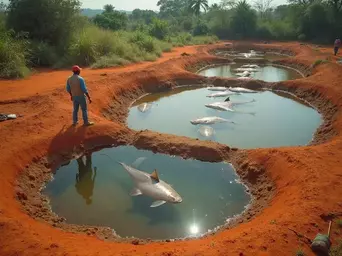
How to Install Monk Structures for Effective Catfish Pond Water Control
Posted on: 2025-12-01
By: Yomi Adisa
You've built your catfish ponds and stocked them with healthy fingerlings, but when the rains come or you need to harvest, managing water levels becomes a nightmare. Many farmers across Nigeria and Ghana struggle with flooding during heavy rains or find themselves unable to drain ponds efficiently for harvesting, leading to stressed fish and reduced profits.
This article provides you with comprehensive technical knowledge about monk structures—specialised water control systems that give you complete command over your pond's water levels. You'll learn exactly how to design, install, and maintain these critical infrastructure components for optimal catfish production.
Proper water management through monk structures directly impacts your bottom line. With effective water control, you can harvest your African catfish (Clarias gariepinus) more efficiently, maintain optimal water quality throughout the growing cycle, and protect your investment from unexpected weather events.
By the end of this guide, you'll understand the technical specifications needed for your pond size, master the step-by-step installation process, and know how to maintain these structures for years of reliable service. You'll also gain insight into cost-effective material choices and troubleshooting techniques that prevent common operational problems.
What You Will Learn
- Learn how to design monk structures tailored for your catfish pond size and production goals.
- Master the step-by-step installation process to ensure reliable water management for your African catfish (Clarias gariepinus).
- Discover effective maintenance routines that keep your monk structures functioning optimally for years.
- Understand the crucial technical specifications for materials to enhance durability in tropical environments.
- Identify common installation challenges and practical solutions to prevent operational failures.
Understanding Monk Structures
You need precise control over your catfish pond's water levels, and monk structures give you exactly that capability. These engineered water control systems act as the command centre for your pond, allowing you to drain water for harvesting, maintain optimal depths during production, and prevent overflow during Nigeria's heavy rainy seasons. Without proper water control infrastructure, you're essentially farming at the mercy of weather patterns and seasonal variations.
Most catfish farmers across Ghana and Kenya rely on simple outlet pipes or basic sluice gates, but these systems offer limited flexibility and often fail when you need them most. Monk structures represent a significant upgrade in pond management technology, giving you the ability to adjust water levels incrementally rather than dealing with all-or-nothing drainage scenarios. This precision becomes crucial when you're managing African catfish (Clarias gariepinus) through different growth phases that require varying water depths.
The investment in a properly designed monk structure pays for itself through improved harvesting efficiency, reduced fish stress, and better overall pond management. You'll find that controlling water levels becomes straightforward rather than a constant source of worry, especially during Uganda's unpredictable weather patterns or Egypt's irrigation scheduling challenges. Understanding proper water quality parameters helps you maintain healthy catfish whilst using monk structures effectively.
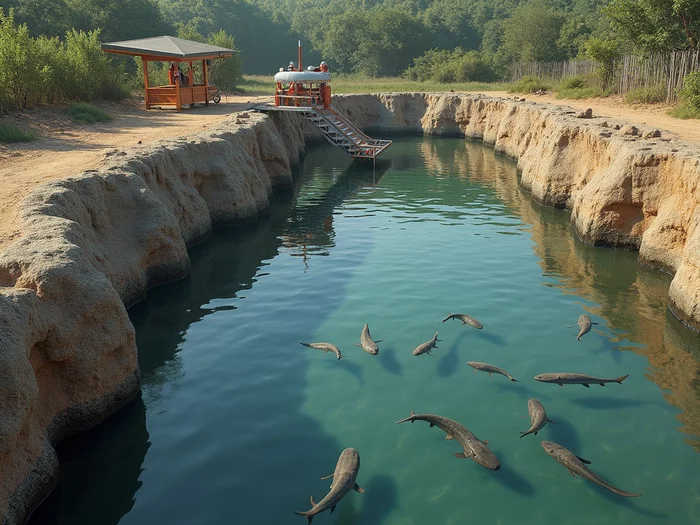
What is a Monk Structure?
A monk structure is a vertical tower system that controls water flow out of your catfish pond through removable wooden boards and screens. The structure consists of a concrete or PVC tower positioned at your pond's deepest point, connected to an outlet pipeline that carries water away from the pond. You insert wooden boards into grooved slots within the tower to set your desired water level, whilst screens prevent your catfish from escaping through the outlet.
The beauty of this system lies in its adjustability—you can raise or lower water levels by simply adding or removing boards from the tower slots. Each board typically measures 15-20cm in height, giving you precise control over water depth adjustments. The screens, usually made from galvanised mesh with 6-8mm openings, ensure that even small African catfish fingerlings cannot escape whilst allowing water to flow freely through the system.
Benefits and Comparisons
You gain several critical advantages with monk structures that simple outlet pipes cannot provide. First, harvesting becomes dramatically easier because you can gradually lower water levels, concentrating your catfish in smaller areas for efficient netting. This controlled drainage reduces fish stress compared to rapid water removal, which can cause African catfish to become agitated and difficult to handle.
Monk structures also prevent the overflow disasters that plague many farms during heavy rains. In Lagos, where sudden downpours can raise pond levels by 30-40cm overnight, the monk's overflow capability automatically maintains safe water levels without your constant supervision. You set the maximum level with your board configuration, and excess water simply flows out through the top of the structure.
Compared to sluice gates, monk structures offer superior flexibility and lower maintenance requirements. Sluice gates work well for large commercial operations but require precise installation and regular mechanical maintenance that many smaller farmers in rural areas cannot easily access. Monk structures use simple wooden boards that you can replace locally, and the system has no moving mechanical parts that can jam or corrode in tropical conditions.
Technical Specifications and Design Considerations
You need to match your monk structure specifications precisely to your pond size and catfish production goals, because undersized structures create bottlenecks during drainage whilst oversized ones waste money and materials. The technical design decisions you make now will determine whether your water control system functions reliably for the next 10-15 years or requires constant repairs and modifications. Getting these specifications right from the start saves you significant time and money whilst ensuring optimal performance throughout your catfish production cycles.
Your material choices directly impact both initial costs and long-term maintenance requirements, especially in Africa's challenging climate conditions. A concrete monk structure might cost ₦45,000-60,000 initially in Nigeria but last 15-20 years with minimal maintenance, whilst a PVC system costs ₦25,000-35,000 but may need replacement every 8-10 years. You must also consider local availability of materials and skilled labour, as importing specialised components can double your project costs.
The foundation and stability requirements vary significantly based on your soil conditions and pond design, particularly in areas with expansive clay soils common across Ghana and Uganda. Poor foundation design causes monk structures to shift or settle unevenly, creating gaps that allow fish to escape or preventing proper board seating that compromises water level control. Proper soil testing and preparation ensures your monk structure foundation remains stable for years.
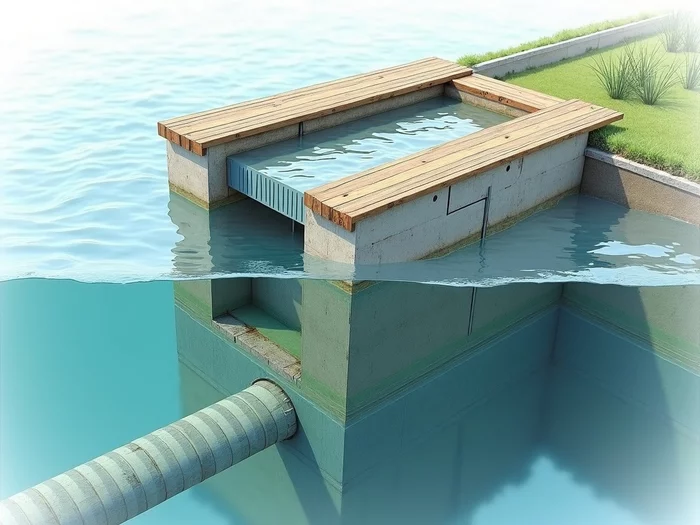
Material Options for Monk Structures
Concrete offers the most durable option for your monk structure, withstanding Africa's intense UV radiation and temperature fluctuations without degradation. You'll typically use a 1:2:4 cement-sand-aggregate mix for the tower walls, creating 10-15cm thick walls that resist cracking and provide excellent stability. Concrete monks handle the constant wet-dry cycles during pond management without structural compromise, making them ideal for intensive catfish operations where you drain and refill ponds multiple times per year.
PVC provides a lighter, more affordable alternative that works well for smaller ponds up to 500 square metres. You can construct the tower using 200-250mm diameter PVC pipe with custom-cut slots for board insertion, though you'll need to reinforce the structure with concrete footings to prevent flotation. PVC monks cost approximately 40-50% less than concrete versions but require more frequent inspection for UV damage and potential cracking at joint connections.
Mild steel offers excellent strength-to-weight ratios but requires galvanising or regular painting to prevent corrosion in pond environments. Steel monks work particularly well in areas with unstable soils where concrete structures might crack due to ground movement. However, you'll face higher maintenance costs due to rust prevention requirements, and skilled welding services may be limited in rural farming areas across Kenya and Uganda.
Designing Monk Structures for Catfish Ponds
Your monk structure height should exceed your maximum pond depth by at least 30-40cm to handle overflow situations during heavy rains. For typical catfish ponds with 1.2-1.5m maximum depths, you'll need monk towers measuring 1.8-2.0m in total height. The internal dimensions must accommodate standard board widths of 15-20cm, with slot depths of 2-3cm to ensure secure board seating without gaps that allow fish escape.
Screen mesh sizing becomes critical for preventing African catfish escape whilst maintaining adequate water flow rates. You want 6-8mm mesh openings for grow-out ponds containing fish above 100g, whilst nursery ponds with smaller fingerlings require 3-4mm mesh. The screen area should equal at least 150% of your outlet pipe cross-sectional area to prevent flow restrictions that could cause backup during rapid drainage operations.
Your outlet pipe diameter depends on pond size and desired drainage time, with most catfish farmers targeting complete drainage within 4-6 hours for harvesting efficiency. Use 100mm pipes for ponds up to 200 square metres, 150mm pipes for 200-500 square metres, and 200mm pipes for larger operations. The pipe should slope at minimum 1:100 gradient to ensure complete drainage and prevent sediment accumulation that reduces flow capacity over time.
Foundation and Stability Requirements
You need a concrete foundation extending at least 50cm below the pond bottom to prevent undermining from water flow and provide adequate bearing capacity. The foundation should measure 1.5-2.0 times the monk structure's base width to distribute loads properly and resist overturning forces during high water flow conditions. In clay soils common across Nigeria and Ghana, you may need to extend foundation depth to 80-100cm to reach stable bearing strata.
Anti-seepage measures around the monk structure prevent water loss and structural instability caused by piping failures. Install a clay or bentonite collar extending 1.0-1.5m horizontally from the structure base, compacted in 15cm lifts to achieve proper density. This collar prevents water from flowing around the structure rather than through it, maintaining your intended water levels and preventing erosion that could undermine the foundation.
Backfill materials around the monk structure require careful selection and placement to prevent settlement and maintain structural alignment. Use well-graded gravel or crushed stone within 30cm of the structure, placed and compacted in thin lifts to avoid point loads that could crack concrete walls. The remaining backfill should consist of clay-rich soil compacted to at least 95% of standard Proctor density to provide long-term stability and prevent differential settlement that creates operational problems.
Step-by-Step Installation Process
You must approach monk structure installation with careful planning and precise execution, because mistakes during construction create operational problems that persist for years. The installation process requires coordination between excavation, concrete work, and plumbing installation, with each phase building upon the previous one. Poor sequencing leads to costly rework, whilst proper planning ensures your monk structure functions reliably from the first day of operation.
Most catfish farmers underestimate the complexity of monk installation, particularly the critical foundation work that determines long-term stability. You need to account for soil conditions, drainage requirements, and access for construction equipment, especially in remote areas across rural Nigeria and Kenya where material transport becomes challenging. The installation timeline typically spans 7-10 days for concrete structures, including curing time, so you must plan around your catfish production schedule to avoid disrupting ongoing operations.
Success depends on having the right tools, materials, and skilled labour available when needed, because delays during installation can compromise structural integrity and increase costs. You'll find that investing in proper preparation and quality materials during installation saves significant money compared to repairs and modifications later, particularly when dealing with African catfish (Clarias gariepinus) that require consistent water management throughout their growth cycle. Understanding effective water management systems helps you appreciate why proper installation matters for your farm's profitability.
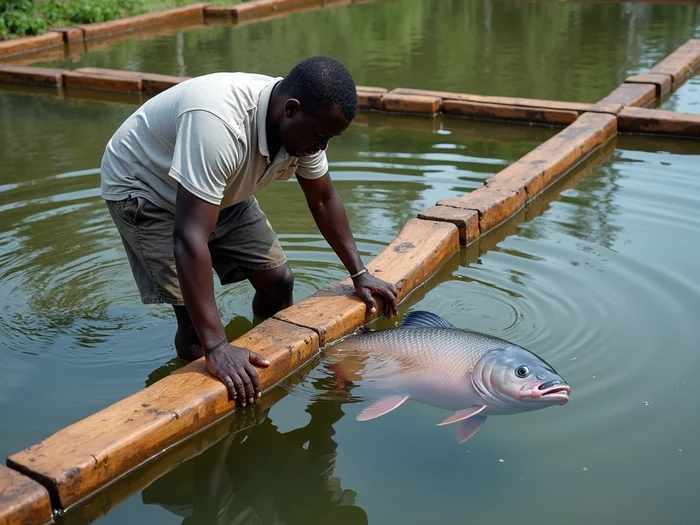
Pre-Installation Planning
You need to select your monk structure location at the deepest point of your pond, typically where natural drainage occurs during pond construction. Mark the exact position using stakes and string lines, ensuring the structure aligns with your planned outlet pipeline route to the drainage channel or storage pond. The location should provide easy access for maintenance whilst remaining far enough from feeding areas to avoid disturbing your African catfish during routine operations.
Water level assessment determines your monk structure height and outlet pipe elevation, requiring careful measurement of seasonal water variations and rainfall patterns. In Ghana's coastal regions, you might experience 40-50cm seasonal variations, whilst Uganda's highland areas see smaller fluctuations of 20-30cm. Measure your pond's maximum and minimum operating levels, then add 30-40cm safety margin for overflow protection during unexpected heavy rains.
Material procurement requires advance planning because specialised components like galvanised screens and PVC fittings may need ordering from urban suppliers. Create a complete materials list including cement (typically 8-10 bags for standard monk), aggregate (2-3 cubic metres), reinforcing steel (50-75kg), outlet pipe (100-200mm diameter), and wooden boards (15-20 pieces measuring 15cm x pond width). Order materials 2-3 weeks ahead to avoid construction delays that could affect your catfish production schedule.
Installation Steps for Monk Structures
Begin excavation by marking a rectangular area measuring 1.5m x 1.0m around your monk location, digging to 50-80cm below pond bottom depending on soil conditions. Remove all organic matter and loose soil, creating level bearing surfaces for your concrete foundation. Install the outlet pipe during excavation, ensuring proper slope (minimum 1:100) towards your drainage point and adequate bedding with sand or fine gravel to prevent pipe damage.
Pour your concrete foundation in a single operation, using 1:2:4 mix (cement:sand:aggregate) with adequate water for workability but avoiding excess that weakens the concrete. The foundation should measure 1.2m x 0.8m x 0.3m thick, with the outlet pipe properly positioned and sealed where it passes through the concrete. Install vertical reinforcing bars (12mm diameter) extending 60cm above foundation level to tie into the monk tower walls.
Construct the monk tower using either poured concrete or concrete blocks, creating internal dimensions of 40cm x 30cm with wall thickness of 10-15cm. Install the board slots during construction by embedding galvanised steel angles or cutting grooves 2-3cm deep into the walls. The slots should be spaced 15-20cm vertically to match your wooden board dimensions, with the bottom slot positioned 10cm above the outlet pipe invert to ensure complete drainage capability.
Install your screen system on the upstream face of the monk structure, using galvanised mesh with 6-8mm openings for grow-out ponds or 3-4mm for nursery operations. Secure the screen with removable clips or bolts to allow cleaning and replacement, ensuring the screen area exceeds your outlet pipe area by at least 50% to prevent flow restrictions. Test the entire system by filling the pond and checking for leaks, proper board seating, and adequate drainage flow rates before stocking with catfish.
Common Installation Challenges and Solutions
Misalignment between the monk structure and outlet pipe creates operational problems and potential structural failure, particularly when pipes settle differently than the concrete structure. Prevent this by using flexible pipe connections or installing the pipe and monk simultaneously with proper bedding and backfill. If misalignment occurs, you can often correct minor issues using rubber gaskets or flexible couplings, but major misalignment requires partial reconstruction.
Water infiltration during construction delays concrete curing and weakens the final structure, especially during Nigeria's rainy season when sudden downpours can flood excavations. Install temporary pumping systems or schedule construction during dry periods to maintain proper working conditions. If water infiltration occurs, remove standing water and allow surfaces to dry before continuing concrete work, as wet surfaces prevent proper bonding between concrete layers.
Inadequate compaction around the monk structure leads to settlement and potential structural damage within the first year of operation. Use mechanical compactors for backfill placement, working in 15cm lifts with proper moisture content for optimal density. Hand compaction rarely achieves adequate density, particularly in clay soils common across Ghana and Uganda, so invest in proper equipment rental or hire experienced contractors who understand compaction requirements for aquaculture structures.
Maintenance and Operational Protocols
You must establish regular maintenance routines for your monk structures because neglect leads to operational failures that can cost you entire catfish harvests. Proper maintenance prevents the gradual deterioration that affects water control precision, screen blockages that stress your fish, and structural problems that require expensive repairs. Most maintenance tasks take only 15-30 minutes but prevent problems that could take days to resolve and potentially harm your African catfish production.
Your maintenance schedule should align with catfish production cycles, performing major inspections during pond draining for harvest and routine checks during normal operations. The tropical climate across Nigeria, Ghana, and Kenya accelerates wear on exposed components, whilst the constant wet-dry cycles during water level adjustments stress joints and seals. Understanding these environmental factors helps you anticipate maintenance needs and prevent unexpected failures during critical production periods.
Effective maintenance protocols also improve your operational efficiency by ensuring monk structures respond quickly and accurately to water level adjustments. When your catfish reach harvest size, you need reliable drainage systems that function without delays or complications, because stressed fish lose weight and quality rapidly in confined spaces during harvesting operations. Implementing stress management techniques during water level changes protects your investment.
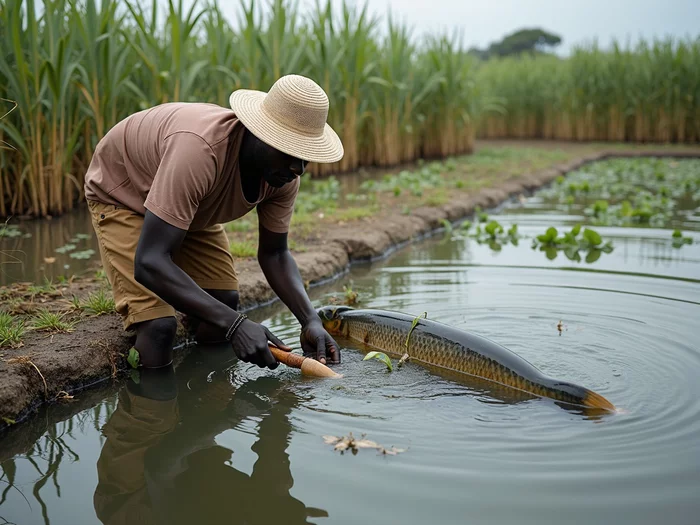
Routine Maintenance for Monk Structures
Inspect your monk structure screens weekly during normal operations, removing accumulated debris, algae, and organic matter that reduces water flow capacity. Use a stiff brush to clean screen surfaces, working from the upstream side to push debris away from the mesh openings. During catfish feeding periods, screens collect more organic matter due to increased biological activity, so you may need twice-weekly cleaning to maintain optimal flow rates.
Check wooden boards monthly for warping, cracking, or edge wear that creates gaps allowing fish escape or compromising water level control. Replace damaged boards immediately using seasoned hardwood that resists swelling and shrinkage in pond environments. Store spare boards in a dry location to prevent warping, and consider treating replacement boards with food-safe wood preservatives to extend their service life in tropical conditions.
Examine concrete surfaces quarterly for cracks, erosion, or joint separation that could worsen over time and compromise structural integrity. Small cracks (less than 2mm wide) can be sealed using hydraulic cement or epoxy injection, whilst larger cracks may indicate foundation problems requiring professional assessment. Pay particular attention to the junction between the monk structure and outlet pipe, where differential settlement often creates the first signs of structural stress.
Adjusting Water Control Systems
Adjust water levels gradually when managing African catfish, because rapid changes stress fish and can trigger disease outbreaks or feeding disruptions. Lower water levels by removing one board at a time, allowing 2-4 hours between adjustments for fish to adapt to changing conditions. During hot seasons across Nigeria and Ghana, maintain deeper water levels (1.2-1.4m) to provide thermal stability, whilst cooler periods allow shallower depths (0.8-1.0m) that warm more quickly and promote feeding activity.
Seasonal adjustments require different approaches depending on your local climate patterns and catfish production goals. During rainy seasons, set your monk boards to maintain maximum safe water levels whilst allowing overflow protection, typically leaving 20-30cm freeboard below the top board level. Dry season management focuses on conserving water whilst maintaining adequate depths for fish health, often requiring you to add boards as evaporation lowers pond levels.
Monitor water quality parameters when adjusting levels, because concentration effects can rapidly change oxygen levels, pH, and waste accumulation in your catfish ponds. Use dissolved oxygen metres to verify adequate levels (minimum 4-5 ppm) after water level changes, and be prepared to increase aeration or delay further adjustments if water quality deteriorates. African catfish tolerate water quality variations better than many species, but sudden changes still cause stress that affects growth rates and feed conversion efficiency. Similar principles apply to managing dissolved oxygen in tilapia ponds, where proper aeration techniques ensure healthy fish growth.
Troubleshooting Common Problems
Water loss around monk structures typically indicates seal failure between boards and slot walls, or gaps caused by warped boards that no longer fit properly. Check board edges for damage and ensure slots remain clean and free of debris that prevents proper seating. Apply food-grade sealant to minor gaps, but replace severely warped boards because temporary fixes often fail during critical operations like harvesting when you need reliable water control.
Screen clogging reduces drainage capacity and can cause water backup during heavy rains or emergency drainage situations. Install multiple screen panels if single screens cannot handle your flow requirements, and consider using coarser mesh (10-12mm) for the outer screen layer to catch large debris before it reaches finer mesh designed to retain catfish. Clean screens more frequently during algae blooms or after heavy feeding periods when organic matter accumulation accelerates.
Structural settlement creates operational problems including board binding, uneven water levels, and potential fish escape through enlarged gaps. Minor settlement (less than 2-3cm) can often be accommodated by adjusting board dimensions or adding shims, but major settlement requires foundation repair or structure replacement. Monitor settlement by marking reference points on the monk structure and measuring changes quarterly, particularly during the first two years after installation when most settlement occurs.
Cost Analysis and Environmental Considerations
You need accurate cost projections for monk structure installation because underestimating expenses can derail your catfish farming expansion plans or force you to compromise on quality that affects long-term performance. The initial investment in proper monk structures represents 3-5% of your total pond construction costs but provides water control capabilities that directly impact your harvesting efficiency and operational flexibility. Understanding the true costs helps you make informed decisions about material choices and construction approaches that balance affordability with durability.
Material costs vary significantly across African markets, with urban areas like Lagos and Nairobi offering more options but higher prices, whilst rural locations may have limited availability requiring transport costs that double material expenses. You must also consider the environmental impact of your material choices, particularly in regions where sustainable aquaculture practices are becoming increasingly important for market access and regulatory compliance.
Long-term cost analysis reveals that higher initial investments in quality materials often provide better value than cheaper alternatives that require frequent replacement or extensive maintenance. This becomes particularly relevant for catfish farmers planning to operate for 10-15 years or more, where the cumulative costs of maintenance and replacement can exceed initial construction expenses for inferior materials.
Cost Breakdown of Monk Structure Construction
Concrete monk structures typically cost ₦35,000-50,000 in Nigeria, including materials (cement, aggregate, reinforcing steel) at ₦25,000-35,000 and labour at ₦10,000-15,000 for skilled construction teams. Add ₦8,000-12,000 for outlet pipes, screens, and wooden boards, bringing total costs to ₦43,000-62,000 per structure. These costs assume local material availability and standard soil conditions that don't require special foundation treatments or extensive excavation.

PVC monk systems cost approximately 40% less than concrete versions, ranging from ₦20,000-30,000 for materials and ₦5,000-8,000 for installation labour in Ghana and Kenya. However, PVC structures may require replacement every 8-10 years due to UV degradation and thermal cycling, whilst concrete monks last 15-20 years with minimal maintenance. Calculate lifecycle costs by dividing total expenses by expected service life to determine true cost per year of operation.
Steel monk structures fall between concrete and PVC in initial costs (₦30,000-40,000) but require ongoing maintenance expenses for rust prevention and painting every 3-4 years. Factor in ₦3,000-5,000 annually for protective coatings and inspection, plus potential replacement costs if corrosion damage becomes severe. Steel works well in areas with skilled welding services but may be impractical in remote locations where maintenance support is limited.
Material Comparison and Environmental Impact
Concrete offers the longest service life (15-20 years) with minimal maintenance requirements, making it environmentally preferable due to reduced replacement frequency and lower long-term resource consumption. Local cement production in Nigeria, Ghana, and Egypt reduces transport-related environmental impacts, whilst the thermal mass of concrete structures helps moderate water temperature fluctuations that benefit African catfish health. However, cement production generates significant CO2 emissions, contributing to environmental concerns about concrete-intensive construction.
PVC provides lightweight installation advantages and requires less skilled labour, but petroleum-based plastics raise environmental concerns about sustainability and end-of-life disposal. PVC monk structures generate less construction waste initially but create disposal challenges when replacement becomes necessary after 8-10 years. Consider recycling options in your area, as some regions lack facilities for proper PVC disposal, leading to environmental contamination if structures are discarded improperly.
Wood components (boards and some structural elements) offer renewable resource advantages when sourced from sustainably managed forests, but tropical hardwoods suitable for aquaculture applications may come from environmentally sensitive areas. Investigate certified sustainable wood sources, or consider engineered wood products that use fast-growing plantation species rather than old-growth timber. Properly maintained wooden components last 5-8 years in pond environments, requiring periodic replacement that provides opportunities to upgrade to more sustainable materials as they become available.
Pro Tip: Lifecycle Cost Calculation
Calculate the true cost per year by dividing total expenses (initial + maintenance + replacement) by expected service life. A ₦50,000 concrete monk lasting 18 years costs ₦2,778 annually, whilst a ₦25,000 PVC system lasting 9 years costs ₦2,778 annually—making them equivalent despite different initial prices.
Summary Table
| Key Points | Details |
|---|---|
| Monk Structure Definition | A vertical tower system for managing water flow, featuring removable wooden boards and screens. |
| Structure Height | Height must exceed maximum pond depth by at least 30-40cm; typical total height is 1.8-2.0m. |
| Board Dimensions | Boards are 15-20cm in height, with internal slot depths of 2-3cm for secure seating. |
| Screen Mesh Size | Use 6-8mm openings for grow-out ponds and 3-4mm for nursery ponds. |
| Outlet Pipe Specifications | Use 100mm pipes for ponds up to 200m², 150mm for 200-500m², and 200mm for larger ponds. |
| Foundation Depth | Extend at least 50cm below pond bottom; may need 80-100cm in clay soils. |
| Material Options | Concrete: ₦45,000-60,000; PVC: ₦25,000-35,000, lasts 8-10 years; steel: ₦30,000-40,000 with high maintenance. |
| Cleaning Frequency | Screens should be cleaned weekly; wood boards need monthly checks. |
| Cost Efficiency | Investing in quality materials reduces lifetime costs and maintenance frequency. |
Conclusion
Proper monk structure installation gives you complete control over your catfish pond water levels, transforming harvesting from a stressful ordeal into a manageable process. Remember the key principles: match your structure size to pond dimensions, invest in quality materials that suit your local conditions, and establish regular maintenance routines from day one. These fundamentals determine whether your water control system serves you reliably for years or creates ongoing operational headaches.
You now have the technical knowledge to design, install, and maintain monk structures that meet your specific catfish production needs. Start with careful planning and material selection, then follow the installation steps methodically. Your skills will develop with each structure you build, and the investment pays dividends through improved harvesting efficiency and better pond management.
With reliable water control established, focus next on optimising your pond aeration systems and feeding schedules. Effective water management through monk structures creates the foundation for these other critical aspects of successful African catfish production.
Frequently Asked Questions
How do monk structures improve African catfish harvesting efficiency?
Monk structures allow you to gradually lower water levels, concentrating your African catfish in a smaller area. This controlled drainage makes netting easier and reduces stress on the fish compared to rapid water removal. Less stress means improved fish quality and easier handling during harvest.
What factors should I consider when choosing materials for my monk structure?
You should consider durability, cost, and local availability. Concrete offers the longest service life (15-20 years) and withstands harsh conditions, but has higher initial costs. PVC is more affordable and lighter but may need replacement every 8-10 years. Mild steel is strong but requires regular maintenance to prevent corrosion.
How high should my monk structure be in relation to my catfish pond depth?
Your monk structure's total height should exceed your pond's maximum depth by at least 30-40cm. This extra height allows for overflow protection during heavy rains. For example, a pond with a 1.5m maximum depth would require a monk tower of approximately 1.8-2.0m in height.
How often should I clean the screens on my monk structure?
You should inspect and clean your monk structure screens weekly during normal operations. Remove any accumulated debris, algae, and organic matter to maintain optimal water flow. During periods of heavy feeding or algae blooms, you may need to clean them twice weekly.
What are the consequences of inadequate compaction around a monk structure during installation?
Inadequate compaction of backfill materials around the monk structure can lead to settlement and potential structural damage within the first year. This can cause problems like board binding, uneven water levels, and even gaps that allow African catfish to escape. Use mechanical compactors and work in thin lifts to achieve proper density.


Yomi Adisa Lead Researcher
Yomi Adisa is the lead researcher at Fish Farming Business, where he studies what makes aquaculture ventures profitable across Africa. His research focuses on market patterns, buyer preferences, and the business decisions that determine success or failure in fish farming.