How to Build a Catfish Pond: Step-by-Step Construction Guide for Farmers
Posted on: 2025-11-11
By: Yomi Adisa
How to Build a Catfish Pond: Step-by-Step Construction Guide for Farmers
You've watched other farmers succeed with catfish farming while your own attempts have ended in frustration—ponds that leak, fish that die mysteriously, and water that never seems quite right. The difference isn't luck or secret knowledge; it's understanding that proper pond construction creates the foundation for everything that follows in catfish farming.
📑 Table of Contents
Building a catfish pond isn't simply about digging a hole and filling it with water. Your pond design determines fish survival rates, feeding efficiency, water quality management, and ultimately your profit margins. A poorly constructed pond becomes a constant source of problems—seepage that drains your water and budget, poor drainage that makes harvesting difficult, and water quality issues that stress fish and invite disease.
Meanwhile, a well-designed pond creates a productive ecosystem where catfish thrive with minimal intervention, generating consistent profits cycle after cycle. Many aspiring catfish farmers lose their initial investment because they approach pond construction without understanding soil requirements, water management systems, or proper drainage design. They dig ponds that won't hold water, choose locations that flood during rains, or create systems that become expensive maintenance nightmares.
This complete construction guide eliminates the guesswork that destroys farming dreams. You'll learn precise site selection criteria that ensure your pond holds water and drains properly, construction specifications for different pond types suited to various conditions, water management systems that maintain optimal fish health, and maintenance practices that keep your investment productive for decades. Whether you're building your first 50-square-metre pond or expanding to commercial scale, you'll understand exactly what needs to be done and why it matters.
🎯 What You'll Learn
- Learn how to select the ideal site and soil type for your catfish pond to ensure water retention and optimal fish growth.
- Master the construction techniques for different pond types, including embankment and watershed ponds, to maximise drainage and minimise costs.
- Discover effective water management practices, including regular quality testing and aeration, to maintain a healthy environment for your catfish.
Picture this: Adebayo, a farmer in Ogun State, started with just a small earthen pond behind his house three years ago. Today, he operates five well-constructed catfish ponds that generate 800,000 naira monthly. The difference wasn't luck or expensive equipment – it was understanding how to build proper catfish ponds that create the right environment for healthy, fast-growing fish.
Building a catfish pond isn't just about digging a hole and filling it with water. Your pond design determines everything from fish survival rates to feeding efficiency, water quality management, and ultimately your profit margins. A poorly constructed pond leads to constant water quality problems, disease outbreaks, and frustrated fish that refuse to grow.
A well-built pond becomes a productive ecosystem where catfish thrive with minimal intervention. This guide provides you with complete technical knowledge for constructing catfish ponds that work in African conditions. You'll learn precise site selection criteria, construction specifications for different pond types, water management systems that maintain optimal fish health, and maintenance practices that keep your investment productive for years.
Site Selection and Planning
Understanding Soil Types
Your soil type determines whether your pond holds water or becomes an expensive muddy disappointment. Clay content is your best friend in pond construction – you need at least 20% clay content for good water retention, with 30-40% being ideal. Clay particles swell when wet, creating a natural seal that prevents water seepage.
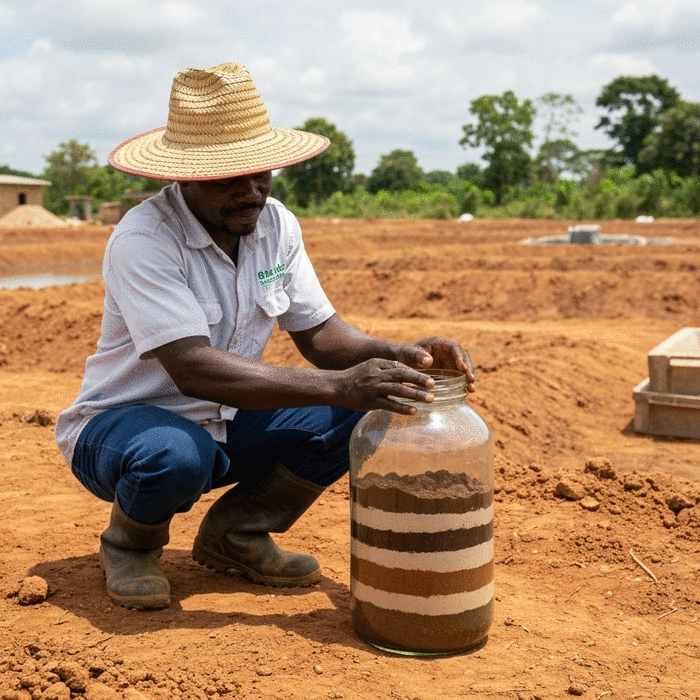
Test your soil by taking samples from different depths – surface soil, 0.5 metres down, and 1 metre down. The jar test works perfectly: fill a clear jar one-third with soil, add water to two-thirds full, shake vigorously, then let it settle for 24 hours. Clay settles at the bottom, sand in the middle, and organic matter floats on top.
Sandy soils drain too quickly and require expensive liner materials. Rocky soils create excavation nightmares and equipment damage. Highly organic soils (like swampland) decompose underwater, consuming oxygen your fish need.
Evaluating Water Sources
Reliable water supply makes or breaks your catfish operation. Boreholes provide the most consistent supply but require initial investment of 150,000-300,000 naira depending on depth. Surface water from streams or rivers costs less initially but brings seasonal variations and potential contamination risks.
Test your water source for pH (ideal range 6.5-8.5), dissolved oxygen (should be above 5mg/L), temperature stability, and absence of industrial pollutants. Water from areas with heavy fertiliser use often contains nitrates that trigger algae blooms. Iron-rich water (common in many Nigerian locations) turns reddish-brown and stresses fish gills.
Calculate your water needs accurately: a 100-square-metre pond at 1.5 metres depth requires 150,000 litres initially, plus 5-10% weekly replacement for evaporation and water changes. Your source must reliably provide this volume even during dry season.
Assessing Topography and Drainage
Natural slope between 1-3% provides excellent drainage control without excessive excavation costs. Gentle slopes allow gravity-fed water systems and natural drainage during pond cleaning. Steep slopes require expensive terracing and create erosion problems during heavy rains.
Avoid low-lying areas that flood during rainy season – floodwater carries diseases, parasites, and contaminants that devastate catfish populations. Similarly, avoid hilltops where water pumping costs become prohibitive. The sweet spot is mid-slope locations with natural windbreaks from trees or buildings.
Plan your pond layout following the natural contours. Rectangular ponds aligned with slope direction provide better water circulation than square ponds. For multiple ponds, position them at different elevations to enable gravity-fed water flow from one pond to the next, reducing pumping costs significantly.
Legal and Permitting Considerations
Most states require environmental impact assessments for ponds larger than 500 square metres or commercial operations exceeding 1000 fish. Contact your State Ministry of Agriculture and Rural Development for specific requirements. Permits typically cost 15,000-50,000 naira and take 2-8 weeks to process.
Water rights become critical if you're using surface water sources. Rivers, streams, and major water bodies often have usage restrictions, especially during dry seasons. Borehole permits require geological surveys and may have depth restrictions to protect community water supplies.
Check local zoning laws – some residential areas prohibit commercial aquaculture, while agricultural zones may have setback requirements from property boundaries. Insurance companies increasingly require proper permits before covering aquaculture operations, making legal compliance essential for risk management.
Types of Catfish Ponds and Construction Steps
Embankment/Levee Ponds
Embankment ponds work excellently on relatively flat terrain where you build walls (levees) above ground level to contain water. These ponds offer superior drainage control and easier harvesting since you can drain completely by gravity. Construction involves building earthen walls 1.5-2 metres high with 3:1 slope ratios (3 metres horizontal for every 1 metre vertical) for stability.
Your levee base should be 4-5 metres wide, tapering to 2-3 metres at the top to support vehicle traffic during maintenance. Compact soil in 20-centimetre layers using heavy machinery or manual tamping. The inner slope requires protection from wave erosion – either plant grass or install rock protection along the waterline.
Install a monk board or standpipe drainage system at the deepest point. A monk board system costs 25,000-40,000 naira but provides precise water level control. The drain outlet should be 30 centimetres below the desired water level, allowing complete drainage when needed.
Watershed Ponds
Watershed ponds rely on natural rainfall and runoff to maintain water levels, making them cost-effective in high-rainfall areas receiving over 1000mm annually. These ponds work by damming natural drainage channels or constructing berms across gentle valleys to capture runoff water.
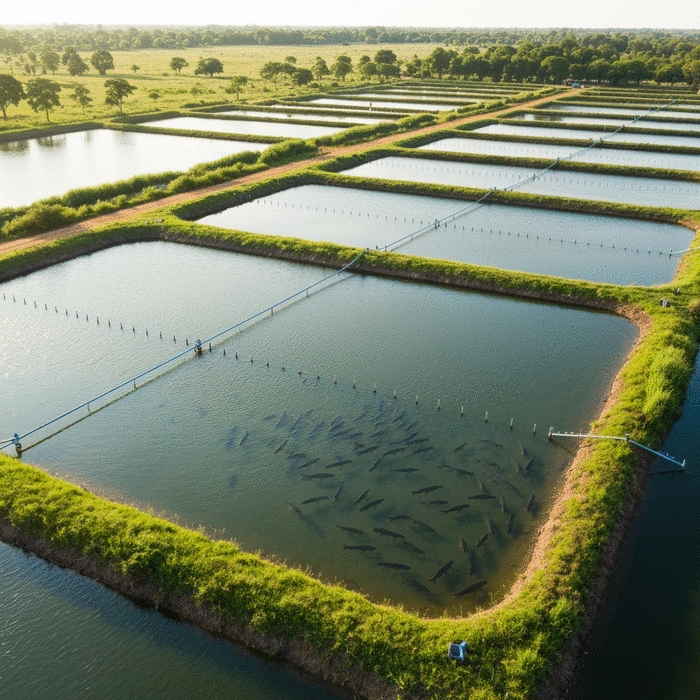
Calculate your watershed area carefully – you need approximately 10-15 hectares of drainage area for each hectare of pond surface in areas receiving 1200-1500mm annual rainfall. Less rainfall requires larger watershed areas. The spillway becomes critical for watershed ponds – size it to handle 25-year flood events to prevent dam failure during extreme weather.
Construct spillways 1.5-2 times wider than you think necessary. Emergency spillways should activate 30 centimetres below the dam crest. Use concrete or stone lining to prevent erosion.
Hybrid Ponds
Hybrid ponds combine embankment construction with watershed water collection, providing water security with manageable construction costs. You build levees on three sides while using natural high ground or existing slopes for the fourth side. This reduces excavation costs by 30-40% while maintaining good drainage control.
Design hybrid ponds with both spillway systems for excess water removal and pump-fed systems for dry season water additions. The natural side should have the spillway to handle overflow, while the constructed sides contain the drainage system for pond management.
Hybrid ponds work exceptionally well in areas with distinct wet and dry seasons. During rains, natural runoff maintains water levels. During dry periods, you supplement with pumped water or stored rainwater.
Pond Construction Techniques
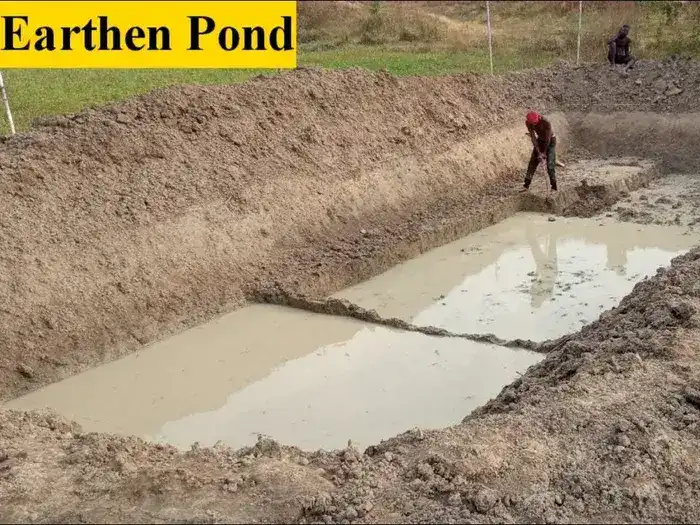
Begin excavation during dry season when soil conditions are optimal and equipment access is easier. Mark your pond boundaries with stakes and string, then strip and stockpile topsoil separately – you'll use this fertile soil for levee surfaces where you'll plant grass for erosion control.
Excavate in benches rather than steep sides. Create a shallow area (0.5-1 metre deep) covering 20-30% of pond surface for fish feeding and natural food production. The main pond area should be 1.5-2 metres deep, with a harvest basin at 2.5-3 metres depth covering 10-15% of the bottom area.
Compact the pond bottom and sides using sheep's foot rollers or manual tamping. Proper compaction prevents seepage and extends pond life. Install water control structures before final grading – retrofitting drainage systems costs three times more than initial installation.
| Pond Type | Advantages | Disadvantages | Cost Range (Naira per square metre) |
|---|---|---|---|
| Embankment/Levee Ponds | Superior drainage control, easier harvesting | Higher construction cost | 2000-3500 |
| Watershed Ponds | Cost-effective in high rainfall areas | Requires larger land areas | 1000-2000 |
| Hybrid Ponds | Balances cost and water security | Complexity in design | 1500-2500 |
Water Management and Pond Maintenance
Maintaining Water Quality
Water quality determines fish health, growth rates, and survival more than any other factor. Test pH weekly using digital metres (15,000-25,000 naira) or test strips (500 naira for 50 tests). Catfish tolerate pH between 6.5-8.5, but rapid changes stress fish more than absolute values.
Monitor dissolved oxygen daily, especially during hot weather and after heavy feeding. Oxygen levels below 3mg/L cause fish kills within hours. Early morning readings (5-6 AM) show minimum levels when fish stress is highest.
Check ammonia and nitrite levels weekly using test kits designed for aquaculture. Ammonia above 0.5ppm and nitrite above 0.1ppm indicate overfeeding or inadequate biological filtration. Reduce feeding by 50% and increase water exchange until levels normalise.
| Parameter | Ideal Range | Monitoring Frequency | Action Required if Out of Range |
|---|---|---|---|
| pH | 6.5-8.5 | Weekly | Add lime if below 6.5, increase organic matter if above 8.5 |
| Dissolved Oxygen | Above 5mg/L | Daily | Install aerators if below 3mg/L |
| Ammonia | Below 0.5ppm | Weekly | Reduce feeding and increase water exchange if above |
Drainage and Water Level Control
Maintain water levels 10-15 centimetres below spillway level during normal operations. This buffer prevents accidental drainage during heavy rains while allowing controlled overflow if needed. During dry season, water levels may drop 2-3 centimetres weekly due to evaporation – plan water additions accordingly.
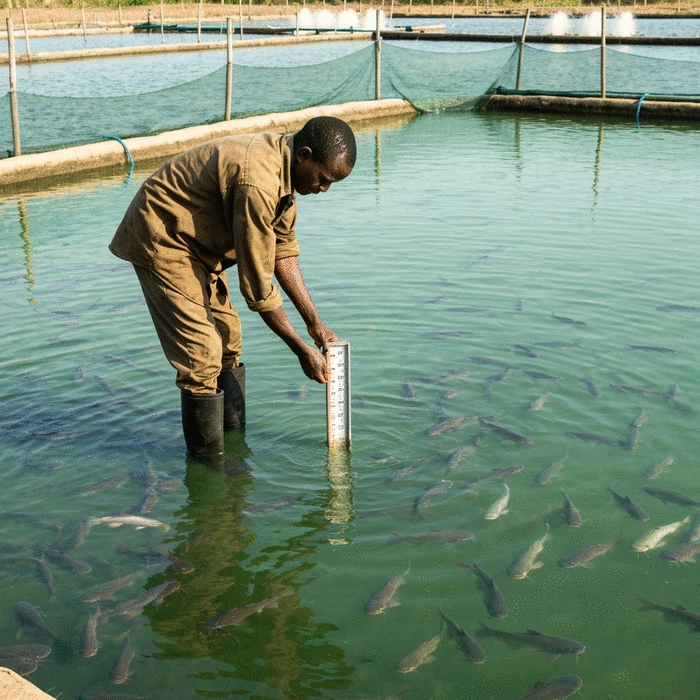
Install water level gauges (simple marked poles work perfectly) at multiple locations to monitor uniformly. Uneven water levels indicate seepage problems or blocked drainage channels. Address seepage immediately by adding bentonite clay (200-300 naira per kilogram) or plastic liner patches.
Schedule complete pond draining annually for cleaning and maintenance. Drain slowly over 2-3 days to avoid shocking fish and to allow beneficial bacteria populations to survive in mud. Remove accumulated sediment exceeding 10 centimetres depth – excess organic matter consumes oxygen and produces toxic gases.
Regular Maintenance Practices
Inspect levees monthly for cracks, animal burrows, or erosion damage. Small cracks can be sealed with clay-rich soil, but larger damage requires professional repair. Maintain grass cover on levee surfaces – grass roots strengthen soil structure and prevent erosion during heavy rains.
Clean inlet and outlet screens weekly to prevent clogging. Blocked screens cause water level fluctuations and poor circulation. Remove aquatic weeds before they cover more than 30% of pond surface.
Monitor pond banks for erosion, especially after storms. Repair erosion damage immediately with rock protection or grass planting. Eroded soil clouds water and provides surfaces for harmful bacteria growth.
Stocking Density and Fish Health
Stock catfish fingerlings at 100-150 per square metre for intensive production or 50-75 per square metre for extensive systems. Higher densities require better water quality management and more frequent feeding. Purchase fingerlings from certified hatcheries to avoid disease introduction – healthy fingerlings cost 8-15 naira each but diseased cheap fingerlings destroy entire pond populations.
Monitor fish behaviour daily during feeding times. Healthy catfish feed aggressively and swim actively. Lethargic fish, surface gasping, or reduced feeding indicate stress or disease problems.
Check fish growth monthly by sampling 10-20 fish and weighing them. Catfish should gain 30-50 grams monthly under good conditions. Poor growth rates indicate overcrowding, poor nutrition, or water quality problems.
| System Type | Stocking Density (per square metre) | Water Quality Management Needs |
|---|---|---|
| Intensive System | 100-150 | High (frequent testing, aeration) |
| Extensive System | 50-75 | Moderate (less frequent testing) |
Disease Prevention Strategies
Quarantine new fish for 7-10 days before introducing them to production ponds. Use separate equipment for quarantine facilities to prevent cross-contamination. Treat quarantine water with salt (3-5 grams per litre) to reduce parasite loads and stress.
Maintain biosecurity by disinfecting boots, nets, and equipment between ponds. Simple bleach solutions (10ml per litre water) kill most pathogens. Limit visitor access to pond areas and provide disinfection facilities for essential personnel.
Common catfish diseases include bacterial infections, fungal problems, and parasites. Bacterial infections appear as red spots, ulcers, or fin rot. Fungal infections create white, cotton-like growths.
| Disease | Symptoms | Treatment | Prevention Measures |
|---|---|---|---|
| Bacterial Infections | Red spots, ulcers | Approved aquaculture medicines | Quarantine new fish |
| Fungal Infections | White, cotton-like growths | Approved antifungal treatments | Maintain water quality |
| Parasites | Excessive mucus production, erratic swimming | Approved antiparasitic medications | Biosecurity measures |
Cost Estimation and Budgeting
Material Costs
Excavation costs vary significantly based on soil type and equipment availability. Hand excavation costs 150-200 naira per cubic metre but may be the only option in remote areas. Mechanical excavation using bulldozers costs 50-80 naira per cubic metre for large projects but requires minimum volumes of 500-1000 cubic metres to justify equipment mobilisation.
Clay for pond sealing costs 300-500 naira per cubic metre delivered, depending on distance from source. You'll need 0.1-0.2 cubic metres per square metre of pond bottom for adequate sealing. Concrete for water control structures costs 15,000-25,000 naira per cubic metre including labour.
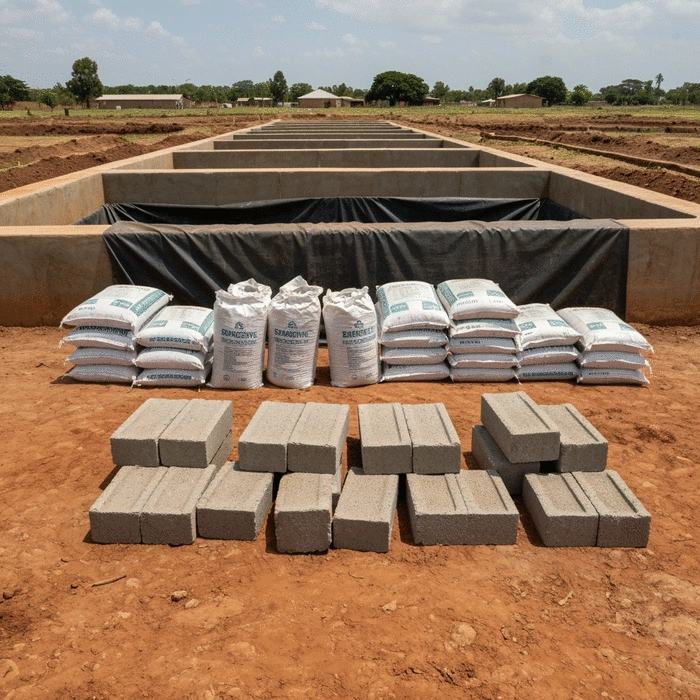
Plastic pond liner provides alternative sealing for problem soils at 800-1200 naira per square metre installed. While expensive initially, liners eliminate seepage problems and extend pond life significantly. Include 10-15% extra material for overlaps and repairs when calculating liner requirements.
Labour and Equipment Costs
Skilled pond construction labour costs 3000-5000 naira daily for experienced workers who understand compaction requirements and water control installation. Unskilled labour costs 1500-2500 naira daily but requires supervision to ensure quality work. Budget one skilled worker for every three unskilled workers on construction teams.
Equipment rental varies by location and season. Bulldozers cost 25,000-40,000 naira per day including operator and fuel. Compaction equipment costs 8,000-15,000 naira daily.
Include 15-20% contingency for unexpected costs like rock removal, additional clay requirements, or weather delays. Construction projects rarely finish exactly on budget, and contingency funds prevent project delays when problems arise.
Long-term Financial Planning
A well-constructed 100-square-metre pond costs 200,000-350,000 naira initially but produces 150-200kg of catfish every six months. At current market prices of 800-1000 naira per kilogram, gross revenue reaches 120,000-200,000 naira per cycle. Feed costs consume 60-70% of revenue, leaving 35,000-70,000 naira profit per cycle.
Annual maintenance costs typically run 5-10% of initial construction cost. This includes pond cleaning, equipment maintenance, and minor repairs. Major renovations every 5-7 years cost 30-50% of original construction cost but extend pond life significantly.
Plan for equipment replacement schedules – aerators last 3-5 years, water pumps need overhaul every 2-3 years, and concrete structures require maintenance every 5-10 years. Setting aside 10% of gross revenue for equipment replacement prevents production interruptions when equipment fails. For more detailed long-term financial planning, consider consulting a financial advisor specializing in aquaculture.
| Cost Category | Cost Range (Naira) | Notes |
|---|---|---|
| Excavation (per cubic metre) | 50-200 | Mechanical vs hand excavation |
| Clay sealing (per cubic metre) | 300-500 | Delivered cost varies by distance |
| Concrete structures (per cubic metre) | 15,000-25,000 | Including labour |
| Plastic pond liner (per square metre) | 800-1200 | Installed cost |
| Skilled labour (daily) | 3,000-5,000 | Experienced workers |
| Bulldozer rental (daily) | 25,000-40,000 | Including operator and fuel |
| Contingency (of total cost) | 15-20% | For unexpected expenses |
For a more detailed breakdown and tips on managing expenses, check out this budget-friendly catfish pond guide.
Environmental Best Practices and Sustainability
Minimising Water Usage and Waste
Implement recirculation aquaculture systems (RAS) where feasible. RAS reduces water usage by 90-95% compared to flow-through ponds, but requires significant initial investment (500,000-1,000,000 naira for a small system) and advanced technical skills. For earthen ponds, reduce water exchange by optimising feeding rates and maintaining good aeration.
Collect rainwater from roofs and impermeable surfaces for pond top-ups. A 100-square-metre roof can collect 100,000 litres of water from 1000mm annual rainfall. Store in covered tanks to prevent evaporation and contamination.
Treat pond effluent before discharge. Sedimentation ponds remove solids, while constructed wetlands (planting specific aquatic plants) remove excess nutrients. This prevents pollution of natural waterways and protects local ecosystems.
Sustainable Feed and Stocking
Use high-quality, sustainably sourced fish feed. Look for feeds with FCR (Feed Conversion Ratio) below 1.2, meaning less feed is required per kilogram of fish produced. Explore alternative protein sources like insect meal or plant-based proteins to reduce reliance on wild-caught fish meal.
Stock native catfish species adapted to local conditions. Native species are more resistant to local diseases and require less intervention. Avoid introducing exotic species that can outcompete native fish or disrupt ecosystems if they escape.

Practice polyculture (raising multiple species in one pond) where appropriate. Tilapia can help control algae, while certain filter feeders improve water quality. Ensure species are compatible and do not compete for the same food sources.
Biodiversity and Ecosystem Protection
Maintain vegetated buffer zones around your ponds. These zones filter runoff, prevent erosion, and provide habitat for local wildlife. Plant native trees and shrubs that require minimal water and maintenance.
Avoid using pesticides or herbicides near pond areas. Runoff from these chemicals can be highly toxic to fish and aquatic invertebrates. Explore biological pest control methods or manual removal of weeds.
Educate your community about sustainable aquaculture practices. Share your knowledge and encourage responsible farming to protect shared water resources and ecosystems. Participate in local environmental initiatives and collaborate with other farmers to promote best practices.
Summary: Key Construction and Management Considerations
Building a successful catfish pond requires careful planning and execution. From selecting the right site with appropriate soil and water sources to implementing robust construction techniques for embankment, watershed, or hybrid ponds, every step is crucial. Effective water management, including regular quality testing and drainage control, is paramount for fish health.
Long-term financial planning and budgeting for materials, labour, and maintenance ensure the sustainability of your operation. Finally, adopting environmental best practices, such as minimising water usage, using sustainable feed, and protecting biodiversity, contributes to both ecological health and the longevity of your catfish farming business.
Conclusion
The journey to successful catfish farming begins with a well-constructed pond. By following the detailed steps and considerations outlined in this guide, you can avoid common pitfalls and build a foundation for a thriving aquaculture business. Remember, your pond is an ecosystem, and its design and management directly impact your fish's health and your farm's profitability. Invest time in planning, use quality materials, and commit to sustainable practices, and you will reap the rewards of a productive and profitable catfish farm for years to come.
Frequently Asked Questions
What is the ideal soil type I should look for when selecting a site for my catfish pond?
You should aim for clay soils with 20-30% clay content, as these provide excellent water retention and create naturally sealed pond bottoms. Test your soil at various depths (30cm, 60cm, and 1 metre) to ensure increasing clay content, which offers natural sealing properties. Avoid sandy soils that drain too quickly or heavy clay that can crack.
How can I effectively reduce water evaporation in my pond, especially in dry regions?
In dry land areas, you can significantly reduce evaporation by installing shade structures over 30-40% of your pond surface, using cost-efficient materials like bamboo frames with palm fronds or shade cloth. Additionally, consider constructing deeper ponds (2-2.5 metres) as the increased water volume provides better thermal stability and reduces the impact of daily evaporation.
Why is it important to build core trenches beneath the levees of my catfish pond?
Installing core trenches beneath levee centrelines is crucial to prevent seepage through the pond's foundation. These trenches, excavated 50cm wide and 30-50cm deep into impermeable soil layers and backfilled with high-clay content material, create an effective seepage barrier. This technique significantly reduces water loss, particularly important in sandy or permeable soils.
How do I determine the appropriate size for my pond's drainage system to ensure efficient water removal?
Your drainage system should be designed for complete pond evacuation within 6-12 hours. For ponds up to 1,000 square metres, install drain pipes with a minimum 15cm diameter, increasing to 20-25cm for larger operations. Ensure drain inlets are at the deepest point with protective screens and construct outlets with energy dissipation features to prevent erosion.
Can I use rainwater harvesting to supplement my pond's water supply, and if so, how?
Yes, you can effectively use rainwater harvesting to supplement your primary water sources during rainy seasons. Your pond surfaces themselves can act as catchment areas, or you can dedicate collection areas that drain into storage tanks or reservoirs. A 1,000 square metre pond can collect 750-1,000 litres per millimetre of rainfall, providing substantial water volumes.


Yomi Adisa Lead Researcher
Yomi Adisa is the lead researcher at Fish Farming Business, where he studies what makes aquaculture ventures profitable across Africa. His research focuses on market patterns, buyer preferences, and the business decisions that determine success or failure in fish farming.