Calculating Pond Size and Stocking Density for Maximum Catfish Production Efficiency
Posted on: 2025-11-07
By: Yomi Adisa
Calculating Pond Size and Stocking Density for Maximum Catfish Production Efficiency
Picture this: You've just invested 200,000 naira in constructing your first catfish pond, bought 2,000 fingerlings at 12 naira each, and eagerly stocked your pond. Six months later, instead of the robust 1kg fish you expected, you're harvesting stunted 400g catfish that barely cover your feed costs. Sound familiar? This scenario plays out across countless catfish farms from Lagos to Kumasi, not because farmers lack dedication, but because they've missed the critical relationship between pond size and stocking density.
📑 Table of Contents
Understanding how to calculate optimal pond dimensions and determine the right number of fish per square metre isn't just technical knowledge—it's the foundation that separates profitable catfish farming from expensive disappointment. When you master these calculations, you're not just putting fish in water; you're creating a balanced ecosystem where each catfish has enough space, oxygen, and resources to reach its full growth potential. The mathematics behind pond sizing and stocking density directly impacts every aspect of your operation: feed conversion rates, disease resistance, water quality management, and ultimately, your profit margins.
A properly sized pond with optimal stocking density can yield 15-25kg of catfish per square metre annually, whilst an overcrowded pond might struggle to produce 8kg per square metre. The difference between these outcomes lies in understanding the technical principles we'll explore in this comprehensive guide. You'll learn step-by-step calculation methods for different pond types, how to adjust densities based on seasonal conditions and water quality, and proven management strategies that maximise both fish health and your return on investment.
🎯 What You'll Learn
- Learn how to calculate pond volume and determine the optimal stocking density to maximise catfish growth and production efficiency
- Master the relationship between water quality management and stocking density to ensure healthy fish and reduce disease risk
- Discover effective seasonal adjustments in stocking density to adapt to environmental changes and enhance overall farm profitability
Understanding Pond Size and Its Impact on Stocking Density
Importance of Pond Size in Catfish Farming
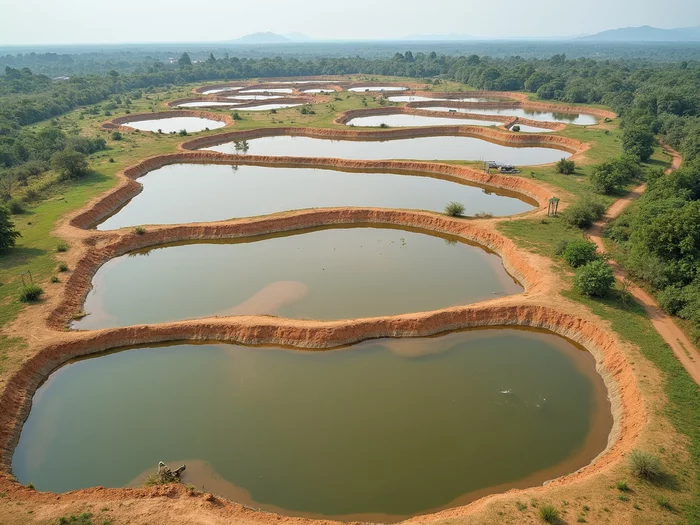
Pond size forms the foundation of your entire catfish production system, determining not just how many fish you can raise, but how well they'll grow and survive. Think of your pond as a living apartment building—the total floor space dictates how many residents can live comfortably, whilst the room dimensions affect their quality of life. In catfish farming, pond size directly controls the carrying capacity, which is the maximum number of fish your system can support whilst maintaining healthy growth rates and water quality.
The relationship between pond size and carrying capacity isn't simply about water volume. A larger pond provides greater water stability, meaning temperature fluctuations are less dramatic, dissolved oxygen levels remain more consistent, and waste products become diluted across a larger area. These factors combine to create an environment where catfish experience less stress, grow more efficiently, and show greater resistance to disease. Conversely, smaller ponds require more intensive management because changes in water quality happen rapidly and can quickly become critical.
Calculating Pond Volume and Influencing Factors
Calculating your pond volume accurately is essential for determining stocking density, feed requirements, and medication dosages. For rectangular ponds, use this formula: Volume = Length × Width × Average Depth. Always measure in metres to maintain consistency with standard stocking density calculations. For example, a rectangular pond measuring 20m × 10m × 1.5m deep contains 300 cubic metres of water.
Circular ponds require a different approach: Volume = π × (radius)² × Average Depth. A circular pond with a 10m diameter (5m radius) and 1.5m depth contains approximately 118 cubic metres. Remember that the effective volume is usually 10-15% less than calculated volume due to pond slopes, equipment placement, and maintaining freeboard (the space between water surface and pond top).
Several environmental factors influence your optimal pond size decisions. In Nigeria's tropical climate, larger ponds (above 200 square metres) maintain more stable temperatures during harmattan winds and rainy season fluctuations. Your water source capacity also determines practical pond size—if you're relying on borehole water, ensure your source can fill and regularly top up your chosen pond size. Areas with frequent power outages benefit from larger ponds because they provide more time to respond to aeration system failures.
Operational factors include your available land, initial capital, and production goals. A commercial operation targeting 5 tonnes annually needs different pond sizing than a farmer producing for local markets. Nigerian regulations typically require pond construction permits for facilities above certain sizes, and some states have specific guidelines about pond depths and setback distances from property boundaries.
Stocking Density Fundamentals
What is Stocking Density?
Stocking density measures how many fish you place in a given volume or area of water, typically expressed as fish per cubic metre or fish per square metre. This measurement determines the success or failure of your entire production cycle because it directly affects fish growth rates, survival percentages, feed conversion efficiency, and disease susceptibility. Getting stocking density right means finding the sweet spot where you maximise production without compromising fish health or water quality.
Understanding stocking density is crucial for maximising production efficiency because it influences every biological and economic aspect of your farm. Higher densities can potentially increase total yield per pond, but they also increase stress, reduce individual growth rates, and demand more intensive management. Lower densities typically produce larger individual fish with better survival rates but may not maximise your pond's productive potential. The key lies in finding the optimal density that balances total production with fish health and management practicality.
Carrying Capacity of Different Pond Types
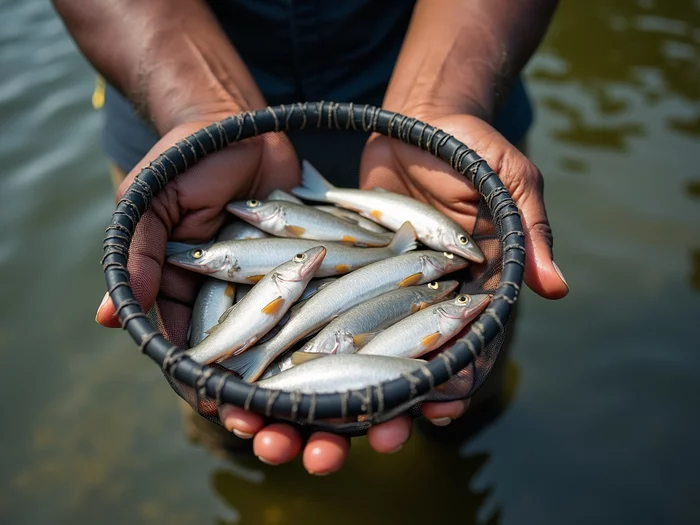
Concrete ponds offer the highest carrying capacity due to their superior water quality control and durability. These systems can typically support 200-300 fingerlings per square metre, depending on aeration and water management systems. The smooth surfaces prevent bacterial buildup, allow for thorough cleaning, and provide excellent water circulation. A well-managed concrete pond with adequate aeration can achieve densities up to 400 fish per square metre for intensive production systems.
Tarpaulin ponds represent the middle ground, supporting 150-250 fingerlings per square metre under proper management. These systems require careful attention to water quality because the plastic liner can retain heat and create temperature fluctuations. However, their controlled environment and ease of cleaning make them suitable for moderate to high-density stocking when combined with adequate aeration and regular water monitoring.
Earthen ponds typically support lower densities of 100-200 fingerlings per square metre due to their natural buffering capacity and biological processes. Whilst they provide excellent water stability and natural food production through pond ecosystems, they're harder to clean and monitor. The soil bottom can harbour pathogens and makes waste removal challenging, necessitating more conservative stocking approaches.
| Pond Type | Carrying Capacity (fingerlings/m²) | Water Quality Control | Management Requirements |
|---|---|---|---|
| Concrete Pond | 200-300 fingerlings/m² | Superior | High |
| Tarpaulin Pond | 150-250 fingerlings/m² | Moderate | Moderate |
| Earthen Pond | 100-200 fingerlings/m² | Natural | Lower |
Growth vs. Efficiency Trade-offs
Lower stocking densities (100-150 fish per square metre) typically produce faster individual growth rates, with catfish reaching 1-1.2kg in 6 months under good management. These fish show better feed conversion ratios (1.2-1.4kg feed per 1kg fish), higher survival rates (90-95%), and greater resistance to disease. However, total pond yield might be lower because you're not fully utilising the pond's productive capacity.
Higher stocking densities (250-300 fish per square metre) can increase total production per pond but often result in smaller individual fish (700-900g at 6 months) and higher feed conversion ratios (1.6-1.8kg feed per 1kg fish). Survival rates may drop to 80-85%, and disease outbreaks become more likely due to stress and competition. The economic considerations for catfish farming becomes complex: more fish per pond versus smaller individual size and higher production costs.
The optimal balance often lies in moderate densities (180-220 fish per square metre) that achieve good individual growth rates whilst maximising pond utilisation. This approach typically yields 15-20kg per square metre annually with fish averaging 800g-1kg at harvest, providing the best combination of production efficiency and economic returns for most commercial operations.
Calculating and Managing Optimal Stocking Density
Step-by-Step Calculation Process
Begin by accurately measuring your pond dimensions and calculating total surface area. For a rectangular pond: Surface Area = Length × Width. For circular ponds: Surface Area = π × (radius)². Record these measurements carefully because all subsequent calculations depend on this foundation data.
Next, determine your target fish size at harvest and production timeline. If you're targeting 1kg fish in 6 months, you'll stock at lower densities than if you're producing 600g fish in 4 months. Consider your market requirements—some buyers prefer smaller fish, whilst others pay premium prices for larger specimens.
Calculate your base stocking density using this formula: Stocking Density = (Target Production ÷ Average Fish Weight) ÷ Surface Area. For example, if you want to produce 3,000kg from a 200 square metre pond with average fish weight of 1kg: (3,000 ÷ 1) ÷ 200 = 15 fish per square metre. However, account for mortality by increasing initial stocking by 10-15%, giving you approximately 17 fingerlings per square metre.
Here's a complete sample calculation: A farmer in Ogun State has a 15m × 8m rectangular concrete pond (120 square metres). Targeting 1,800kg total production with 900g average fish weight means needing 2,000 fish at harvest. Accounting for 10% mortality requires stocking 2,200 fingerlings. Final stocking density: 2,200 ÷ 120 = 18.3 fingerlings per square metre. This conservative density allows for good growth rates whilst maximising production.
Adjusting Stocking Density for Water Quality
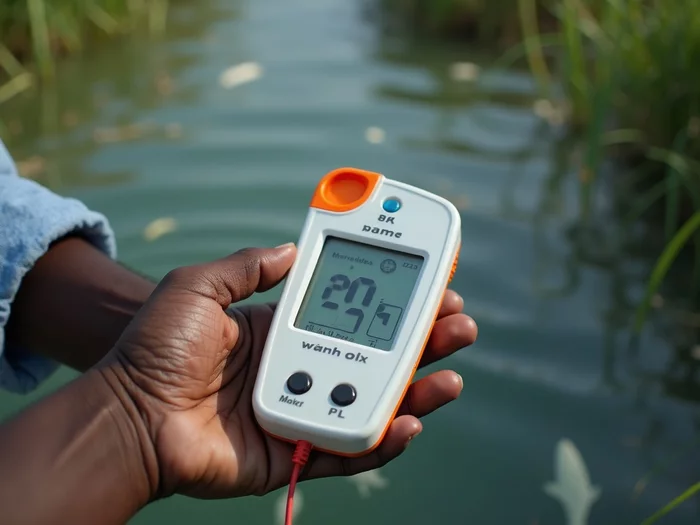
Water quality parameters directly influence how many fish your pond can support healthily. Dissolved oxygen levels must remain above 5mg/L throughout the production cycle, but higher stocking densities consume oxygen faster, especially during hot weather and at night when photosynthesis stops. If your pond struggles to maintain oxygen levels above 6mg/L consistently, reduce stocking density by 20-30%.
Ammonia and nitrite levels become critical in high-density systems. Ammonia should stay below 0.5ppm, whilst nitrite must remain under 0.1ppm. These toxic compounds accumulate faster in crowded ponds, requiring more frequent water changes or additional biological filtration. Monitor these parameters weekly using test kits, and if levels consistently approach danger zones, plan for lower stocking densities in future cycles.
Temperature stability affects stocking decisions, particularly during Nigeria's dry season when pond temperatures can reach 32-35°C. Higher temperatures reduce oxygen solubility whilst increasing fish metabolism and waste production. During hot periods, consider reducing feeding rates and ensure your stocking density allows for adequate oxygen levels even during temperature peaks.
pH fluctuations become more pronounced in high-density systems due to increased biological activity. Maintain pH between 6.5-8.5, but monitor daily in densely stocked ponds. If pH swings exceed 0.5 units daily, your stocking density may be too high for your pond's buffering capacity.
Seasonal Adjustments in Stocking Density
Nigeria's seasonal variations significantly impact optimal stocking densities throughout the year. During the rainy season (May-October), increased cloud cover reduces natural oxygen production through photosynthesis, whilst cooler temperatures can slow fish metabolism and growth. Consider reducing stocking density by 10-15% for fingerlings stocked during this period, or ensure backup aeration systems are operational.
The dry season (November-April) presents different challenges. Higher temperatures increase oxygen consumption whilst reducing oxygen solubility. Harmattan winds can cause rapid temperature drops, stressing fish and affecting their immune systems. Ponds stocked during this period benefit from slightly lower densities to provide buffer capacity for environmental stress.
Adjust feeding strategies seasonally to match stocking density decisions. During cooler months, fish grow slower and require less feed, making higher densities more manageable. In hot weather, fish stress increases and waste production accelerates, favouring lower densities with more intensive management.
Plan your stocking calendar to align with seasonal advantages. Stock fingerlings in September-October when temperatures moderate but before harmattan winds begin. This timing allows fish to establish good growth before facing dry season challenges, and they'll reach market size during the following year's optimal growing conditions.
| Season | Recommended Density Adjustment (%) | Key Considerations |
|---|---|---|
| Rainy Season | -10 to -15% | Reduced natural oxygen production |
| Dry Season | -10% | Increased temperature and stress |
Implementing Density Management Strategies
Best Practices for Stocking Density Management
Successful density management begins with gradual stocking rather than introducing all fingerlings simultaneously. Stock 70% of your planned fingerlings initially, then add the remaining 30% after 2-3 weeks once you've confirmed water quality stability and initial survival rates. This approach allows you to adjust final density based on actual pond performance rather than theoretical calculations.
Implement size-based grading throughout the production cycle to maintain optimal density as fish grow. Sort fish monthly, removing the largest specimens for early harvest and redistributing smaller fish to maintain appropriate biomass per square metre. A 200 square metre pond initially stocked with 3,000 fingerlings might need reduction to 2,500 fish after 3 months and 2,200 fish after 5 months to maintain optimal growing conditions.
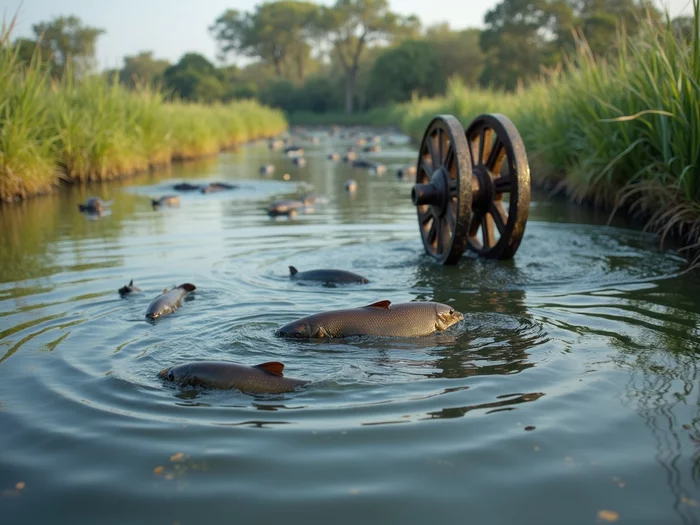
Aeration and water circulation play crucial roles in supporting higher stocking densities. Install paddle wheel aerators or air stone systems capable of providing 2-3 watts per square metre of pond surface. Run aeration systems continuously during hot weather and at night when dissolved oxygen levels naturally drop. Proper circulation prevents dead zones where waste accumulates and oxygen becomes depleted.
Monitor fish behaviour daily as an indicator of density stress. Healthy catfish should disperse throughout the pond during feeding, show active swimming behaviour, and maintain good appetite. Fish crowded at the surface, sluggish feeding response, or aggressive competition for feed indicates density stress requiring immediate intervention through partial harvest or improved aeration.
Disease Management at Various Densities
Higher stocking densities create ideal conditions for disease transmission because pathogens spread rapidly through crowded populations. Implement strict biosecurity protocols including disinfecting equipment between ponds, limiting visitor access, and quarantining new fish before introduction. Maintain detailed health records documenting fish behaviour, feeding patterns, and any mortality incidents.
Preventive medication becomes more critical in high-density systems. Administer probiotics weekly to maintain beneficial bacteria populations in fish digestive systems and pond water. Use vitamin C supplements during stressful periods like weather changes or handling operations. Keep emergency medications including antibiotics and anti-parasitic treatments readily available, but use them judiciously to prevent resistance development.
Early disease detection requires daily observation and prompt response. In high-density ponds, diseases can affect entire populations within 48-72 hours. Watch for symptoms like loss of appetite, abnormal swimming behaviour, skin lesions, or increased mortality. Isolate affected fish immediately and consult with aquaculture extension officers or veterinarians for proper diagnosis and treatment protocols.
Establish treatment protocols appropriate for your stocking density. Higher densities may require more aggressive treatment approaches, including temporary reduction in feeding, increased water exchange rates, and extended medication periods. Lower densities often respond well to environmental management changes like improved aeration or partial water changes without requiring medication.
| Disease | Symptoms | Recommended Treatment |
|---|---|---|
| Bacterial Infections | Loss of appetite, skin lesions | Antibiotics |
| Stress-Related Diseases | Abnormal swimming behaviour, Increased mortality | Probiotics |
Water Quality Management
Maintain comprehensive water quality monitoring schedules that intensify with higher stocking densities. Test dissolved oxygen, pH, ammonia, and nitrite levels daily in high-density systems (above 200 fish per square metre), whilst moderate densities require testing every 2-3 days. Record results consistently to identify trends before they become critical problems.
Implement water exchange strategies based on your stocking density and pond type. High-density concrete ponds may require 10-20% daily water exchanges during peak biomass periods, whilst earthen ponds with lower densities might need only 5-10% weekly exchanges. Calculate water exchange volumes based on total pond volume and fish biomass rather than arbitrary percentages.
Biological filtration becomes essential in intensive systems. Establish beneficial bacteria populations using commercial bacterial supplements or mature pond water from healthy systems. These bacteria convert toxic ammonia to less harmful nitrates, reducing water quality stress on your fish. Maintain bacterial populations through regular feeding with organic matter and avoiding chlorinated water additions.
Emergency water quality management procedures should be established before problems occur. Keep backup aeration systems, water pumps, and emergency water supplies readily available. Develop protocols for rapid response to oxygen depletion, ammonia spikes, or pH crashes that account for your specific stocking density and pond characteristics.
Transition Protocols Between Different Pond Types
Moving fish between pond types requires careful density adjustments because different systems support varying carrying capacities. When transferring from earthen ponds to concrete systems, you can typically increase density by 30-50% due to improved water quality control. Conversely, moving from concrete to earthen ponds requires density reduction to account for reduced management precision.
Acclimatisation procedures must account for density changes and environmental differences. Float transport containers in the destination pond for 30 minutes to equalise temperatures, then gradually mix pond water with transport water over another 30 minutes. This process becomes more critical when moving to higher-density environments where stress tolerance is reduced.
Stress minimisation during transfers involves reducing feeding 24 hours before moving, using appropriate transport containers (50-80 fish per 50-litre container), and adding salt (2-3g per litre) to transport water to reduce osmotic stress. Handle fish gently and complete transfers quickly to minimise handling stress that could compromise their adaptation to new density conditions.
Post-transfer monitoring requires increased attention for 7-10 days as fish adapt to new conditions and densities. Watch for signs of stress including reduced feeding, abnormal swimming behaviour, or increased mortality. Reduce feeding to 50% of normal rates for the first 3 days, then gradually increase as fish demonstrate normal behaviour patterns.
Economic Considerations and ROI Analysis
Cost-Effectiveness of Stocking Density Choices
Conservative stocking densities (120-150 fish per square metre) typically generate higher profit margins despite lower total production because they produce premium-sized fish with better survival rates and feed conversion efficiency. A farmer stocking 150 fingerlings per square metre might harvest 135 fish averaging 1.1kg each, generating 148.5kg per square metre. With catfish selling at 800 naira per kg, this yields 118,800 naira per square metre.
Aggressive stocking densities (250-300 fish per square metre) can increase total production but often reduce profitability due to higher mortality, increased feed costs, and smaller fish sizes. Stocking 280 fingerlings per square metre might yield 220 fish averaging 700g each, producing 154kg per square metre. However, smaller fish typically sell for 650 naira per kg, generating 100,100 naira per square metre despite higher total production.

The optimal economic density often falls between these extremes. Stocking 200 fingerlings per square metre typically yields 175 fish averaging 900g each, producing 157.5kg per square metre selling at 750 naira per kg for 118,125 naira per square metre. This approach maximises both production and profitability whilst maintaining manageable risk levels.
Investment in aeration systems significantly affects the economics of higher stocking densities. A 200 square metre pond requires approximately 600 watts of aeration capacity costing 150,000-200,000 naira initially, plus 15,000-20,000 naira monthly in electricity costs. This investment only becomes profitable if the increased production from higher densities exceeds these additional costs by at least 30% to account for equipment depreciation and maintenance.
| Stocking Density (fish/m²) | Average Fish Weight (kg) | Survival Rate (%) | Total Production (kg) | Profit (naira) |
|---|---|---|---|---|
| 120-150 fish/m² | 1.1 | 90-95% | 148.5 | 118,800 |
| 200 fish/m² | 0.9 | 88% | 157.5 | 118,125 |
| 250-300 fish/m² | 0.7 | 78% | 154 | 100,100 |
Evaluating Fingerling Source Impact
High-quality fingerlings from reputable hatcheries cost 15-20 naira each but typically show 90-95% survival rates and consistent growth performance. These fingerlings adapt better to various stocking densities and show greater resistance to environmental stress. When calculating optimal stocking density, you can plan more aggressively with quality fingerlings because mortality rates are predictable.
Lower-cost fingerlings (8-12 naira each) often come from unknown sources with variable quality and genetic backgrounds. These fish may show survival rates of only 70-80% and inconsistent growth patterns that make density planning difficult. The initial savings disappear quickly when poor survival rates require emergency restocking or when slow growth extends production cycles.
Fingerling size at stocking affects optimal density calculations. Larger fingerlings (5-8cm) can be stocked at slightly higher densities because they're past the critical early mortality period and can compete better for feed. Smaller fingerlings (3-5cm) require more conservative densities to ensure adequate food access and reduced competition stress.
Seasonal availability of quality fingerlings influences stocking density decisions. During peak fingerling season (March-May), you can select the best quality stock and plan densities accordingly. Off-season fingerlings may require more conservative stocking approaches due to limited selection and potentially stressed stock from extended hatchery holding periods.
Case Studies on Density Management
A commercial farm in Lagos State compared three density approaches across identical 300 square metre concrete ponds over 18 months. Pond A used conservative density (150 fish/m²), Pond B used moderate density (200 fish/m²), and Pond C used intensive density (280 fish/m²). All ponds received identical feed, management, and aeration systems.
Pond A (conservative density) achieved 95% survival with average fish weight of 1.2kg at 6 months. Total production was 42,750kg with feed conversion ratio of 1.3:1. Production costs totalled 15.2 million naira, whilst sales generated 34.2 million naira, yielding 19 million naira profit (55% return on investment).
Pond B (moderate density) achieved 88% survival with average fish weight of 950g at 6 months. Total production was 50,160kg with feed conversion ratio of 1.5:1. Production costs totalled 21.8 million naira, whilst sales generated 37.6 million naira, yielding 15.8 million naira profit (42% return on investment).

Pond C (intensive density) achieved 78% survival with average fish weight of 720g at 6.5 months. Total production was 47,174kg with feed conversion ratio of 1.8:1. Production costs totalled 24.1 million naira, whilst sales generated 30.7 million naira, yielding 6.6 million naira profit (22% return on investment). This case study demonstrates that moderate density provided the best balance of total production and profitability, whilst intensive density actually reduced both profit margins and total returns.
Conclusion
Mastering pond sizing and stocking density calculations puts you in control of your catfish farming success. Start with accurate pond measurements, choose conservative stocking densities between 150-200 fish per square metre for your first cycles, and always account for 10-15% mortality when calculating initial fingerling requirements. Remember that moderate densities typically generate better profits than overcrowded ponds, even when total production appears lower. Focus on producing healthy, market-sized fish rather than cramming maximum numbers into your pond space.
You now have the mathematical foundation and practical guidelines to make informed stocking decisions for any pond type or production goal. These calculations aren't just theory—they're proven methods used by successful catfish farmers across West Africa. Start conservatively with your first few cycles to build experience and confidence. As you observe how your specific pond responds to different densities, you can fine-tune your approach based on actual results rather than guesswork.
Your next priority should be developing a comprehensive feeding strategy that matches your chosen stocking density. Fish crowded beyond optimal levels waste feed and grow poorly regardless of nutrition quality, whilst properly stocked ponds convert feed efficiently into marketable fish. Consider also exploring water quality monitoring techniques and disease prevention protocols, as these management areas work together with proper stocking density to create the foundation for profitable catfish production. Each production cycle will teach you something new about optimising your specific farming conditions.
Frequently Asked Questions
How do I calculate the ideal number of fingerlings to stock in my rectangular pond?
First, measure your pond's length and width to get the surface area (Length × Width). Then, decide your target total harvest weight and average fish size. Use the formula: (Target Production ÷ Average Fish Weight) ÷ Surface Area, then add 10-15% to account for potential mortality, as demonstrated in the Ogun State example.
Why is it important to consider my pond type (concrete, tarpaulin, earthen) when deciding on stocking density?
Different pond types have varying carrying capacities and require different management intensities. Concrete ponds can support 200-300 fingerlings per square metre due to better water control, while earthen ponds are limited to 100-200 fingerlings per square metre because they're harder to clean and monitor for pathogens. Matching density to pond type prevents stress and disease.
Can I increase my stocking density if I have good aeration?
Yes, adequate aeration is crucial for supporting higher stocking densities. Installing paddle wheel aerators or air stone systems providing 2-3 watts per square metre can significantly improve dissolved oxygen levels, allowing you to stock more fish without compromising their health or growth. However, you'll still need to closely monitor water quality parameters like ammonia and nitrite.
What are the main trade-offs between stocking at very high densities versus lower densities?
Higher densities can increase total yield per pond, but often result in smaller individual fish (700-900g), higher feed conversion ratios (1.6-1.8kg feed per 1kg fish), and greater risk of disease and mortality. Lower densities produce larger fish (1-1.2kg) with better feed conversion (1.2-1.4kg feed per 1kg fish) and higher survival, but might not fully utilise your pond's capacity.
When should I consider making seasonal adjustments to my stocking density in Nigeria?
You should adjust for both the rainy season (May-October) and the dry season (November-April). During the rainy season, consider reducing density by 10-15% due to reduced natural oxygen production. In the dry season, higher temperatures increase oxygen consumption and stress, also favouring slightly lower densities to provide a buffer for environmental challenges.


Yomi Adisa Lead Researcher
Yomi Adisa is the lead researcher at Fish Farming Business, where he studies what makes aquaculture ventures profitable across Africa. His research focuses on market patterns, buyer preferences, and the business decisions that determine success or failure in fish farming.