Managing Dissolved Oxygen in Catfish Ponds: Monitoring Techniques and Emergency Aeration Response

Posted on: 2025-11-11
By: Yomi Adisa
Managing Dissolved Oxygen in Catfish Ponds: Monitoring Techniques and Emergency Aeration Response
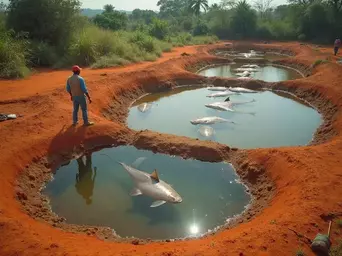
Picture this: You arrive at your catfish pond on a hot August morning in Lagos, only to find dozens of your fish gasping at the surface, their mouths opening and closing desperately. The water feels warm to your touch, and you notice a slight smell that wasn't there yesterday evening. Your heart sinks as you realise what's happening – dissolved oxygen levels have crashed overnight, and your fish are suffocating in their own pond.
📑 Table of Contents
This scenario plays out across Nigerian fish farms every year, often resulting in devastating losses that can wipe out months of investment and hard work. Understanding and managing dissolved oxygen is perhaps the most critical skill you'll develop as a catfish farmer. It directly affects every aspect of your production – from daily growth rates and feed conversion efficiency to survival rates and final harvest weights.
A pond with consistently optimal oxygen levels can achieve 95% survival rates and fish that reach market size 20-30% faster than poorly managed systems. More importantly, mastering oxygen management prevents the heartbreaking and expensive fish kills that can destroy your entire investment in a single night. A farmer in Ogun State recently lost 8,000 fish worth over 2 million naira when a power outage disabled his aerators during a particularly hot night.
This article provides you with complete technical guidance on monitoring dissolved oxygen levels in your ponds, implementing effective aeration techniques, and responding swiftly to oxygen emergencies. You'll learn exactly what equipment to use, how to take accurate measurements, when to intervene, and how to set up both manual and automated monitoring systems that fit your budget and farm size.
🎯 What You'll Learn
- Learn how to accurately monitor dissolved oxygen levels using manual and automated systems to prevent fish stress and mortality
- Master effective aeration techniques, including paddlewheel and air diffusion systems, to maintain optimal oxygen levels in your catfish ponds
- Discover emergency response protocols to quickly address low oxygen situations and safeguard your fish from critical health risks
Understanding and Monitoring Dissolved Oxygen
The Role of DO in Catfish Aquaculture
Dissolved oxygen serves as the lifeblood of your catfish pond ecosystem. Every fish in your pond relies on oxygen dissolved in the water to fuel their metabolism, just as you need oxygen from the air to breathe. When catfish have adequate oxygen levels – typically above 5 milligrams per litre – they can efficiently convert the expensive feed you provide into muscle growth, leading to faster weight gain and better feed conversion ratios.
Think of oxygen as the engine that drives your fish's ability to process food. With optimal dissolved oxygen levels between 6-8 mg/L, your catfish will actively search for food, digest it efficiently, and convert nutrients into body weight. However, when oxygen drops below 4 mg/L, your fish begin showing stress symptoms – they become lethargic, stop feeding actively, and their immune systems weaken, making them susceptible to diseases that can spread rapidly through your pond.
The relationship between oxygen and feed conversion is particularly important for your profitability. A pond maintaining 6-7 mg/L dissolved oxygen typically achieves feed conversion ratios of 1.8:1 to 2.2:1, meaning every 2 kilograms of feed produces approximately 1 kilogram of fish weight. When oxygen levels consistently drop below 4 mg/L, this ratio can worsen to 3:1 or higher, dramatically increasing your feed costs whilst reducing growth rates.
| Oxygen Level (mg/L) | Fish Behaviour | Growth Rate | Feed Conversion Ratio |
|---|---|---|---|
| 6-8 mg/L | Active feeding and growth | Optimal growth rate | 1.8:1 to 2.2:1 |
| 4-6 mg/L | Signs of stress | Reduced growth rate | 3:1 or higher |
| Below 4 mg/L | Severe stress indicators | Significant growth reduction | Poor feed conversion |
Factors Influencing DO Levels
Temperature plays the dominant role in determining how much oxygen your pond water can hold. During Nigeria's hot season, when pond temperatures reach 30-32°C, water can only hold about 7.5 mg/L of oxygen at saturation. Compare this to cooler periods when temperatures drop to 25°C, and the same water can hold nearly 8.5 mg/L. This means your most critical oxygen management period occurs during the hottest months, typically March through May, when you need to be most vigilant about monitoring and aeration.
Phytoplankton density creates a complex oxygen dynamic that changes dramatically throughout each 24-hour period. During daylight hours, the microscopic algae in your pond produce oxygen through photosynthesis, often creating supersaturated conditions with oxygen levels reaching 10-12 mg/L by late afternoon. However, this same phytoplankton consumes oxygen throughout the night for respiration, causing levels to drop steadily until dawn when they typically reach their lowest point.
Your fish biomass directly impacts oxygen consumption rates. A pond stocked at 10,000 fish per hectare will have vastly different oxygen demands than one carrying 25,000 fish per hectare. As your fish grow from 50-gram fingerlings to 1-kilogram market size, their collective oxygen consumption increases exponentially. A general rule suggests that every 1,000 kilograms of fish in your pond consumes approximately 15-20 kilograms of oxygen daily under normal conditions.
Organic matter decomposition represents a hidden oxygen drain that many farmers overlook. Uneaten feed, fish waste, dead phytoplankton, and decaying plant material all consume oxygen as bacteria break them down. This process continues 24 hours daily, creating a constant background oxygen demand that increases with pond age and feeding intensity. Ponds with poor waste management can lose 2-3 mg/L of oxygen daily just to decomposition processes.
Consequences of Low DO Levels
When dissolved oxygen drops below 4 mg/L, your catfish begin exhibiting clear stress indicators that you can observe and use as early warning signs. Fish will congregate near the surface, appearing to gulp air with their mouths breaking the water surface repeatedly. Their swimming patterns become erratic – instead of the normal, steady movements, they may swim in tight circles or dart suddenly in random directions.
Prolonged exposure to oxygen levels below 3 mg/L triggers a cascade of physiological problems. Your fish's metabolism slows dramatically, reducing their appetite and growth rates. Their immune systems become compromised, making them vulnerable to bacterial infections, parasites, and fungal diseases that normally wouldn't affect healthy fish. Most critically, their ability to process ammonia decreases, leading to ammonia toxicity that compounds the oxygen stress.
The economic implications of oxygen-related problems extend far beyond immediate fish mortality. Even if your fish survive mild oxygen stress, their growth rates can decrease by 30-50% for weeks following the incident. Feed conversion efficiency worsens significantly, meaning you'll spend more money on feed to achieve the same weight gain. Fish that experience repeated oxygen stress often develop chronic health issues, resulting in lower market prices due to poor body condition and increased susceptibility to handling stress during harvest.
Complete fish kills from oxygen depletion typically occur when levels drop below 2 mg/L for more than 2-3 hours. A farmer in Ogun State recently lost 8,000 fish worth over 2 million naira when a power outage disabled his aerators during a particularly hot night. The pond temperature reached 31°C, phytoplankton consumed available oxygen, and by dawn, dissolved oxygen had dropped to 1.5 mg/L – too low for catfish survival.
Monitoring Techniques for Dissolved Oxygen
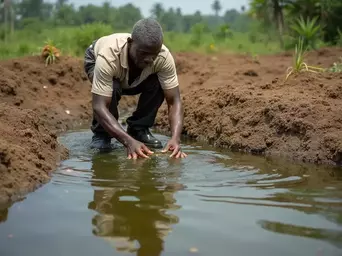
Manual monitoring using dissolved oxygen test kits provides an affordable, reliable method for tracking oxygen levels in your ponds. Digital oxygen metres, available in Nigeria for 15,000-35,000 naira, offer the most accurate readings and easiest operation. To use these metres effectively, calibrate them weekly using the manufacturer's calibration solution, rinse the probe with clean water before each measurement, and take readings at least 15 centimetres below the water surface to avoid surface tension effects.
When taking manual readings, timing is crucial for understanding your pond's oxygen patterns. Take your first measurement just before dawn, typically between 5:30-6:00 AM, when oxygen levels reach their daily minimum. This early morning reading reveals whether your pond can maintain adequate oxygen throughout the night. Take a second reading in late afternoon, around 4:00-5:00 PM, when photosynthesis has maximised oxygen production. The difference between these readings shows your pond's daily oxygen swing and helps predict potential problems.
For farmers managing multiple ponds or seeking more precise control, automated monitoring systems offer continuous data collection and early warning capabilities. Solar-powered oxygen monitoring systems, increasingly available through agricultural suppliers in Lagos and Abuja for 150,000-300,000 naira, can monitor multiple ponds simultaneously and send alerts to your mobile phone when oxygen levels drop below preset thresholds.
The key advantage of automated systems lies in their ability to detect rapid oxygen changes that manual monitoring might miss. During a sudden weather change or phytoplankton die-off, oxygen levels can drop from safe to dangerous within 2-3 hours. Automated monitors can trigger aeration systems automatically or alert you immediately, providing the rapid response time necessary to prevent fish losses.
Establish a monitoring frequency that matches your pond's risk level and your management capacity. High-density ponds with biomass exceeding 15,000 kilograms per hectare require monitoring at least twice daily during hot weather, with additional checks during weather changes or after heavy feeding. Lower-density ponds may require only daily monitoring during normal conditions, but increase frequency during critical periods such as hot weather, overcast days, or when you notice fish behaviour changes.
Record your oxygen readings along with water temperature, weather conditions, feeding amounts, and fish behaviour observations. This data helps you identify patterns and predict when oxygen problems are likely to occur. A farmer in Kaduna discovered that his pond's oxygen levels consistently dropped below 4 mg/L on overcast days following heavy feeding, allowing him to adjust feeding schedules and prevent recurring problems.
Aeration Methods for Catfish Ponds
Mechanical Aeration Systems
Paddlewheel aerators represent the most commonly used mechanical aeration method for commercial catfish production. These systems work by creating water movement and surface agitation that increases the contact between water and air, facilitating oxygen transfer. For optimal effectiveness, install paddlewheels to create a circulation pattern that moves water throughout your entire pond, preventing dead zones where oxygen levels remain low.
Size your paddlewheel system based on your pond's fish biomass and shape. A general guideline suggests 1 horsepower of aeration for every 2,000-3,000 kilograms of fish biomass, but adjust this based on your specific conditions. Rectangular ponds typically require aerators positioned to create a circular flow pattern, whilst square ponds may need multiple smaller units to ensure complete water circulation.
Air diffusion systems offer an alternative approach that can be more energy-efficient for smaller ponds. These systems use air compressors to force air through diffuser stones or membranes placed on the pond bottom, creating columns of bubbles that carry oxygen-depleted water from the bottom to the surface. Install diffusers along the deepest sections of your pond, spacing them 3-5 metres apart for uniform coverage.
The advantage of air diffusion lies in its ability to address oxygen stratification, where surface water contains adequate oxygen whilst bottom water becomes depleted. This stratification commonly occurs in ponds deeper than 1.5 metres, particularly during hot weather when temperature differences prevent natural water mixing.
Regular maintenance ensures your mechanical aeration systems operate at peak efficiency. Clean paddlewheel blades weekly to remove algae and debris that reduce their effectiveness. Check and tighten all bolts and connections monthly, as vibration can loosen hardware over time. For air diffusion systems, inspect air lines for leaks and clean diffuser stones monthly to prevent clogging that reduces air flow.
| Aeration Type | Description | Advantages | Disadvantages | Cost Range |
|---|---|---|---|---|
| Paddlewheel Aerators | Create water movement and surface agitation for oxygen transfer. | Effective in large ponds. | Higher energy consumption. | ₦180,000 - ₦250,000 initial, ₦8,000 - ₦12,000 monthly. |
| Air Diffusion Systems | Use air compressors to force air through diffusers. | Energy efficient for smaller ponds. | Installation complexity. | ₦150,000 - ₦300,000 initial, variable monthly. |
| Water Exchange | Replace pond water with fresh water to improve oxygen levels. | Natural aeration method. | Dependent on water source availability. | Variable based on water source and pumping costs. |
Alternative Aeration Strategies
Water exchange provides a natural aeration method that can supplement or replace mechanical systems in certain situations. Fresh water typically contains higher oxygen levels than pond water, so replacing 10-20% of your pond water daily can significantly improve oxygen conditions. This method works particularly well if you have access to a reliable water source with good oxygen content, such as a flowing stream or well water.
Calculate your water exchange requirements based on your pond volume and fish biomass. A 1,000 square metre pond with 1.5 metres average depth contains 1,500 cubic metres of water. Exchanging 15% daily requires replacing 225 cubic metres, which equals 225,000 litres. Ensure your water source can provide this volume consistently, and consider the cost of pumping when evaluating this method's economic feasibility.
Wind-driven aeration harnesses natural air movement to increase oxygen transfer at the water surface. Whilst you cannot control wind patterns, you can design your pond construction and remove obstacles that block wind flow across the water surface. Position ponds to take advantage of prevailing wind directions, and avoid planting tall trees or constructing buildings that create wind shadows over your ponds.
Phytoplankton management offers a biological approach to oxygen production that works in harmony with natural pond processes. Maintain moderate phytoplankton populations that produce oxygen during daylight whilst avoiding excessive blooms that create dangerous oxygen swings. Achieve this balance through controlled fertilisation, strategic feeding practices, and occasional water exchanges that prevent phytoplankton from becoming too dense.
Emergency Aeration Response Protocols
Recognising oxygen stress indicators allows you to intervene before fish mortality occurs. Watch for fish gathering at the water surface, particularly near any water inflow or areas with slight water movement. Catfish exhibiting oxygen stress often swim with their dorsal fins breaking the surface, and they may appear to be "gulping" air with exaggerated mouth movements.
Changes in feeding behaviour provide another early warning sign. Fish experiencing oxygen stress typically show reduced appetite and may ignore feed that would normally create feeding frenzies. If your fish fail to respond enthusiastically to feeding, immediately check dissolved oxygen levels, as this behaviour change often precedes more obvious stress symptoms by several hours.
When you identify oxygen stress, activate emergency aeration immediately rather than waiting to confirm the problem with testing equipment. Every minute counts when oxygen levels drop to critical ranges. If you have backup aerators, start them all to maximise oxygen transfer rates. If you lack sufficient aeration equipment, create emergency surface agitation using any available means – even a small water pump creating a fountain effect can provide temporary relief.
Consider emergency water exchange if aeration alone cannot raise oxygen levels quickly enough. Pumping fresh water into your pond whilst simultaneously draining oxygen-depleted water from the bottom can rapidly improve conditions. However, ensure your replacement water source has adequate oxygen content, as some well water or stored water may actually have lower oxygen levels than your pond.
Monitor your emergency response effectiveness by taking oxygen readings every 30 minutes until levels stabilise above 4 mg/L. Continue intensive aeration until readings consistently remain above 5 mg/L for at least 4 hours, ensuring the crisis has passed and normal oxygen production can resume.
Post-emergency management requires careful attention to your fish's recovery needs. Reduce feeding by 50% for 2-3 days following an oxygen crisis, as stressed fish have reduced digestive capacity and excess feed will decompose and consume additional oxygen. Monitor fish behaviour closely for signs of secondary infections or continued stress, and consider adding beneficial bacteria products to help process organic waste that may have accumulated during the crisis.
| Indicator | Immediate Action | Monitoring Frequency |
|---|---|---|
| Fish at surface | Activate aeration immediately | Monitor every 30 minutes |
| Reduced feeding response | Check dissolved oxygen levels | Monitor every 30 minutes |
| Oxygen levels below 4 mg/L | Use all available aeration equipment | Monitor every 30 minutes |
Species-Specific Considerations
Channel Catfish vs. Hybrid Catfish
Channel catfish demonstrate greater tolerance for low oxygen conditions compared to hybrid catfish, making them more forgiving for farmers still developing their oxygen management skills. Channel catfish can survive short periods with dissolved oxygen as low as 2.5 mg/L, whilst hybrid catfish begin showing severe stress at 3.5 mg/L and may experience mortality if levels remain below 3 mg/L for more than an hour.
This difference in oxygen tolerance translates directly to management requirements and stocking densities. You can safely stock channel catfish at higher densities – up to 25,000 fish per hectare – with adequate aeration, whilst hybrid catfish require more conservative stocking rates of 15,000-20,000 fish per hectare to maintain safe oxygen margins. The trade-off comes in growth rates, as hybrid catfish typically grow 15-25% faster than channel catfish when oxygen conditions remain optimal.
Hybrid catfish show more dramatic responses to oxygen fluctuations, both positive and negative. When dissolved oxygen levels consistently remain above 6 mg/L, hybrid catfish can achieve feed conversion ratios as low as 1.6:1 and reach market size in 5-6 months. However, when oxygen levels fluctuate frequently between 3-5 mg/L, their growth rates can slow by up to 40%, negating their natural growth advantage over channel catfish.
Consider your management experience and equipment reliability when choosing between species. New farmers or those with limited aeration backup systems may find channel catfish more forgiving and profitable, even with slower growth rates. Experienced farmers with reliable power sources and comprehensive aeration systems can maximise profits with hybrid catfish by taking advantage of their superior growth potential.
| Catfish Species | Oxygen Tolerance (mg/L) | Stocking Density (fish/hectare) | Growth Rate Advantage |
|---|---|---|---|
| Channel Catfish | 2.5 mg/L | Up to 25,000 | Slower growth rate |
| Hybrid Catfish | 3.5 mg/L | 15,000-20,000 | Faster growth rate (15-25%) |
Selecting the Right Species for Your Pond
Evaluate your local environmental conditions when selecting catfish species for optimal oxygen management. In northern Nigeria, where temperatures may be slightly cooler and more variable, channel catfish often perform more consistently due to their broader temperature tolerance and lower oxygen requirements. Southern regions with consistently high temperatures may favour hybrid catfish if you can maintain excellent oxygen management.
Consider your pond design and depth when making species selections. Shallow ponds (less than 1.2 metres) experience greater temperature and oxygen fluctuations, making channel catfish a safer choice. Deeper ponds (1.5-2 metres) with proper aeration can better support hybrid catfish populations, as the greater water volume provides more stable conditions and better oxygen reserves.
Your power reliability and backup systems significantly influence species selection success. Hybrid catfish require more consistent aeration, making them risky choices for areas with frequent power outages unless you have reliable backup generators or solar-powered aeration systems. Channel catfish can better tolerate temporary aeration failures, providing a safety margin for farmers with less reliable power infrastructure.
Market considerations also influence species selection for oxygen management planning. If your local market pays premium prices for larger fish, hybrid catfish may justify the additional oxygen management requirements through higher revenues. However, if market prices remain constant regardless of size, channel catfish may provide better profit margins through lower production risks and management costs.
Environmental Adaptations and Management Practices
Tailor your oxygen monitoring frequency to your chosen species' specific requirements. Hybrid catfish ponds require more frequent monitoring – at least twice daily during warm weather – due to their lower tolerance for oxygen fluctuations. Channel catfish ponds may require daily monitoring during normal conditions, with increased frequency only during extreme weather or high biomass periods.
Adjust your feeding strategies based on species-specific oxygen consumption patterns. Hybrid catfish consume oxygen more rapidly during active feeding periods, so consider splitting their daily rations into smaller, more frequent meals to avoid oxygen spikes. Channel catfish can typically handle larger meals without creating dangerous oxygen depletion, allowing for more convenient feeding schedules.
Implement species-appropriate stocking density adjustments throughout the production cycle. Both species consume more oxygen as they grow, but hybrid catfish require more aggressive density reductions to maintain safe oxygen levels. Plan to harvest or separate fish more frequently with hybrid catfish to prevent overcrowding that leads to oxygen stress.
Design your emergency response protocols around species-specific tolerance levels. Hybrid catfish require immediate intervention when oxygen drops below 4 mg/L, whilst channel catfish allow slightly more response time. However, never rely on species tolerance as a substitute for proper oxygen management – both species perform best with consistently optimal oxygen levels above 5 mg/L.
Economic Considerations in DO Management
Cost-Benefit Analysis of Aeration
Calculate the return on investment for aeration systems by comparing equipment and operating costs against improved production outcomes. A 1-horsepower paddlewheel aerator costs approximately 180,000-250,000 naira initially, with monthly electricity costs of 8,000-12,000 naira assuming 8 hours daily operation. Over a 6-month production cycle, total costs reach approximately 300,000-320,000 naira including initial investment and operating expenses.
Compare these costs against production improvements from optimal oxygen management. A 1-hectare pond maintaining 6-7 mg/L dissolved oxygen typically produces 15,000-18,000 kilograms of market-size catfish with 90-95% survival rates and feed conversion ratios of 1.8-2.0:1. The same pond without adequate aeration might produce only 10,000-12,000 kilograms with 75-80% survival rates and feed conversion ratios of 2.5-3.0:1.
The economic difference becomes clear when you calculate net returns. Proper aeration can increase production by 5,000-6,000 kilograms per cycle, worth 1.5-2 million naira at current market prices of 300-350 naira per kilogram. Additionally, improved feed conversion saves approximately 2,000-3,000 kilograms of feed per cycle, worth another 400,000-600,000 naira. Total benefits of 1.9-2.6 million naira easily justify aeration investments of 300,000 naira.
Consider the insurance value of aeration systems against catastrophic losses. A single fish kill can destroy 3-6 months of investment and labour, often totalling 2-4 million naira in losses. Reliable aeration systems essentially provide insurance against these devastating events, making the investment valuable even if production improvements were minimal.
Investment in Monitoring and Aeration Technologies
Automated monitoring systems require higher initial investments but offer significant long-term value through improved management precision and reduced labour requirements. A comprehensive monitoring system for a 5-hectare farm costs 500,000-800,000 naira initially but can prevent losses worth millions whilst reducing daily labour requirements by 2-3 hours.
Calculate the labour savings from automated systems by comparing manual monitoring time against automated alerts. Manual monitoring of 5 ponds requires approximately 2 hours daily for proper sampling and record keeping. Over a 6-month production cycle, this equals 360 hours of labour worth 180,000-270,000 naira depending on local wage rates. Automated systems provide this monitoring continuously whilst freeing your time for other farm management activities.
The precision advantage of automated systems translates to better production outcomes through more consistent oxygen management. Manual monitoring typically detects problems after fish stress begins, whilst automated systems can prevent problems by alerting you to declining conditions before fish are affected. This proactive management can improve survival rates by 5-10% and growth rates by 10-15%, worth hundreds of thousands of naira annually.
Consider the scalability benefits of automated systems when planning farm expansion. Manual monitoring becomes increasingly difficult and less reliable as you add more ponds, whilst automated systems can monitor additional ponds with minimal additional cost. This scalability makes automated systems particularly attractive for farmers planning to expand their operations beyond 2-3 ponds.
Conclusion
Mastering dissolved oxygen management is your gateway to consistent, profitable catfish farming success. By monitoring oxygen levels twice daily—especially during early morning hours—implementing appropriate aeration systems, and recognising the early warning signs of oxygen stress, you can prevent devastating fish kills and optimise growth rates. Remember that maintaining dissolved oxygen above 5 mg/L consistently will deliver better feed conversion, faster growth, and survival rates exceeding 90%.
Start with reliable monitoring equipment and establish a routine of checking oxygen levels before dawn and late afternoon. Learn to read your fish's behaviour as an early warning system—surface gasping and reduced feeding activity often signal oxygen problems before your test kit confirms it. Even basic paddlewheel aeration can transform your pond's productivity, easily paying for itself through improved survival and growth rates.
You now have the technical knowledge to manage this critical aspect of catfish production successfully. Like any farming skill, dissolved oxygen management improves with experience and consistent application. Trust the monitoring data, respond quickly to problems, and don't hesitate to over-aerate during questionable conditions—it's far better to use extra electricity than lose an entire pond of fish.
With solid oxygen management established, you're ready to optimise your feeding strategies and stocking densities. These three elements—oxygen, feeding, and stocking—work together as the foundation of profitable catfish farming. Master oxygen management first, and the other pieces will fall into place more easily.
Frequently Asked Questions
What specific signs should I look for to know if my catfish are experiencing low oxygen stress?
You should watch for fish congregating at the water surface, especially near inflows, and appearing to "gulp" air with exaggerated mouth movements. Additionally, a sudden decrease in appetite or erratic swimming patterns are early warning signs that dissolved oxygen levels may be dropping.
How can I effectively clean and maintain my paddlewheel aerator to ensure it's always working well?
To keep your paddlewheel aerator efficient, you should clean the blades weekly to remove any accumulated algae and debris. Also, remember to check and tighten all bolts and connections monthly, as constant vibration can loosen the hardware over time, reducing its effectiveness.
Why is it so crucial to monitor dissolved oxygen levels early in the morning, just before dawn?
Monitoring just before dawn (around 5:30-6:00 AM) is crucial because this is when dissolved oxygen levels typically reach their lowest point after a night of respiration by fish and phytoplankton. This reading will reveal if your pond can sustain adequate oxygen throughout the night, helping you predict potential problems.
Can I use water exchange as my primary method for maintaining oxygen levels, especially if I have a good water source?
Water exchange can be a natural and effective method to supplement or even replace mechanical aeration in some situations, especially if you have access to a reliable fresh water source with good oxygen content. However, ensure your replacement water has adequate oxygen and consider the pumping costs for exchanging 10-20% of your pond water daily.
How do the oxygen requirements of hybrid catfish differ from channel catfish, and why does this matter for my farm?
Hybrid catfish have a lower tolerance for low oxygen, showing severe stress below 3.5 mg/L, while channel catfish can survive short periods as low as 2.5 mg/L. This difference means hybrid catfish require more consistent and robust aeration, lower stocking densities (15,000-20,000 fish per hectare), and more frequent monitoring to thrive, making them a higher-risk, higher-reward species.


Yomi Adisa Lead Researcher
Yomi Adisa is the lead researcher at Fish Farming Business, where he studies what makes aquaculture ventures profitable across Africa. His research focuses on market patterns, buyer preferences, and the business decisions that determine success or failure in fish farming.