Pond Construction Materials and Specifications: Practical Guide for Catfish Farmers
Posted on: 2025-11-13
By: Yomi Adisa
Pond Construction Materials and Specifications: Practical Guide for Catfish Farmers
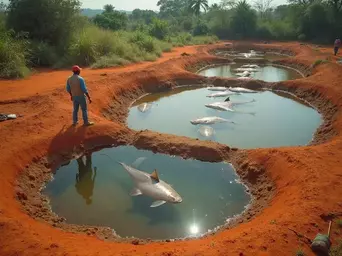
You've secured your land, obtained your permits, and you're ready to start your catfish farming venture. You begin excavating your pond, only to discover weeks later that water seeps away faster than you can fill it. Your fingerlings are stressed, your feed costs are mounting, and your dreams of profitable catfish production seem to be draining away with the water.
📑 Table of Contents
This scenario plays out across Nigeria, Ghana, and Kenya every year, costing farmers thousands of naira and months of lost production time. The difference between thriving catfish operations and failed ventures often comes down to one critical factor: proper pond construction. Your pond isn't just a hole in the ground filled with water—it's the foundation of your entire production system.
Every aspect, from the materials you choose to the specifications you follow, directly impacts water quality, fish health, production efficiency, and ultimately, your profitability. Poor construction decisions made during these early stages can haunt your operation for years, creating ongoing maintenance headaches and limiting your production potential. This comprehensive guide provides you with the complete technical knowledge needed to construct durable, efficient catfish ponds that retain water, maintain optimal conditions, and support maximum fish production.
🎯 What You'll Learn
- Understand the critical specifications for constructing durable catfish ponds to prevent costly water seepage and enhance fish health
- Learn how to select and apply the right materials, like bentonite clay, to ensure effective water retention and long-term pond sustainability
- Master pond design principles, including size and shape optimisation, to improve water circulation and overall production efficiency
Understanding Pond Construction Basics
Importance of Proper Pond Design
Your pond design determines everything from fish survival rates to feed conversion efficiency. A well-designed catfish pond creates an environment where fish can thrive whilst minimising your labour and maintenance costs. Poor design leads to water quality problems, increased disease pressure, and reduced growth rates that can cut your profits by 30-50%.
The foundation of effective pond design rests on three critical factors: size, shape, and depth.
Your pond size directly affects stocking density and management intensity. Smaller ponds (50-200 square metres) allow for intensive management but require more frequent water quality monitoring.
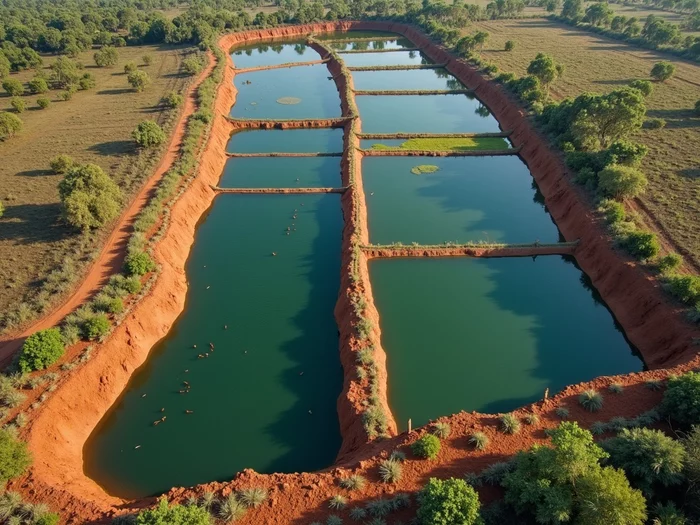
Shape influences water circulation and harvesting efficiency. Rectangular ponds with length-to-width ratios of 3:1 to 4:1 provide optimal water flow patterns. This design prevents stagnant corners where waste accumulates and oxygen levels drop.
Depth requirements vary by production system and climate. For catfish in tropical conditions, maintain depths between 1.2-2.0 metres. Shallow areas (under 1 metre) experience temperature fluctuations and oxygen depletion, whilst depths over 2.5 metres can develop anaerobic bottom layers.
Types of Catfish Ponds
Earthen ponds represent the most common construction method across Africa, utilising natural clay soils for water retention. These ponds integrate well with existing landscapes and provide natural productivity through soil-water interactions. However, they require specific soil types and proper compaction techniques to prevent seepage.
Levee ponds, built above ground level using constructed embankments, offer advantages in areas with poor soil drainage or high water tables. These ponds provide better water control and easier harvesting but require more materials and higher construction costs. Expect to invest 25,000-40,000 naira per 100 square metres for proper levee pond construction with adequate freeboard and slope stability.
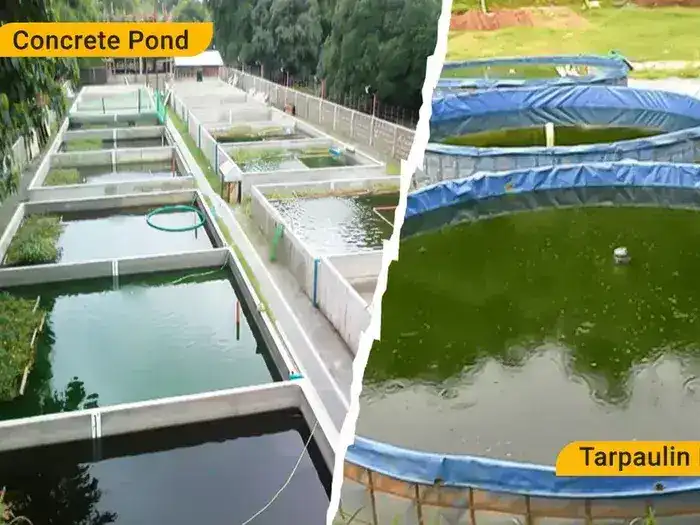
Synthetic liner systems use impermeable materials like EPDM rubber or PVC to create watertight barriers. These systems work in any soil type and provide complete control over water chemistry. Installation costs start around 35,000-50,000 naira per 100 square metres but eliminate seepage problems and reduce long-term maintenance.
| Pond Type | Construction Cost (Naira per 100 m²) | Lifespan | Advantages | Disadvantages |
|---|---|---|---|---|
| Earthen Pond | 15,000 - 25,000 | 5 - 10 years | Natural productivity, landscape integration | Soil type requirement, maintenance |
| Levee Pond | 25,000 - 40,000 | 10 - 15 years | Better water control | Higher material needs |
| Synthetic Liner | 35,000 - 50,000 | 15 - 20 years | No seepage, control over water chemistry | Higher initial investment |
| Factor | Recommended Range/Specification | Impact on Production |
|---|---|---|
| Pond Size | 50 - 200 m² (small), 500 - 2000 m² (large) | Affects management intensity |
| Pond Shape | 3:1 to 4:1 length-to-width ratio | Influences water flow and waste accumulation |
| Pond Depth | 1.2 - 2.0 m | Affects oxygen levels and temperature regulation |
Essential Pond Construction Materials and Best Practices
Bentonite Clay
Bentonite clay serves as nature's waterproofing agent, expanding when wet to create an impermeable barrier. This sodium-based clay can reduce water seepage by 90-95% when properly applied to earthen pond bottoms and walls. You'll find bentonite particularly valuable in areas with sandy or rocky soils that naturally drain water.
Application specifications require 2-4 kilograms of bentonite per square metre of pond surface, depending on soil porosity. Mix bentonite with existing soil at a ratio of 1:3 to 1:5, ensuring even distribution throughout the pond bottom and lower sidewalls. Apply bentonite in thin layers (5-10 centimetres), compacting each layer with hand tools or light machinery before adding the next.
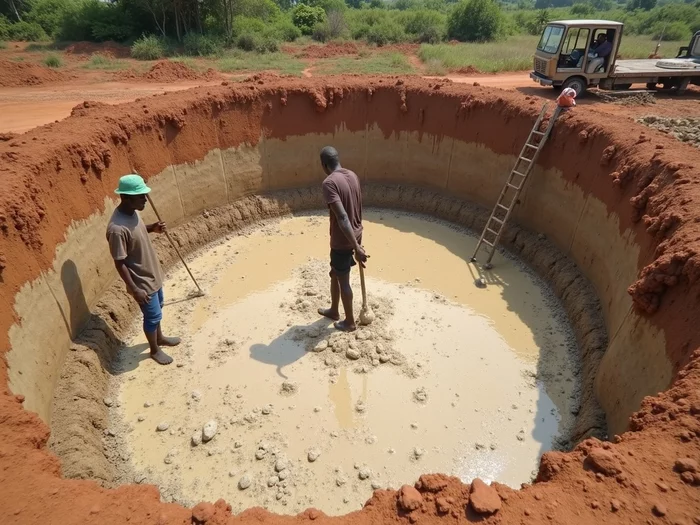
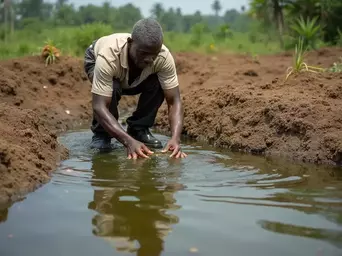
Proper installation technique involves spreading dry bentonite powder over prepared soil surfaces, then mixing with local soil using rakes or tillers. Add water gradually whilst mixing to achieve optimal moisture content (15-20%). The mixture should hold together when squeezed but not feel sticky.
Bentonite effectiveness depends on water chemistry and maintenance practices. High-salt water or excessive organic matter can reduce bentonite's sealing properties over time. Plan for reapplication every 3-5 years, particularly in areas with heavy fish production or frequent pond draining.
Traditional Earthen Materials
Soil selection forms the foundation of successful earthen pond construction. Clay content should comprise 20-30% of your soil composition, providing natural water retention whilst maintaining structural stability. Sandy soils drain too quickly, whilst heavy clay soils can crack during dry seasons, creating leak pathways.
Test your soil composition using the jar test method: fill a clear jar one-third full with soil sample, add water to two-thirds full, shake vigorously, then let settle for 24 hours. Sand settles first (bottom layer), followed by silt (middle), then clay (top). Measure each layer to determine percentages.
Soil compaction prevents seepage and maintains pond integrity under water pressure. Compact soil in 15-20 centimetre lifts using hand tampers or mechanical compactors. Achieve 85-90% of maximum dry density, which you can test by driving a metal rod into compacted soil—it should penetrate less than 5 centimetres with firm pressure.
Erosion control measures protect your investment from rainfall and wave action. Establish grass or other vegetation on pond banks within 30 days of construction. Plant vetiver grass or similar species that develop deep root systems and tolerate periodic flooding.
Synthetic Liners (EPDM and PVC)
EPDM (Ethylene Propylene Diene Monomer) rubber liners offer superior durability and flexibility for catfish pond construction. These liners resist UV degradation, temperature extremes, and punctures better than alternative materials. EPDM thickness should range from 0.75-1.0 millimetres for catfish applications, providing adequate puncture resistance whilst remaining cost-effective.
PVC liners cost less initially but require more careful handling and installation. Choose reinforced PVC with thickness of 0.5-0.75 millimetres for catfish ponds. PVC performs well in stable conditions but can become brittle in extreme temperatures and may require replacement every 8-12 years compared to 15-20 years for EPDM.
Installation requires careful site preparation to prevent liner damage. Remove all rocks, roots, and sharp objects from excavated areas. Create a smooth, uniform surface using sand or fine soil as a protective layer.
Liner anchoring systems secure materials against water pressure and wind damage. Dig anchor trenches 15-20 centimetres deep around pond perimeters. Bury liner edges in trenches, then backfill with soil and compact firmly.
Levee Pond Construction Guidelines
Levee pond construction requires precise specifications to ensure structural integrity and water retention. Build levees with 3:1 side slopes (3 horizontal : 1 vertical) on both interior and exterior faces. This slope provides stability whilst allowing maintenance access and reducing erosion risks during heavy rains.
Cross-sectional measurements depend on pond depth and soil conditions. For ponds 1.5 metres deep, construct levees with 4-metre top width and 2-metre minimum base width. Add 0.5 metres of freeboard above maximum water level to prevent overflow during heavy rains or high winds.
Core material specifications ensure water retention and structural stability. Use clay-rich soil (minimum 25% clay content) for levee cores, compacting in 20-centimetre lifts to 90% maximum dry density. Protect cores with filter layers of sandy soil on water-facing slopes to prevent erosion whilst maintaining seepage control.
Foundation preparation prevents settling and structural failure. Remove all organic matter, loose soil, and debris from levee foundation areas. Compact foundation soils to 85% maximum dry density before beginning levee construction.
Step-by-Step Pond Construction Methodology
Site Preparation
Site selection determines long-term success of your catfish pond operation. Choose locations with gentle slopes (1-3%) that provide natural drainage whilst minimising excavation costs. Avoid low-lying areas prone to flooding or high ground requiring extensive water pumping.
Soil testing reveals construction requirements and potential problems before excavation begins. Collect soil samples from multiple locations across your proposed pond site, testing at depths of 0.5, 1.0, and 1.5 metres. Submit samples to agricultural extension offices or soil testing laboratories for analysis of clay content, pH levels, and organic matter.
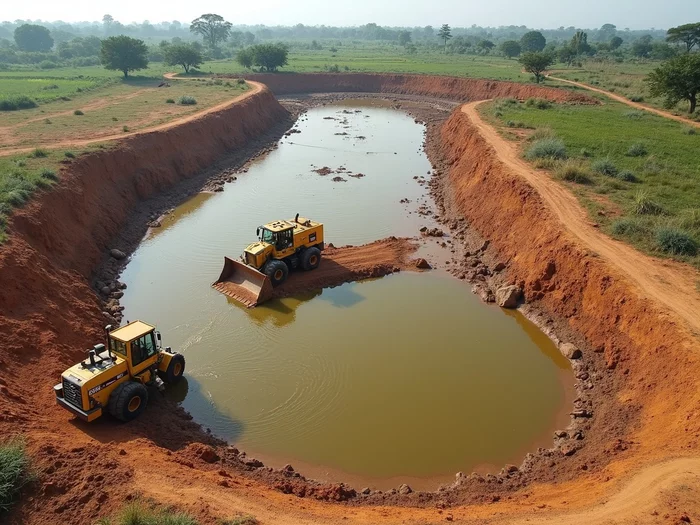
Topographical surveying ensures proper pond design and water flow patterns. Use a water level or simple transit to map elevation changes across your site. Mark high and low points using stakes and flags, creating a rough contour map.
Utility marking and permit verification prevent costly construction delays and safety hazards. Contact local authorities to mark underground utilities like water lines, electrical cables, or communication systems. Verify all required permits are current and construction complies with local regulations.
Constructing the Pond
Excavation sequencing maximises efficiency whilst preserving soil quality for levee construction. Begin excavation at the deepest point, working outward toward pond edges. Separate topsoil from subsoil during excavation—topsoil contains organic matter unsuitable for levee cores but valuable for final landscaping.
Dimension control ensures your finished pond meets design specifications. Use string lines and measuring tapes to maintain proper pond shape during excavation. Check depths regularly using a measuring rod or weighted line.
Dike construction follows specific sequencing to achieve proper compaction and stability. Build dikes in 20-centimetre lifts, compacting each layer before adding the next. Use clay-rich soil for dike cores, transitioning to more permeable soils for outer shells.
Shaping and finishing create proper pond geometry for efficient management. Slope pond bottoms toward harvest areas or drain outlets at gradients of 1-2%. Round corners to eliminate dead zones and improve water circulation.
Installing Drainage and Water Management Systems
Drainage infrastructure enables complete pond management and emergency water removal. Install bottom drains using PVC pipe with minimum 15-centimetre diameter for ponds up to 500 square metres. Increase to 20-25 centimetre diameter for larger ponds.
Inflow systems deliver fresh water whilst maintaining proper circulation patterns. Design inlet structures to create gentle water movement without disturbing fish or creating erosion. Use multiple smaller inlets rather than single large ones to improve water distribution.
Outflow calculations ensure adequate drainage capacity for emergency situations and routine management. Size overflow spillways to handle 25-year storm events plus 20% safety margin. Calculate spillway width using the formula: Width (metres) = Flow rate (cubic metres per second) ÷ (1.7 × √Height).
Pipe sizing depends on pond volume and desired drainage time. Use the formula: Pipe diameter (centimetres) = √(Pond volume in cubic metres ÷ Drainage time in hours) × 10. For example, draining a 1000 cubic metre pond in 8 hours requires approximately 35-centimetre diameter pipe.
Maintenance and Troubleshooting
Long-term Maintenance Procedures
Bentonite seal maintenance preserves water retention throughout your pond's operational life. Monitor water levels weekly during dry seasons to detect increased seepage rates. Normal water loss should not exceed 2-3 centimetres per week from evaporation alone.
Inspect bentonite-sealed areas annually during pond draining or low water periods. Look for cracks, soft spots, or areas where clay appears to have washed away. Repair damaged sections by removing loose material, adding fresh bentonite-soil mixture, and compacting thoroughly.
Earthen pond maintenance focuses on preventing erosion and maintaining structural integrity. Trim vegetation on pond banks monthly to prevent root damage to seals whilst maintaining erosion control. Remove large trees within 10 metres of pond edges—root systems can create leak pathways and falling branches can damage liners or equipment.
Establish maintenance schedules based on local conditions and pond usage intensity. Inspect pond structures monthly during production cycles, checking for erosion, settlement, or damage. Plan major maintenance during dry seasons when pond water levels are naturally lower.
Common Problems and Solutions
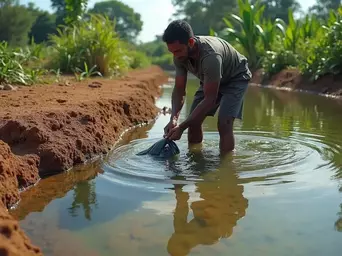
Seepage problems manifest as consistently dropping water levels despite normal evaporation rates. Identify leak locations by examining pond banks during low water periods—wet spots or unusually green vegetation indicate seepage points. Mark problem areas for repair when pond conditions allow access.
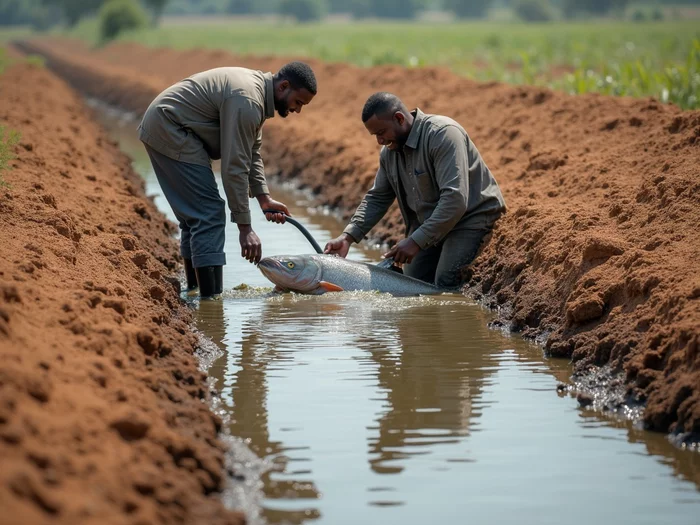
Emergency seepage repairs use bentonite slurry or quick-setting clay to provide temporary sealing. Mix bentonite powder with water to create thick slurry, then pour directly onto leak areas. For larger leaks, drain pond partially and apply bentonite-soil mixture directly to damaged areas, compacting thoroughly.
Structural settlement occurs when pond banks or bottoms sink due to inadequate soil compaction or organic matter decomposition. Minor settlement (2-5 centimetres) is normal during the first year after construction. Significant settlement requires adding fill material and re-compacting affected areas to restore proper pond geometry.
Liner damage from punctures, UV exposure, or mechanical stress requires immediate attention to prevent catastrophic failure. Locate punctures by examining liner surfaces during low water periods or using underwater inspection techniques. Repair small punctures (under 5 centimetres) using patch kits designed for your liner material.
Post-Construction Management and Fish Stocking Practices
Water quality stabilisation requires 2-4 weeks before introducing fish to newly constructed ponds. Fill ponds gradually over 7-10 days to allow soil particles to settle and pH levels to stabilise. Test water parameters daily during this period—pH should range between 6.5-8.5, dissolved oxygen above 5 milligrams per litre, and ammonia below 0.25 parts per million.
Biological conditioning develops beneficial bacterial populations essential for waste processing and disease prevention. Add organic matter like aged manure or compost at 100-200 kilograms per hectare to stimulate bacterial growth. Maintain water temperatures between 25-30°C to accelerate biological processes.
Fish stocking timing depends on water quality stability and seasonal conditions. Stock fingerlings during moderate weather periods when water temperatures remain stable between 26-28°C. Avoid stocking during extreme weather or when significant temperature changes are forecast.
Species selection and stocking densities determine production potential and management requirements. African catfish (Clarias gariepinus) tolerate higher stocking densities (200-300 fingerlings per square metre) but require intensive management. North African catfish or hybrid varieties may perform better at moderate densities (150-200 per square metre) with less intensive management.
| Issue | Symptoms | Recommended Action |
|---|---|---|
| Seepage | Dropping water levels | Identify leak locations, use bentonite slurry |
| Structural Settlement | Sinking banks | Add fill material, re-compact |
| Liner Damage | Punctures, brittleness | Patch small punctures, consider replacement for larger damage |
| Catfish Species | Recommended Density (fingerlings/m²) | Management Level |
|---|---|---|
| African Catfish | 200 - 300 | Intensive |
| North African Catfish | 150 - 200 | Moderate |
| Hybrid Varieties | 150 - 200 | Moderate |
Economic Considerations in Pond Construction
Comparing Material Costs and Lifespan
Bentonite clay applications represent the most cost-effective sealing method for most African catfish farmers. Initial costs range from 8,000-12,000 naira per 100 square metres, with properly applied bentonite lasting 5-8 years before requiring reapplication. Annual cost per square metre averages 15-20 naira when calculated over the full lifespan, making bentonite ideal for farmers prioritising low initial investment.
Traditional earthen construction using suitable clay soils offers the lowest upfront costs at 10,000-18,000 naira per 100 square metres. However, maintenance requirements and potential seepage losses can increase long-term costs significantly. Earthen ponds work best when natural soil conditions provide adequate clay content and proper drainage characteristics exist.
EPDM liner systems require higher initial investment (45,000-60,000 naira per 100 square metres) but provide 15-20 year lifespans with minimal maintenance. Annual costs average 25-35 naira per square metre over the liner's full life. Consider EPDM for permanent installations where consistent water retention is critical and long-term cost effectiveness outweighs initial expense.
PVC liners offer moderate initial costs (35,000-45,000 naira per 100 square metres) with 8-12 year lifespans under proper maintenance. Annual costs range from 35-45 naira per square metre, positioning PVC as a middle option between earthen construction and premium EPDM systems. Choose PVC when soil conditions prevent earthen construction but budget constraints limit EPDM options.
Financial Implications for Different Pond Sizes
Small-scale operations (50-200 square metres) benefit from liner systems that eliminate seepage risks and provide precise water control. Construction costs per square metre are higher due to fixed costs for equipment and materials, but total investment remains manageable at 25,000-75,000 naira per pond. Small ponds allow intensive management practices that can achieve higher yields per square metre.
Mid-scale operations (500-1000 square metres) achieve economies of scale whilst maintaining manageable construction complexity. Bentonite-sealed earthen ponds often provide optimal cost-benefit ratios at this scale, with construction costs and profitability of 80,000-150,000 naira per pond. These sizes support commercial production levels whilst remaining suitable for family-based management systems.
Large-scale operations (2000+ square metres) require careful analysis of construction methods and long-term operational costs. Earthen construction with proper soil selection and compaction techniques often provides the most economical solution. However, consider liner systems in areas with problematic soils or where water conservation is critical.
Return on investment calculations must include construction costs, maintenance expenses, and production potential over the pond's expected lifespan. Well-constructed catfish ponds typically generate positive returns within 18-24 months of initial stocking. Factor in local fingerling costs (8-15 naira each), feed expenses (300-400 naira per kilogram), and expected market prices (800-1200 naira per kilogram) when evaluating construction investment levels.
Regulatory Compliance and Environmental Considerations
Pond construction permits vary significantly across African countries and local jurisdictions. Contact local government offices, environmental agencies, and agricultural departments to determine specific requirements for your area. Some regions require environmental impact assessments for ponds exceeding certain sizes or located near water sources.
Water rights documentation becomes critical when ponds require significant water inputs from rivers, boreholes, or municipal supplies. Obtain all necessary permits before beginning construction to avoid costly delays or legal complications. Understanding these requirements early in your planning process prevents expensive modifications or project abandonment later.
Environmental considerations include protecting local water sources from contamination and managing pond discharge responsibly. Design your pond system with proper filtration and settling areas to prevent nutrient-rich water from entering natural waterways. Consider the impact on local wildlife and vegetation when selecting construction sites and methods.
Building successful catfish ponds starts with choosing the right construction method for your specific conditions and budget. Whether you select bentonite-sealed earthen ponds, synthetic liners, or traditional clay construction, proper installation and attention to specifications will determine your long-term success. Remember the fundamentals: adequate depth (1.2-2.0 metres), proper drainage systems, and quality materials installed according to proven techniques.
You now have the technical knowledge to avoid the costly mistakes that derail many new catfish farmers. Start with your soil analysis, choose materials that match your budget and local conditions, then follow the step-by-step methodology outlined here. Don't rush the construction process—proper site preparation and careful installation prevent expensive repairs later.
As you move forward, remember that pond construction is just the foundation of your catfish farming system. Once your ponds are complete and water quality has stabilised, you'll need to focus on fingerling selection, feeding programmes, and health management. Each component builds on the others, but it all starts with a well-constructed pond that retains water, maintains proper conditions, and supports healthy fish growth.
Frequently Asked Questions
What is the ideal soil composition for building an earthen catfish pond?
For an effective earthen pond, your soil should ideally contain 40-50% sand, 20-30% silt, and 20-30% clay. This balance provides good water retention from the clay whilst maintaining structural stability. You can test your soil composition using a simple jar test as described in the article.
How can I prevent water seepage in my earthen pond if my soil isn't ideal?
If your soil has low clay content, you can significantly reduce seepage by incorporating bentonite clay. Apply 2-4 kilograms of bentonite per square metre, mixing it thoroughly with your existing soil in thin layers (5-10 cm) and compacting each layer. This method can reduce water seepage by 90-95%.
Why are rectangular ponds with a 3:1 or 4:1 length-to-width ratio recommended for catfish farming?
Rectangular ponds with these specific length-to-width ratios promote optimal water flow patterns, which is crucial for catfish health. This design helps prevent stagnant corners where waste can accumulate and oxygen levels can drop, thereby improving water quality and overall production efficiency.
Should I use EPDM or PVC liners for my catfish pond, and what's the key difference in their lifespan?
EPDM liners offer superior durability and resistance to UV and punctures, typically lasting 15-20 years. PVC liners are less expensive initially but require more careful handling and generally last 8-12 years. Your choice depends on your budget, desired lifespan, and site conditions.
How deep should my catfish pond be in tropical climates, and why is this depth important?
For catfish in tropical conditions, you should maintain depths between 1.2-2.0 metres. This depth range is crucial as it balances water volume for diluting waste products with maintaining adequate oxygen levels throughout the water column, preventing temperature fluctuations and anaerobic bottom layers common in shallower or excessively deep ponds.


Yomi Adisa Lead Researcher
Yomi Adisa is the lead researcher at Fish Farming Business, where he studies what makes aquaculture ventures profitable across Africa. His research focuses on market patterns, buyer preferences, and the business decisions that determine success or failure in fish farming.