Pond Lining Options for Catfish Farming
Posted on: 2025-11-19
By: Yomi Adisa
You've dug your pond, sourced quality fingerlings, and prepared your feeding schedule, but there's one critical decision that could make or break your catfish farming success: choosing the right pond liner. Without proper pond lining, you risk water seepage, poor water quality, and ultimately, stressed fish that grow slowly or die prematurely.
In Ghana, many farmers have learned this lesson the hard way when their unlined earthen ponds lose up to 40% of their water during dry seasons, forcing them to constantly refill and disrupting their catfish production cycles. The choice between earth, plastic, concrete, or clay liners isn't just about upfront costs—it's about creating the optimal environment for your African catfish to thrive.
This guide provides you with a comprehensive comparison of pond lining options, breaking down the technical specifications, costs, and practical benefits of each material. You'll learn how different liners affect water quality, maintenance requirements, and long-term profitability of your catfish farm.
By understanding the pros and cons of each lining option, you'll be equipped to make an informed decision that matches your budget, local conditions, and farming goals. Whether you're starting with a small backyard pond or planning a commercial operation, the right liner choice will set the foundation for consistent catfish production and healthier profit margins.
Many successful aquaculture operations across Africa apply similar principles to other species, and if you're considering diversifying your farm, understanding earthen pond construction techniques for different fish species can broaden your production options. The fundamental concepts of liner selection remain consistent whether you're farming catfish, tilapia, or other freshwater species.
What You Will Learn
- Learn how to evaluate different pond lining options based on your local soil conditions and climate for optimal catfish farming.
- Discover the cost implications of earth, plastic, and concrete liners, including long-term water management and maintenance expenses.
- Master the installation techniques specific to each liner type, ensuring durability and efficiency in your catfish production system.
- Understand the impact of liner selection on water quality and its direct correlation with the health and growth rates of African catfish (Clarias gariepinus).
- Identify the key factors influencing your choice of pond liners, including environmental sustainability and operational flexibility.
Types of Pond Liners
You have four main pond lining options for your catfish farm, each with distinct characteristics that affect water retention, maintenance requirements, and your fish's health. The liner you choose determines whether your pond holds water efficiently, maintains stable water quality, and supports optimal growth conditions for African catfish (Clarias gariepinus). Your decision impacts everything from daily water management to long-term profitability.
Many catfish farmers in Nigeria start with earthen ponds because of low initial costs, only to discover significant water losses during harmattan season when clay soils crack and leak. Others invest in plastic liners without understanding UV degradation in tropical climates, leading to premature failures and costly replacements. Understanding each liner type's specifications helps you match the right material to your local conditions, budget, and farming scale.
Each lining option offers different benefits for water quality management, installation complexity, and durability. Here's what you need to know about earth, plastic, concrete, and clay liners to make the best choice for your catfish operation.
Earth Pond Liners
Earth pond liners use compacted natural soil as the primary water barrier, making them the most affordable option for catfish farming. You create these liners by excavating your pond and compacting the bottom and sides with clay-rich soil that has at least 20% clay content for effective water retention. The soil particles bind together when wet, forming a relatively impermeable layer that holds water whilst allowing some natural filtration.
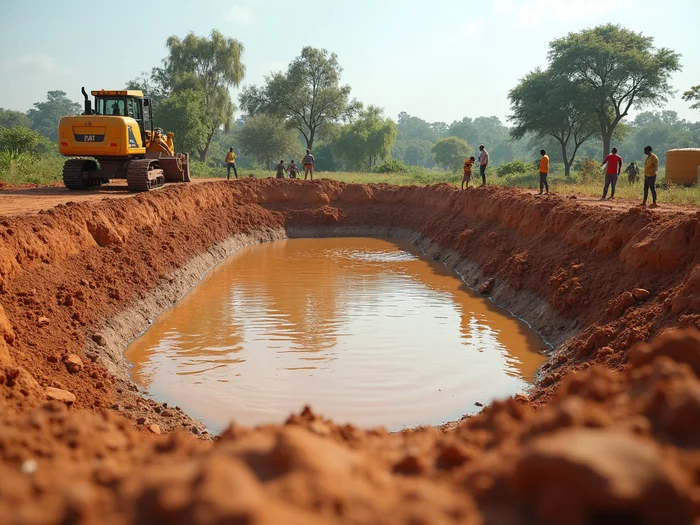
Your soil type determines the effectiveness of earth liners, with clay soils (pH 6.5-8.0) providing the best water retention. You need to compact the soil in 15cm layers using a mechanical compactor or heavy roller, achieving 95% compaction density to minimise seepage. In areas with sandy or loamy soils, you'll need to import clay-rich soil or add bentonite clay at 2-3kg per square metre to improve water-holding capacity.
Earth liners cost ₦50-150 per square metre in Nigeria, making them attractive for small-scale farmers with limited budgets. However, you'll face ongoing maintenance challenges including seasonal cracking during dry periods, gradual erosion from catfish activity, and potential contamination from agricultural runoff. Water loss through seepage can reach 2-5cm per day in poorly compacted earth ponds, requiring constant refilling that increases your operational costs and stresses your fish.
Plastic Pond Liners
Plastic pond liners provide excellent water retention and come in several materials including High-Density Polyethylene (HDPE), Polyvinyl Chloride (PVC), Ethylene Propylene Diene Monomer (EPDM), and reinforced tarpaulin. You want HDPE liners with minimum 0.5mm thickness for catfish ponds, as they resist punctures from sharp objects and UV degradation better than thinner materials. EPDM rubber liners offer superior flexibility and can stretch up to 300% without tearing, making them ideal for irregular pond shapes.
Quality plastic liners feature UV stabilisers that prevent degradation under intense African sunlight, with good HDPE liners lasting 15-20 years when properly installed. You need liners with tensile strength above 20 N/mm² and elongation capacity of at least 700% to handle ground movement and thermal expansion. Fish-safe liners must be free from heavy metals and toxic plasticisers that could leach into water and harm your catfish.
HDPE liners cost ₦800-1,500 per square metre in Lagos, whilst PVC options range from ₦600-1,200 per square metre depending on thickness and quality. The main advantages include zero water seepage, easy cleaning, and excellent water quality control since plastic doesn't interact chemically with pond water. However, you must protect plastic liners from sharp objects, provide adequate underlayment to prevent punctures, and ensure proper anchoring to prevent wind damage during installation.
Concrete Pond Liners
Concrete pond liners offer the most durable and permanent solution for catfish farming, constructed using reinforced concrete with minimum 10cm thickness for structural integrity. You build these liners by excavating your pond, installing steel reinforcement bars (12mm diameter spaced 20cm apart), and pouring concrete mixed at 1:2:4 ratio (cement:sand:aggregate) for optimal strength. The concrete must cure for 28 days to achieve full strength before introducing water and fish.
Proper concrete liners require waterproofing additives or surface sealers to prevent water seepage through microscopic pores in the concrete matrix. You need to include expansion joints every 3-4 metres to accommodate thermal movement and prevent cracking, especially important in tropical climates where temperature fluctuations are significant. The concrete surface should be smooth-trowelled and treated with acid-resistant sealers to prevent pH fluctuations that could stress your African catfish.
Concrete liners cost ₦2,500-4,000 per square metre in Nigeria including materials and labour, making them the most expensive initial investment. The benefits include 30-50 year lifespan, resistance to damage from predators or farming equipment, and excellent structural stability for deep ponds. However, concrete can raise water pH initially, requiring several weeks of water changes before stocking catfish, and repairs require specialised skills and materials that may not be readily available in rural areas.
Bentonite/Clay Liners
Bentonite clay liners use natural sodium bentonite that swells up to 15 times its dry volume when hydrated, creating an impermeable barrier for pond water retention. You apply bentonite at 2-5kg per square metre depending on existing soil permeability, mixing it with the top 15cm of pond bottom soil before compacting and flooding. The bentonite particles form a gel-like seal that self-heals minor cracks and provides excellent long-term water retention.
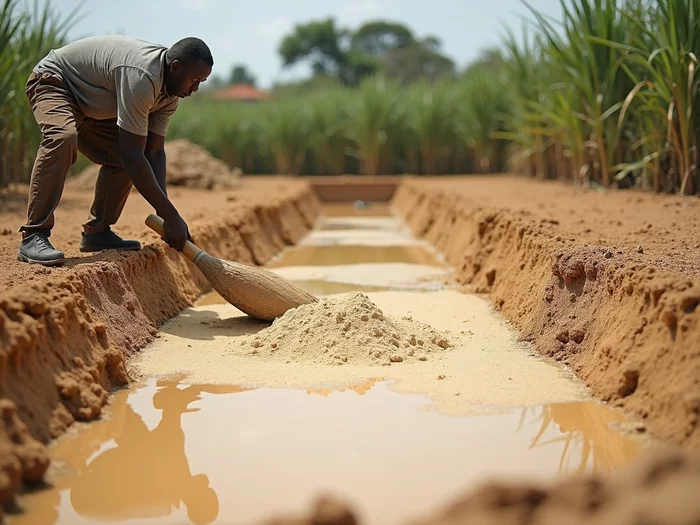
Quality bentonite should have swelling capacity above 24ml/2g and liquid limit exceeding 400% to ensure effective sealing properties. You need to protect bentonite liners from salt water intrusion, which causes the clay to shrink and lose sealing effectiveness, and avoid disturbing the sealed layer once established. The installation requires specific moisture content (12-15%) during mixing and compaction to achieve optimal swelling and sealing performance.
Bentonite costs ₦200-400 per kilogram in Nigeria, making the total liner cost ₦400-2,000 per square metre depending on application rate and soil conditions. The advantages include natural compatibility with existing soil, self-healing properties that repair minor damage, and environmental friendliness since bentonite is non-toxic to fish. However, bentonite liners require careful installation by experienced contractors, can be damaged by excessive fish activity or mechanical disturbance, and may need reapplication every 10-15 years depending on local soil chemistry and water quality conditions.
Cost and Benefit Comparison of Pond Liners
Understanding the true cost of pond liners goes far beyond the initial purchase price—you need to evaluate the complete financial picture including installation, maintenance, and replacement costs over the liner's lifetime. A cheap earth liner that requires constant repairs and water refilling can cost more than a quality plastic liner over five years of operation. Your liner choice directly impacts your catfish farming profitability through water conservation, maintenance labour, and fish health outcomes.
Many Kenyan catfish farmers discover that their ₦200 per square metre earth liner becomes expensive when factoring in 30% annual water loss, frequent repairs after heavy rains, and reduced fish growth from poor water quality. Meanwhile, farmers who invest in ₦1,200 per square metre HDPE liners often recover their investment within three years through water savings and improved catfish survival rates. The key is matching your liner investment to your farming scale, local conditions, and long-term production goals.
This comprehensive cost-benefit analysis helps you evaluate each liner type across six critical factors: initial costs, ongoing maintenance, long-term value, water quality management, environmental impact, and versatility of use. You'll understand how different liners affect your bottom line and catfish production efficiency over time.
Initial Costs
Earth liners offer the lowest upfront investment at ₦50-150 per square metre in Nigeria, requiring only excavation equipment and clay-rich soil compaction. However, you need to factor in soil importation costs if your existing soil lacks adequate clay content, potentially adding ₦100-200 per square metre for quality clay or bentonite amendments. Installation labour costs ₦30-50 per square metre for proper compaction and shaping.
Plastic liners represent a moderate initial investment with HDPE costing ₦800-1,500 per square metre and PVC ranging ₦600-1,200 per square metre in major African cities. You'll need additional materials including geotextile underlayment (₦150-250 per square metre), protective sand layers, and anchoring materials that add 20-30% to your liner costs. Professional installation adds ₦200-400 per square metre but ensures proper sealing and reduces future repair risks.
Concrete liners require the highest initial investment at ₦2,500-4,000 per square metre including materials, steel reinforcement, and skilled labour. You need quality cement, aggregates, waterproofing additives, and experienced concrete workers who understand pond construction requirements. The total project cost for a 100 square metre concrete pond typically ranges ₦300,000-500,000 in Ghana, making it suitable primarily for commercial operations with long-term production plans.
Maintenance Costs
Earth liners generate the highest ongoing maintenance costs through water replacement, crack repairs, and periodic re-compaction. You'll spend ₦20-40 per square metre annually on clay amendments and compaction, plus water costs that can reach ₦50-100 per square metre yearly in areas with expensive water sources. Seasonal repairs after dry periods or heavy rains add another ₦30-60 per square metre every 2-3 years.
Plastic liners require minimal maintenance when properly installed, with annual costs typically under ₦20 per square metre for cleaning and minor repairs. However, puncture repairs cost ₦500-1,000 per incident, and UV degradation may require partial liner replacement every 10-15 years depending on quality and sun exposure. You need to budget ₦100-200 per square metre every decade for liner sections that experience excessive wear or damage.
Concrete liners have the lowest maintenance costs once properly cured and sealed, typically requiring only ₦10-30 per square metre annually for cleaning and minor crack sealing. Major repairs involving structural damage can cost ₦500-1,500 per square metre but occur infrequently with quality construction. You may need to resurface or reseal concrete every 15-20 years at ₦300-600 per square metre to maintain optimal water retention.
Long-term Value
Earth liners provide 5-10 years of service life with proper maintenance, making their cost per year ₦10-30 per square metre when including all maintenance expenses. However, productivity losses from water quality issues and seasonal water shortages can reduce your catfish yields by 20-40%, significantly impacting long-term profitability. The low initial cost becomes less attractive when you factor in reduced fish growth rates and higher mortality during dry seasons.
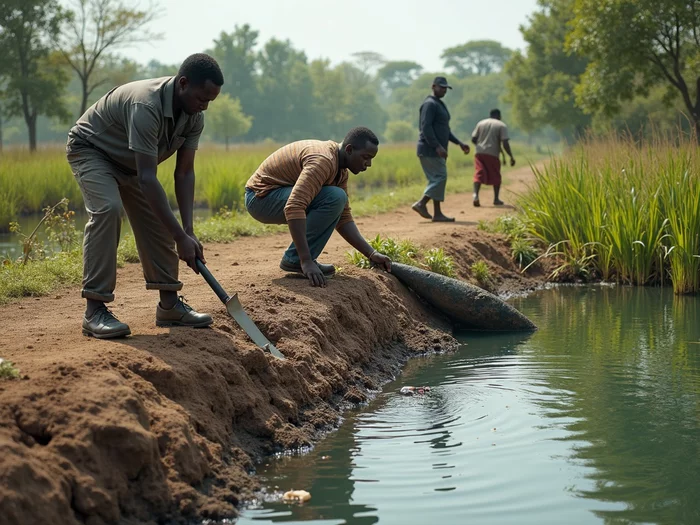
Quality plastic liners deliver 15-25 years of service life, resulting in annual costs of ₦40-100 per square metre including initial investment and maintenance. The excellent water retention and quality control typically increase catfish survival rates by 15-25% and improve growth rates through stable water conditions. Your return on investment often occurs within 3-5 years through water savings and improved fish production efficiency.
Concrete liners offer 30-50 years of service life with annual costs of ₦50-130 per square metre over their lifetime. The superior durability and water quality control make concrete ideal for intensive catfish production, often supporting 50-100% higher stocking densities than earth ponds. Commercial farmers typically recover their concrete investment within 5-8 years through increased production capacity and reduced operational costs.
Water Quality Management
Earth liners allow natural biological processes that can benefit water quality through beneficial bacteria colonisation and nutrient cycling. However, they also permit contamination from surrounding soil, agricultural runoff, and groundwater that may contain pesticides or heavy metals harmful to African catfish. You'll struggle to maintain consistent water parameters, with pH fluctuations of 1-2 units common during rainy seasons when soil minerals leach into pond water.
Plastic liners provide excellent water quality control by preventing contamination from surrounding soil and maintaining stable chemical parameters. You can easily monitor and adjust water quality without interference from soil interactions, leading to more predictable catfish growth and health outcomes. The smooth surface prevents sediment accumulation and makes pond cleaning more efficient, reducing disease risks and improving water clarity for better fish observation.
Concrete liners initially raise water pH to 8.5-9.5 due to lime leaching, requiring 4-6 weeks of water changes before stocking catfish safely. Once properly cured and sealed, concrete provides the most stable water quality environment with minimal chemical interactions. The hard surface prevents organic matter accumulation and allows thorough cleaning between production cycles, supporting intensive catfish farming with excellent biosecurity control.
Environmental Impact
Earth liners have minimal environmental impact since they use natural materials and integrate with existing soil ecosystems. When ponds are decommissioned, the earth returns to agricultural use without leaving permanent environmental changes. However, poor water management in earth ponds can lead to groundwater contamination and soil erosion that affects surrounding agricultural areas.
Plastic liners create environmental concerns through manufacturing processes and eventual disposal challenges, as most plastic materials don't biodegrade naturally. Quality HDPE and EPDM liners can be recycled at end-of-life, but disposal infrastructure may be limited in rural African areas. The excellent water conservation provided by plastic liners helps preserve local water resources, particularly important in drought-prone regions.
Concrete liners have significant environmental impact during production due to cement manufacturing's carbon footprint and resource consumption. However, their 30-50 year lifespan spreads this impact over decades of use, and concrete can be crushed and recycled for construction aggregate when ponds are decommissioned. The permanent nature of concrete ponds supports long-term agricultural planning and land use optimisation for sustainable catfish farming.
Versatility of Use
Earth-lined ponds easily convert to other agricultural uses including crop irrigation reservoirs, livestock watering points, or integrated aquaculture-agriculture systems. You can modify pond depth and shape relatively easily using excavation equipment, making earth liners suitable for farmers who may change production systems over time. The natural soil environment supports diverse aquatic plants and beneficial organisms that can enhance integrated farming approaches.
Plastic-lined ponds offer moderate versatility, functioning well for different fish species, aquaponics systems, or water storage applications. You can relocate quality plastic liners to new pond sites if properly removed and stored, providing flexibility for expanding or relocating farming operations. However, the smooth plastic surface limits biological diversity and may require additional substrates for integrated aquaculture-agriculture systems.
Concrete ponds provide the least versatility due to their permanent nature and high modification costs, but excel at intensive aquaculture applications requiring precise water management. You can easily partition concrete ponds for different production stages or species separation, supporting sophisticated catfish breeding and grow-out operations. The structural strength allows installation of advanced equipment including aeration systems, automatic feeders, and water treatment components that enhance production efficiency.
Installation and Maintenance Tips
Proper installation determines whether your pond liner performs as expected or fails within the first season, making the difference between profitable catfish farming and costly repairs. Many Nigerian farmers lose thousands of naira when their plastic liners tear during installation or their concrete develops cracks from poor curing practices. The installation process requires specific techniques, proper materials, and attention to detail that varies significantly between liner types.
Your maintenance approach directly impacts liner lifespan and catfish production efficiency, with preventive care costing far less than emergency repairs during peak growing seasons. A well-maintained HDPE liner in Ghana can last 20 years with annual maintenance costs under ₦50 per square metre, whilst neglected liners may fail within 5 years requiring complete replacement. Understanding seasonal maintenance requirements helps you schedule work during low-production periods and avoid disrupting your catfish farming operations.
These installation and maintenance guidelines provide step-by-step procedures, common problem solutions, and seasonal management strategies that protect your liner investment. You'll learn professional techniques that ensure proper installation and maintenance practices that maximise liner performance throughout your catfish farming operation.
Installation Process
Earth liner installation begins with excavating your pond to final depth plus 15cm for compaction allowance, ensuring side slopes don't exceed 3:1 ratio to prevent erosion and collapse. You need to remove all rocks, roots, and organic matter larger than 5cm diameter, then test soil clay content using the jar test method—aim for minimum 20% clay content for effective water retention. If your soil lacks adequate clay, import clay-rich soil or add sodium bentonite at 2-3kg per square metre, mixing thoroughly with existing soil.
Compact the pond bottom and sides in 15cm lifts using a mechanical compactor or sheep's foot roller, achieving 95% standard Proctor density to minimise seepage. Apply water during compaction to achieve optimal moisture content (12-15% for clay soils), and test compaction using a penetrometer or simple drop test. Allow the compacted liner to cure for 48 hours before flooding, filling gradually over 3-5 days to prevent erosion and allow soil particles to settle properly.
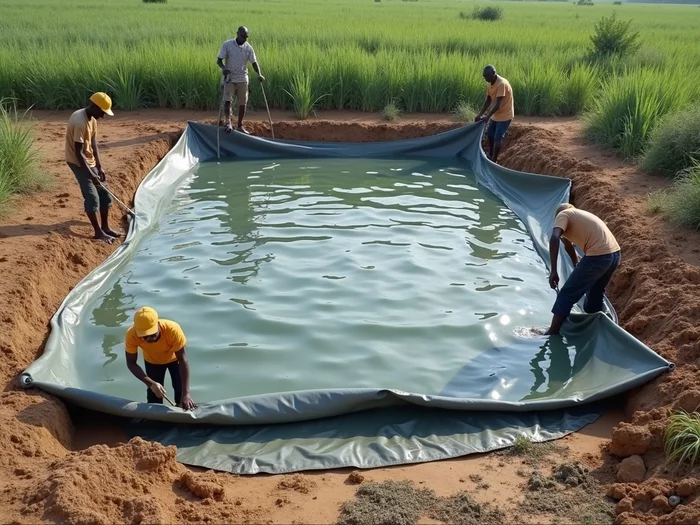
Plastic liner installation requires careful site preparation including removing sharp objects, creating smooth surfaces, and installing protective underlayment. Excavate your pond with gentle side slopes (maximum 2:1 ratio) and round all corners with minimum 30cm radius to prevent stress concentration and tearing. Install geotextile underlayment over the entire pond surface, overlapping seams by 15cm and securing with sandbags or temporary anchors to prevent movement during liner placement.
Unroll plastic liners during warm weather (above 20°C) when material is flexible and easier to handle, allowing 30-50cm extra material around pond perimeter for proper anchoring. Position liners carefully to avoid dragging across rough surfaces, and use multiple people for large installations to prevent excessive stretching or folding. Anchor liner edges in trenches 30cm deep and 20cm wide around pond perimeter, backfilling with soil and compacting firmly to create watertight seals.
Concrete liner installation demands precise mixing ratios, proper reinforcement placement, and controlled curing conditions for optimal strength and waterproofing. Mix concrete using 1:2:4 ratio (cement:sand:aggregate) with maximum 0.5 water-cement ratio, adding waterproofing admixtures at manufacturer's recommended rates. Install steel reinforcement bars (minimum 12mm diameter) in grid pattern with 20cm spacing, maintaining 5cm concrete cover on all surfaces to prevent corrosion.
Pour concrete in continuous sections to avoid cold joints, working quickly to complete each section within 30 minutes of mixing. Use vibrators to eliminate air bubbles and ensure complete consolidation around reinforcement bars, then smooth-finish surfaces with steel trowels for uniform texture. Cover fresh concrete with wet burlap or plastic sheeting, maintaining moist conditions for 28 days whilst concrete achieves full strength—never allow concrete to dry out during this critical curing period.
Maintenance Practices
Earth liner maintenance focuses on preventing erosion, repairing cracks, and maintaining proper compaction to ensure continued water retention. Inspect pond banks monthly for signs of erosion, animal burrows, or vegetation growth that could compromise liner integrity, addressing problems immediately before they expand. During dry seasons, monitor for crack development and repair using clay slurry mixed with water to consistency of thick paint, working repair material into cracks and compacting thoroughly.
Remove accumulated sediment annually using pond nets or suction equipment, avoiding mechanical disturbance that could damage the compacted clay layer. Control aquatic vegetation growth through manual removal or biological methods, as excessive plant roots can penetrate and damage earth liners over time. Recompact high-traffic areas around feeding zones and pond edges every 2-3 years, adding fresh clay material as needed to maintain proper sealing.
Plastic liner maintenance requires regular inspection for punctures, UV degradation, and anchor point security to prevent catastrophic failures during production cycles. Walk pond perimeters monthly checking for loose anchoring, exposed liner edges, or signs of animal damage from birds or rodents seeking water access. Clean liner surfaces quarterly using soft brushes and mild detergent to remove algae buildup that can harbour pathogens and create slippery conditions for pond workers.
Repair small punctures immediately using patch kits designed for your liner material, cleaning repair areas thoroughly and allowing adequate curing time before refilling ponds. Monitor liner flexibility annually, especially in areas with high UV exposure, replacing sections that become brittle or show cracking before they fail completely. Maintain protective sand layers or geotextile underlayment, adding material as needed to prevent sharp objects from contacting liner surfaces.
Concrete liner maintenance involves crack sealing, surface cleaning, and periodic resealing to maintain waterproofing effectiveness throughout the liner's service life. Inspect concrete surfaces every six months for hairline cracks, efflorescence (white mineral deposits), or surface scaling that indicates water penetration or chemical attack. Clean concrete using pressure washers or stiff brushes to remove algae, mineral deposits, and organic matter that can harbour disease organisms.
Seal hairline cracks using flexible sealants designed for underwater applications, ensuring cracks are clean and dry before application for proper adhesion. Apply concrete sealers every 5-7 years to maintain waterproofing, choosing products compatible with fish environments and following manufacturer's application guidelines. Monitor pH levels closely after any concrete repairs or resealing, as fresh concrete products can raise water pH above safe levels for African catfish.
Seasonal Considerations
Dry season management requires different approaches for each liner type, with earth liners needing the most attention to prevent cracking and water loss. Monitor water levels daily during harmattan season when evaporation rates can exceed 1cm per day, refilling ponds gradually to prevent thermal shock to your catfish. Inspect earth liners weekly for crack development, applying clay slurry repairs before cracks expand and compromise water retention significantly.
Plastic liners experience maximum UV stress during dry seasons, requiring shade structures or water level maintenance to keep liner surfaces submerged and protected. Check anchor points monthly as soil shrinkage can loosen liner edges, retightening or adding additional anchoring as needed. Clean plastic surfaces more frequently during dry seasons when algae growth accelerates due to increased sunlight and concentrated nutrients.
Rainy season preparations focus on preventing overflow damage, managing increased water volumes, and protecting liner edges from erosion. Install overflow pipes or spillways before rains begin, positioning outlets to direct excess water away from pond structures and prevent undermining of liner anchoring systems. Clear drainage channels around pond perimeters to prevent surface water from pooling against liner edges and causing uplift or displacement.
Concrete liners handle seasonal changes best but require monitoring for thermal expansion cracks during temperature fluctuations between wet and dry seasons. Check expansion joints for proper sealing and flexibility, replacing joint sealants every 3-5 years to maintain waterproofing. Monitor concrete surfaces for freeze-thaw damage in highland areas where temperatures drop below 5°C, as repeated freezing can crack concrete and compromise structural integrity.
Prepare all liner types for seasonal transitions by adjusting water levels, securing loose materials, and completing major maintenance during low-production periods. Schedule liner repairs and replacements during dry seasons when ponds can be drained completely and materials cure properly before refilling. Plan seasonal maintenance budgets to address predictable issues including crack repairs, anchor reinforcement, and surface cleaning that occur regularly with changing weather patterns.
Choosing the Right Pond Liner
Selecting the optimal pond liner for your catfish farming operation requires balancing multiple factors including your budget, local soil conditions, climate patterns, and long-term production goals. The wrong liner choice can cost you thousands of naira in repairs, water losses, and reduced catfish productivity over just one production cycle. Many Ugandan farmers who chose cheap plastic liners without considering UV exposure found themselves replacing liners every 3-4 years instead of the expected 15-year lifespan.
Your decision impacts every aspect of catfish farming from daily water management to seasonal production planning, making it crucial to evaluate all factors systematically rather than focusing solely on initial costs. A farmer in northern Nigeria with sandy soil and limited water access needs different liner specifications than a farmer in southern Ghana with clay soil and reliable rainfall. Understanding how your specific conditions interact with different liner materials helps you make informed decisions that support profitable catfish farming.
This decision-making framework guides you through the critical factors that determine liner suitability for your operation. You'll learn how to assess your unique circumstances and match them with the liner type that provides the best long-term value for your catfish farming investment.
Factors to Consider
Your soil type fundamentally determines which liner options will perform effectively and economically in your specific location. Sandy soils with less than 10% clay content require plastic or concrete liners since earth liners will lose excessive water through seepage, whilst clay-rich soils with 25-40% clay content can support earth liners effectively. Test your soil using the jar test method: fill a jar one-third with soil, add water, shake vigorously, and let settle—clay content appears as the bottom layer and should comprise at least 20% for earth liner consideration.
Climate conditions including rainfall patterns, temperature extremes, and UV intensity significantly impact liner performance and maintenance requirements. Areas receiving less than 800mm annual rainfall need liners with excellent water retention, making plastic or concrete preferable to earth liners that crack during extended dry periods. High UV environments above 1,500 hours annual sunshine require UV-stabilised plastic liners or concrete options, as standard plastic materials degrade rapidly under intense African sunlight.
Your farm size and production scale determine the economic feasibility of different liner investments, with larger operations better able to justify higher initial costs for superior long-term performance. Small farms under 100 square metres may find earth liners economically attractive despite higher maintenance needs, whilst commercial operations above 1,000 square metres typically benefit from plastic or concrete liners that reduce labour and water costs. Consider your expansion plans when selecting liners, as modular plastic systems offer more flexibility than permanent concrete installations.
Water availability and costs in your area strongly influence liner selection, particularly in regions where water is expensive or unreliable during dry seasons. Earth liners losing 2-5cm daily through seepage become uneconomical when water costs exceed ₦10 per cubic metre, making plastic liners cost-effective despite higher initial investment. Calculate annual water replacement costs for different liner types using local water prices and expected seepage rates to determine true operational costs.
Your technical skills and available labour affect installation complexity and ongoing maintenance capabilities for different liner types. Earth liners require basic excavation and compaction skills available in most rural areas, whilst concrete installation demands specialised knowledge and equipment that may not be locally available. Plastic liner installation needs careful handling and proper anchoring techniques but can be learned relatively easily with proper training and practice.
Decision-Making Guide
Start your liner selection process by conducting a comprehensive site assessment including soil testing, water source evaluation, and climate analysis to establish your baseline requirements. Dig test holes 1 metre deep at several pond locations, examining soil composition and noting groundwater levels that could affect liner performance. Contact local agricultural extension services for soil testing or use simple field tests to determine clay content, pH levels, and drainage characteristics.

Calculate total cost of ownership for each liner option over 10-15 years including initial investment, installation costs, annual maintenance, and expected replacement expenses. Use realistic local prices for materials and labour, factoring in inflation and potential cost increases for imported materials like plastic liners. Include water costs in your calculations, as liner choice significantly impacts water consumption and replacement frequency throughout the production cycle.
Evaluate your risk tolerance and financial capacity to handle unexpected repairs or replacements during critical production periods. Earth liners offer low initial investment but higher risk of seasonal failures, whilst concrete liners require substantial upfront investment but provide long-term stability. Consider your access to credit or emergency funds for major repairs, as liner failures during peak growing seasons can result in total crop losses.
Match liner characteristics to your specific catfish farming system and management approach, considering factors like stocking density, feeding intensity, and water quality requirements. Intensive systems with high stocking densities benefit from concrete or plastic liners that provide superior water quality control, whilst extensive systems may function adequately with properly maintained earth liners. Consider integration with other farming activities, as earth liners support aquaculture-agriculture systems better than plastic alternatives.
Consult with successful catfish farmers in your region who use different liner types, learning from their experiences with installation, maintenance, and long-term performance under local conditions. Visit demonstration farms or contact agricultural extension services for practical advice on liner selection and management techniques. When evaluating your long-term investment strategy, consider how your liner choice affects overall farm expansion plans and operational efficiency. Make your final decision based on comprehensive analysis rather than initial cost alone, choosing the liner that best supports your long-term catfish farming success and profitability goals.
Summary Table
| Key Points | Details |
|---|---|
| Type of Liners | Earth, Plastic (HDPE, PVC), Concrete, and Bentonite/Clay Liners. |
| Optimal Clay Content | Earth liners require ≥20% clay for effective water retention. |
| Compaction Requirement | Achieve 95% compaction density for earth liners using 15cm layers. |
| Plastic Liner Thickness | Minimum 0.5mm thickness for HDPE; tensile strength >20 N/mm². |
| Concrete Thickness | Minimum 10cm thickness with reinforcement (12mm bars spaced 20cm apart). |
| Cost Ranges (per m²) | Earth: ₦50-150; Plastic: ₦600-1,500; Concrete: ₦2,500-4,000; Bentonite: ₦400-2,000. |
| Water Loss in Earth Liners | Seepage may reach 2-5cm per day in poorly compacted ponds. |
| Lifespan of Liners | Earth: 5-10 years; Plastic: 15-25 years; Concrete: 30-50 years. |
| Environmental Impact | Earth: low; Plastic: manufacturing concerns; Concrete: significant during production. |
| Maintenance Costs | Earth: ₦20-100/m²/year; Plastic: < ₦20/m²/year; Concrete: ₦10-30/m²/year. |
Conclusion
Choosing the right pond liner sets the foundation for your catfish farming success. Earth liners work well for small operations with clay-rich soil, plastic liners provide excellent water control for most commercial farms, and concrete offers the best long-term value for intensive production systems. Your decision should balance initial costs against maintenance requirements and water conservation needs.
You now understand how soil type, climate conditions, and farm size influence liner selection. Start by testing your soil and calculating total ownership costs over 10-15 years rather than focusing only on upfront expenses. Trust your analysis—proper liner selection prevents costly water losses and creates stable growing conditions for your African catfish.
With your liner choice made, focus next on pond design and water management systems. These elements work together with your liner to create the optimal environment for catfish growth. Your investment in quality pond infrastructure pays dividends through improved fish health and consistent production cycles.
Frequently Asked Questions
How can I determine if my existing soil is suitable for an earth pond liner?
You can perform a simple jar test: fill a jar one-third with soil, add water, shake vigorously, and let it settle. The clay content will appear as the bottom layer. For an effective earth liner, you should aim for a minimum of 20% clay content in your soil.
What is the recommended minimum thickness for HDPE plastic liners in African catfish ponds?
For African catfish ponds, you should opt for HDPE liners with a minimum thickness of 0.5mm. This thickness provides better resistance to punctures from sharp objects and offers improved protection against UV degradation from intense sunlight in tropical climates.
Why do concrete pond liners initially raise water pH, and how long does it take for it to stabilise?
Concrete liners initially raise water pH to 8.5-9.5 due to lime leaching from the material. To ensure the water is safe for African catfish, you will typically need to perform several weeks (around 4-6) of water changes and monitoring before stocking your fish.
What are the key maintenance considerations for earth pond liners during the dry season?
During the dry season, you must monitor water levels daily and refill gradually to prevent thermal shock. Inspect earth liners weekly for crack development and repair them immediately using a clay slurry to maintain water retention. Preventing erosion and recompacting high-traffic areas are also crucial.
Can I use a plastic liner if my farm is in an area with high UV exposure?
Yes, you can, but it is crucial to select quality plastic liners that feature UV stabilisers. Standard plastic materials can degrade rapidly under intense African sunlight. Look for liners with good UV resistance and consider using shade structures or maintaining high water levels to keep the liner submerged and protected.


Yomi Adisa Lead Researcher
Yomi Adisa is the lead researcher at Fish Farming Business, where he studies what makes aquaculture ventures profitable across Africa. His research focuses on market patterns, buyer preferences, and the business decisions that determine success or failure in fish farming.