How to Administer Hormones for Successful African Catfish Spawning: Practical Guide for Farmers
Posted on: 2025-11-13
By: Yomi Adisa
You've invested months preparing your broodstock, built proper spawning ponds, and maintained excellent water quality, but your catfish simply won't spawn naturally. You watch other farmers achieve consistent breeding success whilst your mature fish remain stubbornly unproductive. This frustrating scenario plays out across fish farms throughout Nigeria, Ghana, and Kenya, where environmental factors and captive conditions often prevent natural spawning cycles.
📑 Table of Contents
The solution lies in understanding hormone administration - a proven technique that triggers spawning in African catfish even when natural conditions aren't perfect. This comprehensive guide provides you with complete technical knowledge for safely and effectively administering hormones to your broodstock, from selecting the right fish and calculating precise dosages to mastering injection techniques and managing post-spawning care.
Hormone administration isn't just about getting fish to spawn - it's about transforming your farm's reproductive efficiency and profitability. Successful hormone-induced spawning can increase your hatchling production by 300-500% compared to relying solely on natural spawning. When you master these techniques, you'll produce consistent quantities of quality fingerlings for your own ponds or sale to other farmers.
A single successful spawning from a 2kg female can yield 150,000-200,000 eggs, potentially producing 100,000+ viable fry worth 800,000-1,500,000 naira at current fingerling prices. This knowledge empowers you to take control of your breeding programme and build a reliable foundation for expanding your catfish production.
🎯 What You'll Learn
- Master the precise hormone dosage calculations based on fish weight to ensure successful spawning and maximise egg production
- Discover effective injection techniques for administering hormones to minimise stress and injury to your broodstock
- Understand the optimal environmental conditions required during spawning to enhance egg viability and fry survival rates
Preparation Phase for Hormone Administration
Selecting Broodstock for Hormone Treatment
Your success with hormone administration begins with choosing the right broodstock. Not every mature catfish makes a suitable candidate for hormone treatment, and selecting poor-quality fish wastes both hormones and your time whilst potentially damaging your breeding programme.
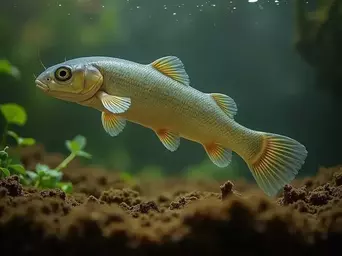
Focus on fish that demonstrate clear sexual maturity and excellent health indicators. Female broodstock should weigh between 1.5-3.5kg and show visible signs of sexual maturity including a swollen, reddish genital papilla and a soft, distended abdomen that feels full of eggs when gently pressed. Males typically weigh 1-2.5kg and display a darker colouration with a pointed, prominent genital papilla that releases milt when gentle pressure is applied to the abdomen.
Age matters significantly in broodstock selection. Choose fish that are at least 18-24 months old, as younger fish often respond poorly to hormone treatment and produce lower-quality eggs. Fish older than 4-5 years may also show declining reproductive performance, so aim for broodstock in their prime reproductive years. Examine your potential broodstock carefully for any signs of disease, injury, or stress, including damaged fins, unusual swimming behaviour, or external parasites.
The reproductive history of your broodstock influences hormone effectiveness. Fish that have spawned successfully before typically respond better to hormone treatment than first-time spawners. However, avoid using fish that have been hormone-treated within the previous 2-3 months, as repeated treatments can reduce responsiveness and stress the fish unnecessarily.

| Broodstock Type | Ideal Weight Range | Signs of Sexual Maturity | Age Recommendation |
|---|---|---|---|
| Female Catfish | 1.5-3.5 kg | Swollen genital papilla, distended abdomen | 18-24 months |
| Male Catfish | 1-2.5 kg | Darker colouration, prominent genital papilla | 18-24 months |
Sourcing and Legal Considerations for Hormones
Understanding your hormone options helps you make informed decisions about cost, effectiveness, and availability. You'll encounter two main categories: natural pituitary extracts and synthetic hormone preparations, each with distinct advantages and limitations.
Fresh pituitary glands extracted from common carp or other cyprinids remain the most traditional and widely available option across Africa. These cost approximately 50-150 naira per gland depending on your location and supplier, with each gland typically providing enough hormone for treating one 2-3kg female catfish. The main advantages include lower cost and proven effectiveness, but you must use fresh pituitary within 24-48 hours of extraction, requiring coordination with suppliers or maintaining your own donor fish.
Synthetic hormones like Ovaprim offer greater convenience and consistency. Ovaprim contains salmon gonadotropin-releasing hormone analogue and domperidone, providing reliable potency and easier storage. A 10ml vial costs 3,000-5,000 naira but treats multiple fish, making the per-treatment cost competitive with fresh pituitary. Synthetic options maintain potency for months when properly refrigerated and eliminate the variability associated with natural extracts.
Dried pituitary powder provides a middle ground between fresh and synthetic options. Properly processed dried pituitary can be stored for extended periods and reconstituted when needed. However, potency varies significantly between suppliers, and you'll need reliable sources to ensure consistent results.
Before purchasing any hormones, verify the legal requirements in your area. Most African countries permit hormone use for aquaculture purposes, but some require permits or registration for importation and use. Contact your local fisheries department or aquaculture extension office to understand current regulations and avoid potential legal complications.
Store all hormones according to manufacturer specifications. Fresh pituitary requires immediate use or freezing at -20°C, whilst synthetic hormones need refrigeration at 2-8°C. Never use hormones past their expiration date, and maintain proper documentation of purchase dates and storage conditions.
| Hormone Type | Advantages | Disadvantages | Cost per Treatment |
|---|---|---|---|
| Fresh Pituitary Extract | Lower cost, proven effectiveness | Short shelf life, requires fresh sourcing | 50-150 naira per gland |
| Synthetic Hormones (e.g., Ovaprim) | Convenient, consistent potency | Higher upfront cost | 3,000-5,000 naira per vial |
| Dried Pituitary Powder | Longer shelf life, easier storage | Variable potency, requires reconstitution | Varies by supplier |
Preparing the Injection Equipment
Proper equipment preparation ensures sterile, accurate hormone administration whilst minimising stress and injury to your broodstock. Gather all necessary materials before beginning the injection process, as working quickly reduces fish stress and improves outcomes.
You'll need disposable syringes ranging from 1ml for small fish to 5ml for larger broodstock. Use 1ml syringes for fish under 1.5kg, 2-3ml syringes for fish between 1.5-3kg, and 5ml syringes for fish over 3kg. Choose syringes with clear measurement markings to ensure accurate dosage calculation.
Select appropriate needles based on injection method and fish size. For intramuscular injections, use 23-25 gauge needles that are 16-25mm long. For intraperitoneal injections, choose 21-23 gauge needles that are 25-38mm long. Larger fish require longer needles to ensure proper injection depth, whilst smaller fish need shorter needles to prevent injury.
Prepare alcohol swabs or 70% isopropyl alcohol with cotton wool for sterilising injection sites and equipment. Clean towels or cloth help restrain fish during injection whilst keeping their skin moist. Have a container of clean pond water ready for returning fish after treatment.
Sterilise all equipment before use. Wipe syringes and needles with alcohol, and ensure your hands are clean. Prepare a clean workspace away from direct sunlight and contamination sources. If treating multiple fish, use separate syringes for each fish to prevent cross-contamination and disease transmission.
Hormone Calculation Methodology
Understanding Dosage Calculations
Accurate dosage calculation forms the foundation of successful hormone administration. Under-dosing results in failed spawning, whilst over-dosing can stress or harm your broodstock without improving results. Weight-based calculations ensure each fish receives the optimal hormone dose for their size and condition.
The fundamental principle involves calculating hormone dosage based on the fish's body weight, typically expressed as units or millilitres per kilogram of body weight. This approach accounts for the physiological differences between small and large fish, ensuring consistent hormone concentrations in the bloodstream regardless of fish size.
Fresh pituitary gland dosage follows a straightforward ratio system. For carp pituitary, use one fresh gland per kilogram of female body weight for the priming dose, and 2-3 glands per kilogram for the resolving dose administered 12 hours later. Male catfish typically receive half the female dosage. A 2kg female would receive 2 glands for priming and 4-6 glands for the resolving dose.
Synthetic hormones like Ovaprim require different calculations based on the manufacturer's specifications. The standard Ovaprim dosage ranges from 0.5-1.0ml per kilogram of female body weight, with males receiving 0.2-0.5ml per kilogram. Always check the specific product instructions, as concentrations vary between manufacturers and formulations.
When working with dried pituitary, reconstitute the powder according to supplier instructions, typically using physiological saline solution. Calculate dosages based on the equivalent fresh pituitary weight, adjusting for any concentration differences specified by your supplier.

Weight-Based Dosage Framework
Implementing a systematic approach to dosage calculation prevents errors and ensures consistent results across your breeding programme. Start by accurately weighing each fish you plan to treat, using a reliable scale capable of measuring to the nearest 100 grams.
For female African catfish using fresh carp pituitary, apply this framework: First injection (priming dose) uses 1 gland per kg body weight, administered in the evening. Second injection (resolving dose) uses 2-3 glands per kg body weight, given 10-12 hours after the priming dose. A 2.5kg female would receive 2.5 glands for priming and 5-7.5 glands for resolving.
Male catfish require approximately half the female dosage. The same 2.5kg male would receive 1.25 glands for priming and 2.5-3.75 glands for resolving. However, many farmers successfully use single-dose treatments for males, administering 1-2 glands per kg body weight in a single injection given simultaneously with the female's resolving dose.
When using Ovaprim, calculate dosages more precisely due to the liquid format. A 2kg female receives 1-2ml total dose (0.5-1.0ml per kg), whilst a 1.5kg male receives 0.3-0.75ml (0.2-0.5ml per kg). Always draw the exact calculated volume into your syringe, and avoid rounding up significantly as synthetic hormones are more potent than natural extracts.
Document your calculations for each fish, recording the fish weight, hormone type, calculated dose, and actual administered dose. This information proves invaluable for evaluating results and refining your dosage protocols based on experience.
| Fish Weight (kg) | Fresh Pituitary Dosage (glands) | Ovaprim Dosage (ml) |
|---|---|---|
| 1 kg | 1 gland | 0.5-1.0 ml |
| 2 kg | 2 glands | 1.0-2.0 ml |
| 3 kg | 3 glands | 1.5-3.0 ml |
| 4 kg | 4 glands | 2.0-4.0 ml |
Timing Protocols for Optimal Results
Proper timing coordination maximises hormone effectiveness and synchronises spawning behaviour between males and females. The two-injection protocol for females creates a priming effect followed by a surge that triggers ovulation, whilst single or double injections for males ensure sperm readiness coincides with egg release.
Administer the female priming dose in the evening, typically between 6-8 PM when water temperatures begin cooling. This timing mimics natural hormonal cycles and reduces stress on the fish. The resolving dose follows 10-12 hours later, usually between 4-6 AM the following morning. Maintain consistent timing intervals, as variations can disrupt the hormonal cascade and reduce spawning success.
Male fish can follow either single or double injection protocols. For double injections, treat males simultaneously with the female priming and resolving doses. For single injections, treat males only with the female's resolving dose, as male hormone response occurs more rapidly than females.
Monitor water temperature during the treatment period, as temperature affects hormone metabolism and spawning timing. Optimal spawning occurs when water temperatures range between 26-30°C. If temperatures drop below 24°C or exceed 32°C, consider delaying treatment until conditions improve.
Spawning typically occurs 8-16 hours after the female resolving dose, depending on water temperature and fish condition. Warmer temperatures accelerate the process, whilst cooler temperatures slow hormone action. Plan your timing so spawning occurs during daylight hours when you can monitor the process and collect eggs promptly.
Injection Techniques and Site Selection
Intramuscular Injection Method
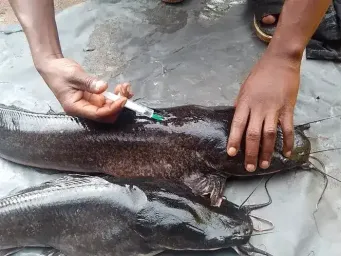
Intramuscular injection delivers hormones directly into muscle tissue, providing steady absorption and reliable hormone release. This method works well for both fresh pituitary and synthetic hormones, offering good control over injection depth and minimising the risk of organ damage.
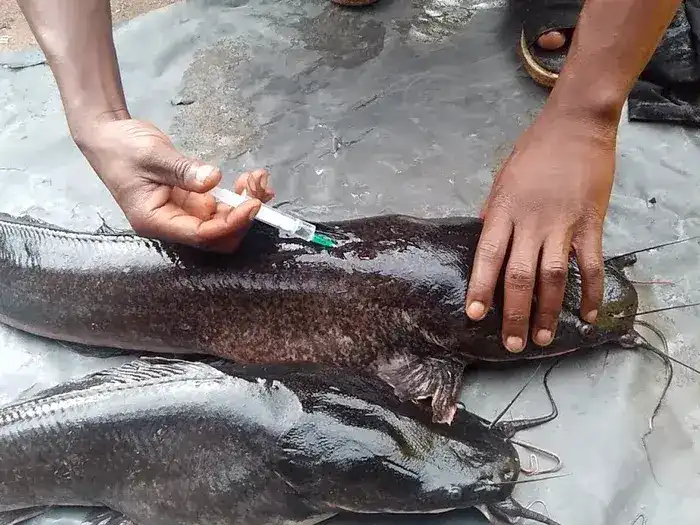
Locate the injection site in the dorsal muscle mass, approximately 2-3cm behind the head and 1-2cm below the dorsal fin. This area provides substantial muscle tissue whilst avoiding vital organs and major blood vessels. The muscle should feel firm and well-developed, indicating good injection site selection.
Restrain the fish gently but securely using a damp towel to cover the head and gills, keeping the fish calm whilst protecting your hands from the sharp fins. Position the fish on its side with the injection site clearly visible and accessible. Maintain the fish's moisture by keeping the towel damp and working quickly to minimise stress.
Clean the injection site with an alcohol swab, wiping in a circular motion from the centre outward. Insert the needle at a 45-degree angle to the fish's body, penetrating 10-15mm into the muscle tissue. For larger fish over 3kg, you may need to insert the needle up to 20mm deep to ensure proper muscle penetration.
Inject the hormone slowly and steadily, taking 5-10 seconds to deliver the full dose. Rapid injection can cause tissue damage and hormone leakage. After injection, withdraw the needle quickly and apply gentle pressure to the injection site for a few seconds to prevent hormone backflow.
Watch for proper injection technique indicators: the muscle should swell slightly as you inject, and minimal bleeding should occur when you withdraw the needle. If significant bleeding occurs or the fish shows excessive stress responses, review your technique and consider adjusting needle size or injection angle.

Intraperitoneal Injection Method
Intraperitoneal injection delivers hormones directly into the body cavity, allowing rapid absorption through the peritoneal membrane. This method provides faster hormone uptake than intramuscular injection but requires more precise technique to avoid organ damage.
Position the injection site on the ventral surface of the fish, approximately 2-3cm behind the pectoral fins and slightly off the midline. Avoid the area directly over the swim bladder, which appears as a silver-coloured organ visible through the body wall. The injection site should be in the soft abdominal area where you can feel the body cavity beneath the skin.
Restrain the fish on its back or at a 45-degree angle to clearly access the ventral injection site. Use a damp towel to cover the fish's head and maintain moisture, working efficiently to reduce handling stress. Ensure your grip is secure but not overly tight, as excessive pressure can damage internal organs.
Clean the injection site thoroughly with alcohol, paying particular attention to removing any mucus or debris that could contaminate the injection. Insert the needle at a 30-45 degree angle to the body surface, penetrating through the body wall into the peritoneal cavity. You should feel a slight resistance as the needle passes through the body wall, followed by less resistance as it enters the cavity.
Inject slowly whilst watching for proper needle placement. The hormone should flow easily without significant back-pressure. If you encounter resistance or the fish shows severe distress, withdraw the needle and reposition. Proper intraperitoneal injection should cause minimal visible reaction from the fish.
After injection, withdraw the needle smoothly and observe the injection site for any hormone leakage or excessive bleeding. A small amount of clear fluid may appear, but significant hormone loss indicates improper technique or needle placement.
Best Practices for Injection Administration
Developing consistent injection techniques improves your success rate whilst reducing stress and injury to your broodstock. Establish a systematic approach that you follow for every injection, creating muscle memory that leads to smoother, more efficient treatments.
Prepare all equipment and calculate all dosages before handling any fish. Having everything ready allows you to work quickly and reduces the time each fish spends out of water. Arrange your workspace logically with syringes, alcohol, towels, and return containers easily accessible.
Handle fish with wet hands and equipment to protect their mucus layer, which provides essential disease protection. Never handle fish with dry hands or rough surfaces that can damage their skin. Use smooth, confident movements rather than hesitant or jerky motions that increase fish stress.
Cover the fish's head and eyes with a damp towel during injection. This simple technique significantly reduces stress by blocking visual stimuli and helping the fish remain calm. Ensure the towel covers the gills adequately to maintain moisture, but don't compress the gill covers tightly.
Work with a partner when possible, especially when treating large fish. One person restrains the fish whilst the other performs the injection, improving safety and technique. If working alone, consider using a V-shaped restraining device or soft-sided container to help position the fish securely.
Monitor each fish's response during injection. Signs of excessive stress include violent struggling, rapid gill movement, or loss of equilibrium. If a fish shows severe stress responses, complete the injection quickly and return the fish to water immediately. Most fish recover rapidly once returned to their familiar environment.
Record injection details for each fish, including injection site, method used, any complications encountered, and the fish's immediate response. This documentation helps you refine your technique and identify patterns that improve future treatments.
Post-Injection Management
Monitoring Spawning Behaviour
Successful hormone administration triggers distinct behavioural changes that indicate approaching spawning. Learning to recognise these signs helps you prepare for egg collection and optimise spawning conditions for maximum success.
Female catfish typically show the first behavioural changes 4-6 hours after the resolving dose. Initially, treated females become more active, swimming in circles or figure-eight patterns around the spawning area. They may also display increased interest in potential spawning sites, investigating corners, inlets, or areas with gentle water circulation.
As ovulation approaches, females exhibit more pronounced behaviours including rapid swimming, jumping or splashing at the water surface, and increased interaction with males. The female's abdomen becomes noticeably softer as eggs mature and prepare for release. Gentle pressure on the abdomen may cause a few eggs to be expelled, indicating readiness for spawning.
Male behaviour changes occur more rapidly, often within 2-4 hours of injection. Treated males show increased activity, darker colouration, and heightened interest in females. They may chase females around the pond and attempt mounting behaviour even before the female is fully ready to spawn.
Peak spawning activity typically occurs 8-16 hours after the female resolving dose, depending on water temperature and fish condition. During actual spawning, you'll observe intense chasing behaviour with the male pursuing the female in rapid circles. The spawning act itself involves the fish swimming side by side whilst releasing eggs and sperm simultaneously.
Document the timing of behavioural changes for each breeding pair. This information helps you predict spawning timing for future treatments and identify any patterns related to fish size, age, or environmental conditions. Successful farmers often develop the ability to predict spawning timing within 1-2 hours based on observed behaviour patterns.
Environmental Conditions for Spawning Success
Optimal environmental conditions significantly influence spawning success and egg quality. Even perfectly administered hormones may fail to produce good results if water quality and physical conditions don't support the spawning process.
Maintain water temperature between 26-30°C during the spawning period. Temperatures below 24°C slow hormone action and may prevent spawning entirely, whilst temperatures above 32°C stress the fish and reduce egg viability. Use heaters or cooling systems if necessary to maintain stable temperatures, especially during seasonal weather changes.
Ensure dissolved oxygen levels remain above 6mg/L throughout the spawning period. Spawning is physically demanding and increases the fish's oxygen requirements. Install additional aeration or water circulation if oxygen levels drop, particularly during warm weather or in heavily stocked ponds.
Monitor pH levels, maintaining them between 6.5-8.0 for optimal spawning conditions. Sudden pH changes can disrupt the spawning process and affect egg development. Test pH before treatment and make any necessary adjustments gradually over several hours rather than rapidly.
Provide appropriate spawning substrates or areas that encourage natural spawning behaviour. Many farmers use spawning mats, brush bundles, or designated areas with gentle water flow. Clean these materials thoroughly before use to prevent disease transmission and ensure they don't introduce harmful chemicals or contaminants.
Reduce disturbances during the spawning period by limiting foot traffic, feeding activities, and other pond maintenance tasks. Excessive noise or movement can interrupt spawning behaviour and cause fish to delay or abandon spawning attempts. Post signs or inform other farm workers about the spawning schedule to ensure minimal disruption.

| Parameter | Recommended Range | Impact on Spawning |
|---|---|---|
| Water Temperature | 26-30°C | Optimal spawning activity |
| > 6 mg/L | Supports physical demands during spawning | Supports physical demands during spawning |
| pH Level | 6.5-8.0 | Affects egg viability and development |
Post-Spawning Care for Eggs and Fry
Proper egg and fry management determines how many viable fingerlings you'll produce from each spawning. Even successful spawning can result in poor survival rates if eggs and newly hatched fry don't receive appropriate care during their most vulnerable stages.
Collect fertilised eggs within 2-4 hours of spawning to prevent fungal infection and predation. Fertilised catfish eggs appear clear or slightly amber-coloured with visible cell division, whilst unfertilised eggs turn white and opaque. Remove unfertilised eggs promptly as they quickly develop fungus that can spread to healthy eggs.
Transfer collected eggs to incubation systems with gentle water circulation and stable temperature control. Maintain water temperature at 26-28°C for optimal hatching rates, which typically occur 18-24 hours after fertilisation. Provide gentle aeration to ensure adequate oxygen levels without creating strong currents that damage developing embryos.
Monitor hatching progress closely, as newly hatched fry are extremely fragile and require immediate attention. Healthy fry initially survive on their yolk sacs for 3-4 days before requiring external feeding. During this period, maintain excellent water quality and minimal disturbance to maximise survival rates.
Begin feeding fry with appropriate starter feeds once they absorb their yolk sacs and begin swimming actively. Use finely powdered feeds or live foods like artemia nauplii, ensuring food particles are small enough for tiny fry mouths. Feed small amounts frequently rather than large meals that can pollute the water and harm fry health.
Gradually increase feeding amounts and frequency as fry grow, monitoring growth rates and adjusting feeding programmes accordingly. Maintain excellent water quality through regular water changes and filtration, as fry are particularly sensitive to ammonia and nitrite accumulation.
Economic Impact of Hormone Use
Understanding the economic implications of hormone use helps you make informed decisions about integrating this technique into your breeding programme. The initial investment in hormones and equipment typically pays for itself within the first successful spawning cycle through increased fingerling production and reduced dependence on external suppliers.
A single hormone treatment costing 200-500 naira per fish can produce 100,000-200,000 viable fry from a 2-3kg female catfish. At current fingerling prices of 8-15 naira each, this represents a potential gross income of 800,000-3,000,000 naira per successful spawning. Even accounting for mortality rates and production costs, the return on investment typically exceeds 500-1000% per spawning cycle.
Compare this to purchasing fingerlings from external suppliers, where costs range from 10-20 naira per fingerling depending on size and quality. Producing your own fingerlings through hormone-induced spawning reduces costs by 40-60% whilst giving you complete control over genetics, health status, and availability timing. This cost advantage becomes more significant as your production scales increase.
Conclusion
Mastering hormone administration for catfish spawning puts you in control of your breeding programme and transforms unpredictable natural spawning into a reliable production system. Focus on the fundamentals: select healthy, mature broodstock weighing 1.5-3.5kg, calculate precise weight-based dosages, and use proper injection techniques to deliver hormones safely. Remember the two-dose protocol for females—priming dose in the evening followed by resolving dose 10-12 hours later—whilst males typically need only the resolving dose.
Start with fresh carp pituitary if synthetic hormones aren't readily available, but invest in proper scales, syringes, and needles to ensure accurate dosing and sterile administration. Document everything: fish weights, hormone doses, injection times, and spawning results. This record-keeping helps you refine your technique and achieve consistent success rates of 70-80% or higher with practice.
Don't expect perfection on your first attempts—even experienced farmers occasionally encounter challenges with timing, fish selection, or environmental conditions. Each spawning teaches you something new about reading fish behaviour, optimising injection techniques, and managing post-spawning care. The investment in learning hormone administration pays substantial dividends through increased fingerling production and reduced dependence on external suppliers.
With reliable breeding established, you can now focus on scaling up your hatchery operations and developing efficient grow-out systems. Consider exploring advanced breeding techniques like selective breeding programmes to improve your stock quality whilst maintaining the reproductive success you've achieved through hormone administration.
Frequently Asked Questions
What are the key signs to look for when selecting female broodstock for hormone treatment?
You should focus on females weighing between 1.5-3.5kg, displaying a swollen, reddish genital papilla, and a soft, distended abdomen that feels full of eggs when gently pressed. Ensure they are at least 18-24 months old, as younger fish often respond poorly and produce lower-quality eggs.
How do I correctly prepare the injection site on a catfish for intramuscular hormone administration?
First, gently but securely restrain the fish using a damp towel to keep it calm and moist. Then, locate the injection site in the dorsal muscle mass, approximately 2-3cm behind the head and 1-2cm below the dorsal fin. Clean this area thoroughly with an alcohol swab, wiping in a circular motion from the centre outwards, before inserting the needle at a 45-degree angle.
Why is it important to administer the female priming dose in the evening, and the resolving dose 10-12 hours later?
Administering the priming dose in the evening, typically between 6-8 PM, mimics natural hormonal cycles and reduces stress on the fish by aligning with cooler water temperatures. The resolving dose 10-12 hours later completes the hormonal cascade, effectively triggering ovulation and synchronising spawning behaviour.
Can I use the same syringe and needle for multiple fish if I'm treating a large batch?
No, you should always use separate, disposable syringes and needles for each fish to prevent cross-contamination and the potential transmission of diseases. This practice is crucial for maintaining biosecurity within your breeding programme and ensuring the health of your broodstock.
What specific environmental conditions are most critical to maintain in the pond after hormone injection to ensure spawning success?
After injection, it's critical to maintain water temperature between 26-30°C and ensure dissolved oxygen levels remain above 6mg/L. Additionally, keep pH levels between 6.5-8.0 and reduce disturbances during the spawning period to encourage natural behaviour.


Yomi Adisa Lead Researcher
Yomi Adisa is the lead researcher at Fish Farming Business, where he studies what makes aquaculture ventures profitable across Africa. His research focuses on market patterns, buyer preferences, and the business decisions that determine success or failure in fish farming.