Fry Management in the First 30 Days After Hatching: Practical Care and Feeding Guide for Catfish Farmers
Posted on: 2025-10-27
By: Yomi Adisa
Fry Management in the First 30 Days After Hatching: Practical Care and Feeding Guide for Catfish Farmers
Picture this: you've just watched thousands of tiny catfish fry emerge from their eggs in your hatchery tank. The excitement is palpable – months of preparation have led to this moment. But as you observe these delicate, translucent creatures barely visible to the naked eye, a sobering reality sets in.
📑 Table of Contents
These next 30 days will determine whether your investment transforms into a thriving fish population or becomes a costly lesson in the unforgiving nature of aquaculture. The first month after hatching represents the most critical period in your catfish production cycle.
During these initial weeks, fry mortality rates can soar above 80% without proper management, whilst well-managed systems consistently achieve survival rates exceeding 90%. The difference lies not in expensive equipment or complex technology, but in understanding the fundamental biological needs of these vulnerable young fish and implementing systematic care practices.
This comprehensive guide provides you with the complete technical knowledge needed to successfully navigate fry management during this crucial period. You'll learn the precise water quality parameters to maintain, feeding protocols that maximise growth whilst preventing waste, health monitoring techniques that catch problems before they become disasters, and environmental management strategies that create optimal growing conditions. Every technique covered here has been proven in commercial operations across Nigeria, Ghana, and Kenya, adapted specifically for the challenges and opportunities of African catfish farming.
Mastering fry management isn't just about keeping fish alive – it's about establishing the foundation for your entire production cycle. Healthy, well-managed fry grow faster, resist disease better, and ultimately generate higher profits when they reach market size. The knowledge you gain here will directly impact your bottom line for months to come.
🎯 What You'll Learn
- Master the precise water quality parameters required to ensure optimal growth and survival rates for catfish fry during their critical first month.
- Discover effective feeding protocols that maximise growth while minimising waste and maintaining water quality in your fry management system.
- Understand the key health monitoring techniques to identify and address common diseases in catfish fry before they lead to significant mortality.
Understanding Fry Development and Practical Implications
The Biological Importance of the First 30 Days
Catfish fry undergo rapid and dramatic changes during their first month of life. In the initial 72 hours after hatching, they rely entirely on their yolk sacs for nutrition, remaining relatively stationary near the bottom of your tank or pond. This yolk-sac stage is critical because the fry are building their internal organs and developing their swimming capabilities.
By day four or five, the yolk sac is absorbed, and the fry begin actively searching for food – marking the transition to exogenous feeding. The metabolic demands during this period are extraordinary. Fry can double their body weight every three to four days under optimal conditions, requiring precise nutrition and environmental management.
Their gill structures are still developing, making them extremely sensitive to water quality fluctuations. Their immune systems are practically non-existent, leaving them vulnerable to bacterial and fungal infections that adult fish would easily resist. Understanding these vulnerabilities helps you prioritise your management efforts where they matter most.
This rapid growth phase directly correlates with survival rates and long-term performance. Fry that grow quickly during the first 30 days typically show better feed conversion ratios, higher disease resistance, and more uniform sizing throughout their production cycle. Conversely, fry that experience stress or poor nutrition during this period often remain stunted, becoming more susceptible to disease and showing irregular growth patterns that complicate management in later stages.
Key Factors Influencing Fry Development
Genetics plays the foundational role in fry development potential. High-quality broodstock produces fry with better survival rates, faster growth, and improved disease resistance. However, even genetically superior fry will fail without proper environmental management.
Water temperature stands as the most critical environmental factor, directly affecting metabolic rate, oxygen consumption, and feeding behaviour. Temperatures below 26°C slow growth significantly, whilst temperatures above 32°C stress fry and increase mortality rates. Nutrition during the first feeding phase sets the trajectory for entire production cycles.
Fry require protein levels between 45-50% during their first two weeks, gradually reducing to 40-45% by day 30. The particle size of feed must match their mouth development – starting with particles smaller than 0.5mm and gradually increasing to 1.0mm by the end of the first month. Water quality parameters interact with nutrition, as poor water conditions reduce feed intake and nutrient absorption even when high-quality feeds are provided.
Stocking density creates a complex interaction affecting growth, water quality, and competition for food. Densities above 200 fry per litre in tank systems or 50 fry per square metre in pond systems often result in stunted growth and increased mortality. However, extremely low densities can also be problematic, as fry exhibit better feeding behaviour and growth when maintained in appropriately sized groups that encourage natural feeding competition.
Practical Actions Based on Developmental Stages
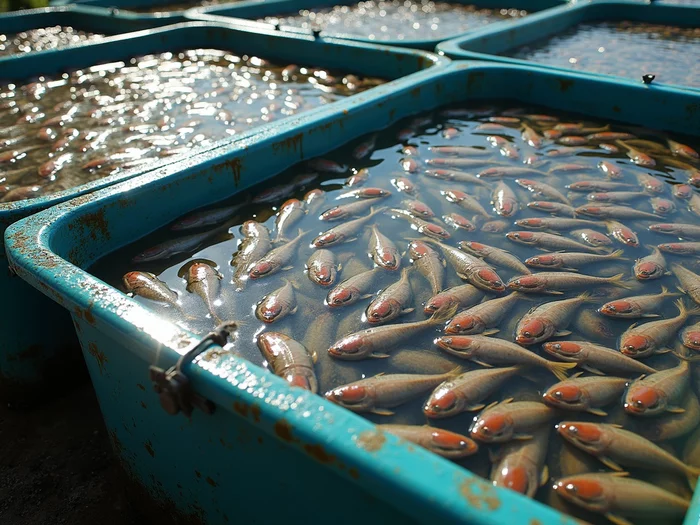
During the yolk-sac stage (days 1-4), your primary focus should be maintaining stable water conditions and preventing fungal infections. Avoid feeding during this period, as uneaten food will decompose and deteriorate water quality. Instead, conduct gentle water changes of 10-15% daily using aged water at identical temperature.
Monitor for white, fluffy growths indicating fungal problems, which require immediate treatment with salt baths at 3-5 grams per litre. The first feeding stage (days 5-14) demands your most intensive management. Begin with newly hatched brine shrimp or high-quality starter feeds with particle sizes below 0.5mm.
Feed small quantities every two hours during daylight, removing uneaten food after 30 minutes. Increase water exchange rates to 20-25% daily to manage the increased waste production. Monitor feeding behaviour closely – healthy fry should actively swim towards food and show aggressive feeding responses.
The juvenile transition stage (days 15-30) allows for more flexible management as fry become hardier. Gradually increase feed particle size to 0.8-1.0mm and extend feeding intervals to every three hours. Begin implementing size grading procedures to separate faster-growing individuals from slower ones.
This prevents smaller fry from being outcompeted for food whilst allowing larger fry to reach their growth potential. Introduce more varied feeding options, including high-quality commercial fry feeds and supplemental live foods when available.
| Growth Stage | Duration (Days) | Nutritional Needs (Protein %) | Feed Particle Size (mm) |
|---|---|---|---|
| Yolk-sac Stage | 1-4 days | N/A | N/A |
| First Feeding Stage | 5-14 days | 45-50% | <0.5 |
| Juvenile Transition Stage | 15-30 days | 40-45% | 0.8-1.0 |
Water Quality Management
Optimal Water Temperature and pH Levels
Maintaining water temperature between 28-30°C provides optimal conditions for catfish fry development. This temperature range maximises metabolic efficiency, ensuring rapid growth whilst maintaining reasonable oxygen levels. Temperatures below 26°C significantly slow growth rates and reduce feeding activity, whilst temperatures above 32°C stress fry and increase oxygen solubility to dangerous levels.
In Nigerian conditions, you'll often need cooling strategies during the hottest months and heating during harmattan periods. For temperature control in tank systems, consider installing simple thermostat-controlled heaters rated at 5 watts per litre of water volume. Position multiple smaller heaters rather than single large units to ensure even heat distribution and provide backup if one fails.
In pond systems, deeper water (minimum 1.5 metres) provides thermal stability, whilst shade structures using palm fronds or shade cloth can prevent excessive heating during peak sun hours. pH levels between 6.8-7.5 provide optimal conditions for fry growth and health. pH fluctuations outside this range stress fry and reduce their ability to absorb nutrients effectively.
In most African regions, pond water tends towards alkaline conditions, often requiring pH reduction using organic acids or peat moss filtration. Monitor pH twice daily, as it naturally fluctuates with photosynthesis cycles – typically lower in early morning and higher in late afternoon. Buffer your water system against pH swings by maintaining adequate alkalinity levels between 80-120 mg/L as calcium carbonate.
Add crushed limestone or agricultural lime at 10-15 grams per cubic metre to increase alkalinity in soft water systems. In areas with naturally hard water, use reverse osmosis or rainwater blending to achieve optimal conditions. Remember that rapid pH changes kill fry faster than slightly suboptimal but stable pH levels.
Oxygenation and Water Movement
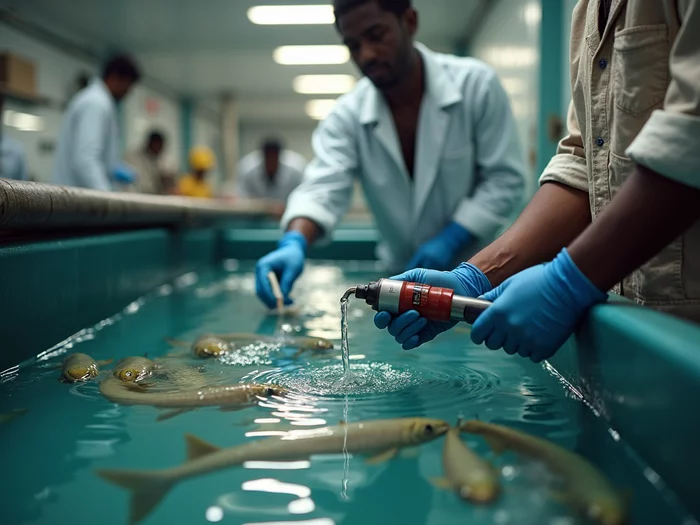
Dissolved oxygen levels must remain above 6 mg/L throughout the fry rearing period, with levels above 7 mg/L being ideal for maximum growth rates. Fry consume oxygen at higher rates per gram of body weight than adult fish, making adequate oxygenation critical for survival. Low oxygen levels immediately reduce feeding activity and growth rates, whilst levels below 4 mg/L cause mortality within hours.
Install adequate aeration systems providing at least 2-3 litres of air per minute per cubic metre of water. Venturi systems work effectively in smaller tank operations, drawing air through water flow to create fine bubbles. For larger systems, invest in proper air pumps with multiple outlets and fine-bubble diffusers.
Position diffusers to create gentle water circulation without creating strong currents that exhaust small fry. Water movement serves multiple purposes beyond oxygenation. Gentle circulation prevents thermal stratification, distributes dissolved nutrients evenly, and helps remove metabolic waste products from fry areas.
However, excessive water movement stresses fry and forces them to expend energy fighting currents rather than growing. Aim for subtle water movement that keeps the entire water column mixed without creating visible surface turbulence. Consider backup aeration systems for power outages, which are common across many African regions.
Battery-powered air pumps or manual aeration devices can maintain minimum oxygen levels during short outages. For longer power interruptions, implement emergency water exchange procedures, replacing 50% of tank water with fresh, well-oxygenated water every 2-3 hours until power returns.
Regular Monitoring and Testing
Establish a comprehensive water quality testing schedule that covers all critical parameters. Test dissolved oxygen, temperature, and pH twice daily – early morning before sunrise and late afternoon. These readings reveal daily fluctuation patterns and help you identify developing problems before they become critical.
Weekly testing should include ammonia, nitrite, nitrate, and alkalinity levels. Ammonia levels must remain below 0.25 mg/L, with levels above 0.5 mg/L being toxic to fry. Test ammonia levels daily during the first two weeks of feeding, as this period shows the highest risk of ammonia spikes from overfeeding or inadequate biological filtration.
Use simple test kits available in aquarium shops, or invest in electronic metres for more frequent testing in larger operations. Nitrite levels should stay below 0.1 mg/L throughout the fry period. Nitrite poisoning prevents oxygen transport in fish blood, causing mortality even when dissolved oxygen levels appear adequate.
Elevated nitrite levels indicate insufficient biological filtration or excessive feeding rates. Address nitrite problems immediately through increased water changes and reduced feeding until biological filters can handle the load. Create a simple monitoring checklist covering visual observations alongside water testing.
Record fry behaviour, feeding response, swimming patterns, and any visible signs of disease or stress. Note water colour, smell, and foam formation, which often indicate problems before chemical tests reveal them. Maintain detailed records of all parameters, as patterns over time reveal management effectiveness and help you fine-tune your protocols.
| Parameter | Optimal Range | Effects of Deviations |
|---|---|---|
| Temperature | 28-30°C | Below 26°C slows growth; Above 32°C increases mortality |
| pH | 6.8-7.5 | Fluctuations stress fry; Outside range reduces nutrient absorption |
| Dissolved Oxygen | >6 mg/L | Below 4 mg/L causes mortality; Below 7 mg/L reduces growth |
Feeding Practices for Fry
Types of Feed for Catfish Fry
Live feeds provide superior nutrition and growth rates compared to formulated feeds, particularly during the critical first two weeks of feeding. Newly hatched brine shrimp (Artemia nauplii) represents the gold standard for catfish fry nutrition, providing optimal protein levels, essential fatty acids, and digestible particle sizes. Fresh brine shrimp costs approximately 800-1,200 naira per kilogram in major Nigerian cities, but the improved survival and growth rates often justify this investment for high-value operations.
Establish your own brine shrimp hatching operation to ensure consistent supply and reduce costs. Purchase brine shrimp eggs from aquaculture suppliers at 15,000-20,000 naira per 450-gram tin, which provides enough eggs for several months of fry production. Set up simple hatching containers using 20-litre plastic containers with strong aeration and salt water at 25-30 grams per litre.
Maintain hatching temperature at 28-30°C for optimal hatch rates within 18-24 hours. High-quality commercial fry feeds offer practical alternatives when live feeds aren't available. Look for feeds containing at least 45% protein with particle sizes appropriate for fry development stages.
Reputable brands available across West Africa include Coppens, Skretting, and locally produced feeds from companies like Vital Feed. Expect to pay 180-250 naira per kilogram for quality fry feeds, significantly less than live feeds but requiring careful feeding management to achieve similar results. Supplement primary feeds with locally available options like finely ground fish meal, dried mosquito larvae, or cultured micro-worms.
Mosquito larvae collection provides an economical protein source – simply place containers of aged water in shaded areas to attract egg-laying mosquitoes, then harvest larvae after 3-4 days. Dry and grind larvae to appropriate particle sizes, storing in sealed containers to prevent spoilage.
Feeding Schedules and Quantities
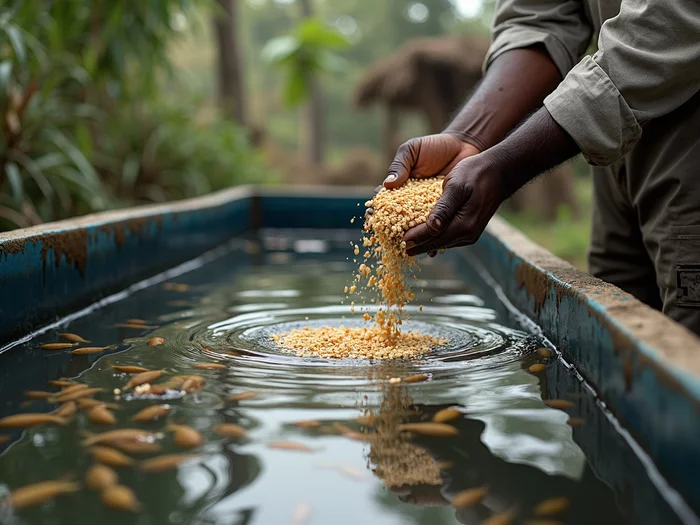
Implement intensive feeding schedules during the first two weeks, providing small quantities every 2-3 hours from sunrise to sunset. This frequent feeding pattern matches fry digestive capacity and prevents food waste that degrades water quality. Calculate feeding quantities based on estimated fry biomass, starting with approximately 20-25% of estimated body weight daily during week one, gradually reducing to 15-20% by week two.
Estimate fry numbers and average weight regularly to adjust feeding quantities accurately. Count fry in representative samples – for example, count fry in 10% of your tank volume and multiply by 10 for total population estimates. Weigh samples of 100 fry weekly to track average weight gain and adjust feeding calculations.
Healthy fry should double their weight every 3-4 days during optimal growing conditions. Divide daily feeding quantities into 6-8 small meals during weeks 1-2, reducing to 4-5 meals during weeks 3-4. Feed the smallest quantities during early morning and late evening when fry activity levels are lower.
Provide larger meals during mid-morning and mid-afternoon when fry show peak feeding activity. Always remove uneaten food within 30 minutes to prevent water quality deterioration. Adjust feeding schedules based on environmental conditions and fry response.
During cooler weather, reduce feeding frequency and quantities as metabolic rates decrease. Increase feeding during optimal temperature periods to maximise growth potential. Monitor water quality closely during intensive feeding periods, as overfeeding quickly leads to ammonia spikes and mortality events.
Monitoring Feeding Behaviour
Observe feeding behaviour carefully to ensure adequate nutrition and identify potential problems early. Healthy fry should show immediate, aggressive responses to feeding, swimming actively towards food particles and competing for available food. Poor feeding responses often indicate water quality problems, disease issues, or inappropriate feed types before other symptoms become apparent.
Watch for feeding hierarchy development as fry grow. Larger, more aggressive fry will dominate feeding areas, potentially preventing smaller fry from accessing adequate nutrition. This size segregation accelerates over time, leading to increasingly uneven growth rates.
Implement grading procedures when you notice significant size differences developing, typically around day 14-18. Document feeding response patterns to establish baselines for your specific conditions. Record the percentage of fry actively feeding, time required for feed consumption, and any unusual behaviours during feeding periods.
Changes in these patterns often precede mortality events or growth slowdowns, allowing you to adjust management practices proactively. Identify signs of overfeeding through water quality monitoring and fry behaviour observation. Overfeeding symptoms include uneaten food accumulating on tank bottoms, increased algae growth, elevated ammonia levels, and reduced feeding enthusiasm at subsequent meals.
Reduce feeding quantities immediately when overfeeding signs appear, and increase water exchange rates to prevent water quality crashes.
Health Monitoring and Disease Prevention
Common Diseases in Fry and Their Symptoms
Fungal infections represent the most common health problem in catfish fry, typically appearing as white, cotton-like growths on fry bodies or fins. These infections often develop from poor water quality, physical injuries, or stress from handling. Fungal problems spread rapidly in fry populations, requiring immediate intervention to prevent widespread mortality.
Early symptoms include reduced feeding activity, erratic swimming patterns, and visible white patches that gradually expand if untreated. Bacterial infections manifest through various symptoms including red streaks on fins, cloudy eyes, bloated abdomens, or rapid mortality without obvious external signs. Columnaris disease, caused by Flavobacterium columnare, appears as white or grey patches around the mouth and fins, often mistaken for fungal infections.
This bacterial infection spreads rapidly in warm water conditions common in African climates, making early detection and treatment critical. Parasitic infections, whilst less common in very young fry, can devastate populations when they occur. External parasites like Trichodina cause fry to exhibit flashing behaviour – rubbing against surfaces to relieve irritation.
Affected fry show reduced feeding, rapid breathing, and may gather near water inlets seeking higher oxygen levels. Internal parasites typically cause poor growth rates, bloated appearance, and abnormal swimming behaviour. Nutritional deficiencies create subtle but significant health problems in growing fry.
Vitamin deficiencies cause spinal deformities, poor growth rates, and increased susceptibility to other diseases. Essential fatty acid deficiencies result in poor survival rates and abnormal development. These problems develop gradually, making them difficult to identify until significant damage occurs to the fry population.
Preventative Health Measures
Implement strict biosecurity protocols to prevent disease introduction into your fry systems. Disinfect all equipment, containers, and tools with 10% bleach solution before use in fry areas. Establish separate equipment sets for fry management, avoiding cross-contamination from adult fish systems.
Wash and disinfect hands thoroughly before handling fry or their environment, as human contact can introduce harmful bacteria. Maintain optimal water quality as your primary disease prevention strategy. Most fry health problems originate from poor environmental conditions that stress fish and create favourable conditions for pathogens.
Monitor water parameters religiously, maintaining stable conditions within optimal ranges. Avoid sudden changes in temperature, pH, or other water quality parameters that compromise fry immune responses. Quarantine new fry batches separately for at least one week before combining with existing populations.
This practice prevents disease transmission between groups and allows you to observe new fry for health problems before they spread. Use separate equipment and follow strict hygiene protocols when managing quarantine systems. Consider prophylactic treatments during high-risk periods, particularly when environmental conditions are suboptimal.
Salt baths at 3-5 grams per litre for 10-15 minutes can prevent fungal infections without harming healthy fry. Probiotic supplements added to feed or water can improve fry immune responses and competitive exclusion of harmful bacteria. However, avoid routine antibiotic use, which can disrupt beneficial bacterial populations and create resistant pathogen strains.
Treatment Protocols for Affected Fry
Act immediately when disease symptoms appear, as fry populations can experience catastrophic mortality within 24-48 hours of initial symptoms. Begin by improving water quality through increased water changes and enhanced aeration, as many health problems resolve when environmental stressors are removed. Test all water parameters and correct any deficiencies before implementing specific treatments.
Treat fungal infections with salt baths using 5-8 grams of non-iodised salt per litre of treatment water. Immerse affected fry for 10-15 minutes, monitoring closely for stress responses. Repeat treatments daily until symptoms disappear, typically requiring 3-5 treatments for complete resolution.
Alternatively, use methylene blue at 2-5 mg/L as a continuous bath treatment, maintaining treatment levels for 3-5 days. Address bacterial infections with more aggressive interventions, as these typically progress faster than fungal problems. Oxytetracycline at 50-75 mg per kilogram of fish body weight, administered through medicated feed for 7-10 days, effectively treats most bacterial infections.
If fry aren't feeding well, use bath treatments with oxytetracycline at 20-30 mg/L for 6-12 hours daily. Always complete full treatment courses even if symptoms improve quickly. Separate severely affected fry from healthy populations to prevent disease spread and allow for intensive treatment.
Use hospital tanks with optimal water quality and enhanced monitoring for treating sick fry. However, recognise when treatment efforts are unlikely to succeed – severely affected fry with advanced symptoms often don't recover and may serve as continuing infection sources for healthy fish.
| Disease | Symptoms | Treatment |
|---|---|---|
| Fungal Infections | White cotton-like growths | Salt baths or methylene blue |
| Bacterial Infections | Red streaks, cloudy eyes | Oxytetracycline treatment |
| Parasitic Infections | Flashing behaviour | Specific antiparasitic treatments |
Environmental Conditions and Fry Safety
Tank or Pond Preparation
Thoroughly clean and disinfect all fry rearing containers before introducing new fry populations. Remove all organic matter, scrub surfaces with stiff brushes, and rinse thoroughly with clean water. Apply 10% chlorine bleach solution to all surfaces, allowing 30 minutes contact time before rinsing completely.
Test for chlorine residues using simple test strips, ensuring complete removal before adding water. Establish proper biological filtration systems before stocking fry, as their waste production immediately begins affecting water quality. In tank systems, use mature filter media from established aquarium systems to seed beneficial bacteria populations.
Allow new biological filters to cycle for at least one week with ammonia sources before introducing fry. Monitor ammonia and nitrite levels daily during the establishment period. Select appropriate substrate materials that support fry safety without creating maintenance problems.
Fine sand provides excellent substrate for fry tanks, allowing beneficial bacteria colonisation whilst being easy to clean. Avoid gravel or rough surfaces that can injure delicate fry or trap uneaten food. In pond systems, ensure substrate is firm enough to support equipment whilst providing natural food sources through beneficial microorganism development.
Install adequate water supply and drainage systems that allow rapid water changes when necessary. Design systems with multiple water inlets to ensure even distribution and prevent dead zones where waste accumulates. Ensure drainage systems can rapidly remove water during emergencies whilst preventing fry escape.
Use fine mesh screens on all water outlets to prevent accidental fry loss during routine maintenance.
Ideal Density and Space Requirements
Stock fry at densities that balance growth performance with management practicality. In tank systems, maintain densities between 100-150 fry per litre during the first two weeks, reducing to 50-75 fry per litre as they grow. Higher densities can work with intensive management and excellent water quality, but provide little margin for error when problems develop.
Lower densities simplify management but require more space and infrastructure investment per fry produced. In pond systems, stock at lower densities of 30-50 fry per square metre initially, reducing to 20-30 fry per square metre by day 30. These lower pond densities account for less intensive management capabilities and natural environmental fluctuations.
Monitor growth rates and adjust densities accordingly through grading and separation procedures. Overcrowded fry show reduced growth rates, increased aggression, and higher susceptibility to disease outbreaks. Implement size grading around day 14-18 to separate fast-growing fry from slower individuals.
This practice prevents size-based competition and allows you to manage different growth groups with appropriate feeding and stocking protocols. Consider the carrying capacity of your filtration and aeration systems when determining stocking densities. Biological filters require time to adjust to increased waste loads, so gradual density increases work better than sudden changes.
Plan for emergency density reduction procedures when water quality problems develop. Having spare tanks or pond space available allows you to quickly reduce stocking pressure during crisis situations.
| System Type | Initial Density (fry/litre) | Final Density (fry/litre) |
|---|---|---|
| Tank Systems | 100-150 | 50-75 |
| Pond Systems | 50 | 20-30 |
Conclusion
Successful fry management during the first 30 days comes down to mastering four fundamental areas: maintaining stable water quality, implementing proper feeding schedules, preventing disease through good hygiene, and providing appropriate environmental conditions. Focus on consistent daily monitoring rather than expensive equipment—testing water parameters twice daily, observing feeding behaviour closely, and maintaining detailed records will prevent most problems before they become disasters. Remember that small, frequent adjustments work better than dramatic interventions when managing delicate fry populations.
You now have the complete technical knowledge needed to achieve 90%+ survival rates with your catfish fry. These techniques have been proven across thousands of African farms, and whilst implementation requires practice, every farmer who consistently applies these principles sees dramatic improvements in their results. Don't expect perfection immediately—developing the instincts to read your fry's behaviour and anticipate problems takes time, but each batch you raise will teach you something valuable.
With strong fry management skills established, your next focus should be developing efficient grow-out systems for juvenile catfish. The healthy, well-started fry you're now producing will respond excellently to proper juvenile management, setting the stage for faster growth rates and higher profits at harvest. Consider exploring advanced topics like selective breeding programmes or integrated farming systems that can further improve your operation's profitability.
The foundation you're building with excellent fry care will support every aspect of your catfish farming success.
Frequently Asked Questions
What are the absolute critical water parameters I need to monitor daily for my catfish fry?
You must monitor water temperature, dissolved oxygen, and pH levels twice daily—once in the early morning and again in the late afternoon. These frequent checks help you identify daily fluctuations and catch potential problems before they become critical for your delicate fry.
How can I tell if my fry are getting enough food, or if I'm overfeeding them?
Healthy fry should show an immediate, aggressive response to feeding, actively swimming towards food particles. If you notice uneaten food accumulating on the tank bottom after 30 minutes, reduced feeding enthusiasm at subsequent meals, or increased algae growth, these are signs of overfeeding.
Why is it so important to grade my fry by size within the first month?
Size grading, typically around day 14-18, prevents smaller fry from being outcompeted for food by their larger, more aggressive siblings. This practice ensures more uniform growth rates across your population and improves overall survival by reducing stress and competition.
Can I use tap water directly for water changes in my fry tanks?
It is best to use aged water at an identical temperature for water changes to avoid shocking the fry. If using tap water, ensure it is dechlorinated and has been allowed to sit for at least 24 hours to off-gas any harmful chemicals before introducing it to the fry tanks.
What should I do immediately if I notice white, cotton-like growths on my fry?
These are signs of a fungal infection, which spreads rapidly. Immediately increase water changes, ensure optimal water quality, and begin treating with salt baths at 5-8 grams of non-iodised salt per litre for 10-15 minutes, repeating daily until symptoms disappear.


Yomi Adisa Lead Researcher
Yomi Adisa is the lead researcher at Fish Farming Business, where he studies what makes aquaculture ventures profitable across Africa. His research focuses on market patterns, buyer preferences, and the business decisions that determine success or failure in fish farming.