Incubating Catfish Eggs: Practical Guide to Using Hatching Jars, Trays and Improving Hatch Rates
Posted on: 2025-10-21
By: Yomi Adisa
Incubating Catfish Eggs: Practical Guide to Using Hatching Jars, Trays and Improving Hatch Rates
You've successfully bred your catfish, collected thousands of fertile eggs, and now you're standing in your hatchery wondering if you'll achieve the 80% hatch rate you need to make this breeding cycle profitable. The next 3-5 days will determine whether those eggs become healthy fry or expensive disappointment. Every catfish farmer faces this critical moment where proper incubation techniques separate successful operations from costly failures.
📑 Table of Contents
Mastering egg incubation is absolutely crucial for your catfish farming success because it directly impacts your production capacity and profitability. A farmer achieving 85% hatch rates versus 60% essentially produces 40% more fry from the same breeding effort. With fingerlings selling for 8-15 naira each across Nigerian markets, improving your incubation techniques can add hundreds of thousands of naira to your annual revenue.
This guide provides you with complete technical knowledge for incubating catfish eggs using various equipment types, from simple hatching trays to sophisticated jar systems. You'll learn exact specifications for water flow rates, temperature control, and handling procedures that consistently deliver high hatch rates. We'll cover the biology behind successful incubation, compare different incubator types with their specific advantages, and give you proven techniques for managing water quality throughout the process.
🎯 What You'll Learn
- Master optimal incubation techniques using hatching jars and trays to achieve hatch rates of 85-95%
- Understand critical water quality parameters, including oxygen levels and pH, to ensure healthy embryonic development during incubation
- Discover effective methods for preventing fungal infections and managing egg health to improve overall fry viability and production
Understanding Catfish Egg Incubation
The Biology of Catfish Eggs
African catfish (Clarias gariepinus) eggs are spherical, measuring 1.0-1.4mm in diameter, with a sticky outer membrane that helps them adhere to surfaces during natural spawning. These eggs are typically pale yellow to amber in colour when fertile, turning white or opaque when unfertilised or dead. Channel catfish eggs are slightly larger at 2.4-3.2mm diameter and have a more pronounced adhesive quality.
Fresh catfish eggs have a specific gravity slightly greater than water, causing them to sink slowly whilst remaining buoyant enough for gentle water currents to move them. This characteristic is crucial for incubation design because it allows you to create water flows that keep eggs suspended and well-oxygenated without damaging them. The chorion (outer shell) is permeable to oxygen and carbon dioxide but protects the developing embryo from physical damage and bacterial invasion.
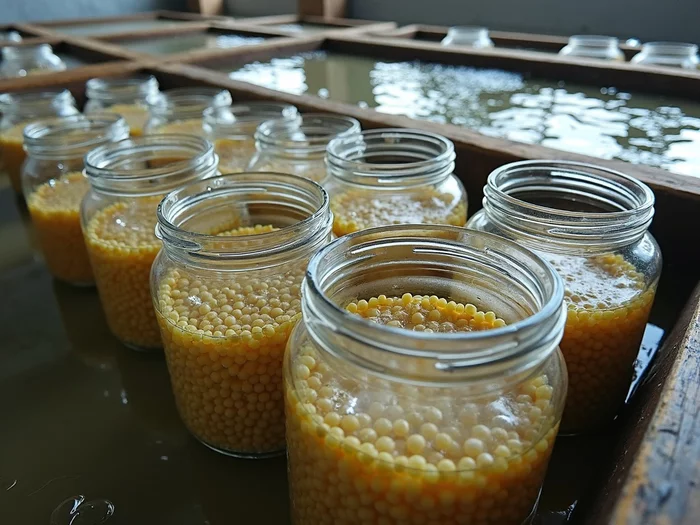
Incubation duration depends primarily on water temperature. At 26-28°C, African catfish eggs hatch in 24-36 hours, whilst channel catfish require 5-7 days at similar temperatures. The embryonic development follows predictable stages: cell division begins within 2 hours, the neural tube forms by 12 hours, and eye pigmentation becomes visible 6 hours before hatching.
Importance of Incubation Techniques and Methods
Proper incubation techniques directly determine your hatch rates, fry quality, and ultimately your farming profitability. Wild catfish achieve natural hatch rates of 70-80% under ideal conditions, but controlled incubation can consistently deliver 85-95% success rates when done correctly. The key lies in maintaining optimal environmental conditions whilst protecting eggs from fungal infections, physical damage, and oxygen depletion.
Effective incubation requires constant water movement to prevent fungal growth, maintain oxygen levels, and remove metabolic waste products. Stagnant water around eggs creates anaerobic conditions that promote harmful bacteria and fungi, particularly Saprolegnia species that appear as white, cotton-like growths. These infections spread rapidly through egg masses, destroying entire batches within hours if left unchecked.
Temperature consistency is equally critical because fluctuations stress developing embryos and can cause developmental abnormalities or death. A temperature variation of just 2-3°C can reduce hatch rates by 15-20% and produce weaker fry with higher mortality rates during early rearing. Professional incubation systems maintain temperature within ±0.5°C of the target range through careful water source management and environmental controls.
Types of Incubators for Catfish Eggs
Hatching Jars
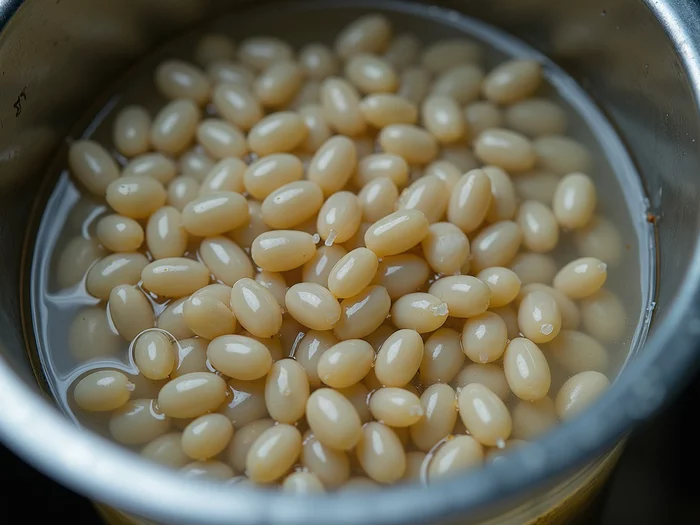
Hatching jars, particularly the Zoug jar design, represent the gold standard for small to medium-scale catfish egg incubation. These cylindrical containers feature a conical bottom that creates upward water flow, keeping eggs in gentle suspension whilst providing excellent oxygenation. Standard jars measure 30-40cm in height with a 15-20cm diameter, holding 50,000-100,000 catfish eggs depending on species and jar size.
The water flow system requires precise calibration to achieve optimal egg movement. For African catfish eggs, maintain an upflow rate of 1.5-2.0 litres per minute, creating gentle circulation that keeps eggs tumbling slowly without violent agitation. Channel catfish eggs, being larger and more adhesive, need slightly higher flow rates of 2.5-3.0 litres per minute.
Temperature control in hatching jars relies on maintaining your water source at 26-28°C. Many Nigerian farmers achieve this by placing jars in insulated rooms or using simple water heating systems with thermostatic controls. A farmer in Kano State successfully incubates eggs using jars placed in a concrete tank filled with heated water, maintaining temperature within 1°C variation at a cost of less than 500 naira per day in electricity.
Hatching Trays
Hatching trays offer excellent versatility for farmers managing multiple breeding cycles or different catfish species simultaneously. These shallow containers, typically 60cm x 40cm x 15cm deep, hold eggs on mesh screens suspended above the tray bottom. Water flows horizontally across the mesh, providing oxygenation whilst allowing easy inspection and dead egg removal.
The mesh screen design is crucial for tray success. Use plastic mesh with 2-3mm openings for African catfish eggs or 4-5mm openings for channel catfish. The mesh must be fine enough to support eggs whilst allowing water circulation and waste removal. Position screens 3-5cm above the tray bottom to create adequate water flow beneath the eggs.
Water flow in trays requires careful distribution to ensure uniform conditions across all eggs. Install a perforated pipe along one end of the tray to distribute incoming water evenly, with the outlet at the opposite end. Maintain water depth of 8-10cm above the mesh screen with flow rates of 2-3 litres per minute per tray.
Funnel-Type Incubators
Funnel-type incubators combine the upflow principles of jars with the accessibility of trays, making them ideal for farmers wanting efficient incubation with easy egg management. These systems use inverted funnel shapes to concentrate water flow at the narrow bottom, creating strong upward currents that diminish as they reach the wider top section where eggs circulate gently. A typical funnel incubator measuring 50cm diameter at the top and 10cm at the bottom can handle 150,000-200,000 African catfish eggs with proper flow management.
Construction of funnel incubators requires careful attention to flow dynamics. The bottom inlet should be 15-20mm diameter for African catfish eggs, with water pressure sufficient to create 2-3 metres per second velocity at the narrow point. This high-velocity zone prevents egg settling whilst the expanded upper area provides gentle circulation.
Summary Comparison of Incubator Types
Hatching jars excel in hatch rate consistency, typically achieving 85-95% success with proper management, but require more technical setup and water pressure systems. They're most cost-effective for operations handling 100,000-500,000 eggs per cycle, with equipment costs of 25,000-40,000 naira per jar including plumbing. Space requirements are minimal, making them ideal for indoor hatcheries with limited floor area.
Hatching trays offer maximum flexibility and easy egg inspection, making them perfect for farmers learning incubation techniques or managing multiple species. Hatch rates typically range 75-90% depending on management skill, with lower equipment costs of 8,000-15,000 naira per tray. They require more floor space but allow for modular expansion as your operation grows.
Funnel-type incubators provide the highest capacity per unit, handling 150,000+ eggs whilst maintaining good hatch rates of 80-92%. Initial construction costs are higher at 35,000-60,000 naira per unit, but the cost per egg incubated becomes very attractive for large operations. They require significant water flow capacity and are best suited for established farms with reliable infrastructure and power supply.
| Incubator Type | Hatch Rate (%) | Capacity (Eggs) | Cost (Naira) | Space Requirement |
|---|---|---|---|---|
| Hatching Jars | 85-95% | 50,000-100,000 | 25,000-40,000 | Minimal |
| Hatching Trays | 75-90% | 10,000-50,000 | 8,000-15,000 | Moderate |
| Funnel-Type Incubators | 80-92% | 150,000-200,000 | 35,000-60,000 | Significant |
Water Quality Management
Oxygenation Techniques
Dissolved oxygen levels must remain above 6mg/L throughout the incubation period to ensure healthy embryonic development. Catfish eggs consume oxygen continuously, with consumption rates increasing as development progresses. In the final 12 hours before hatching, oxygen demand peaks at nearly double the initial rate, making consistent oxygenation absolutely critical for preventing late-stage mortality.
Paddlewheel systems provide excellent oxygenation for large-scale operations, creating surface agitation that maximises atmospheric oxygen absorption. Install paddlewheels in your water reservoir or header tank to pre-oxygenate water before it enters incubators. A 0.5HP paddlewheel can adequately oxygenate 10,000-15,000 litres of water, sufficient for 20-30 hatching jars operating simultaneously.
Drip systems offer a simpler oxygenation method suitable for smaller operations. Water cascading through multiple levels naturally absorbs oxygen whilst creating the gentle agitation eggs require. Construct a simple cascade system using plastic containers with small holes, allowing water to fall 10-15cm between levels.
Monitoring Water Quality Parameters
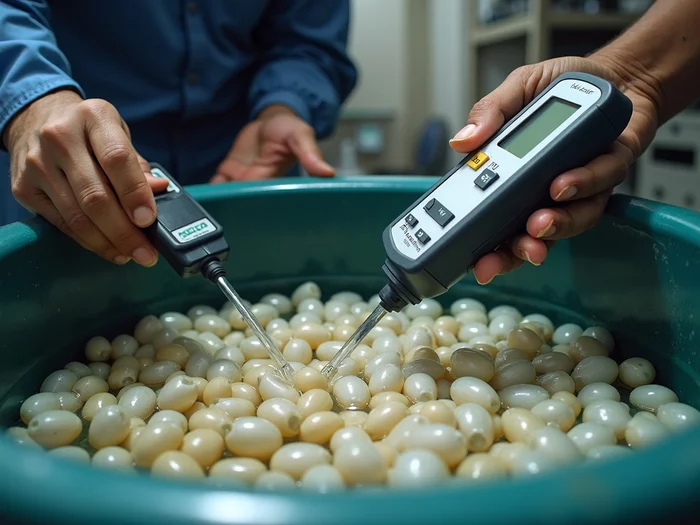
pH levels must remain between 6.5-8.0 for successful catfish egg incubation, with optimal results occurring at 7.0-7.5. pH fluctuations stress developing embryos and can disrupt the delicate ion balance required for proper cellular development. Test pH twice daily using digital metres or reliable test strips, particularly during the first 24 hours when eggs are most vulnerable to environmental changes.
Temperature monitoring requires continuous attention because even brief temperature spikes or drops can damage developing embryos. Install reliable thermometers in each incubation unit and check readings every 4 hours during the day. Many successful farmers use digital thermometers with alarm functions that alert them to temperature deviations.
Ammonia and nitrite levels must remain below 0.25mg/L and 0.1mg/L respectively throughout incubation. These compounds, produced by decomposing organic matter and bacterial activity, are highly toxic to developing fish embryos. Test these parameters daily using commercial test kits, paying particular attention to ammonia spikes that often occur when dead eggs begin decomposing.
| Parameter | Optimal Range | Measurement Frequency | Action if Out of Range |
|---|---|---|---|
| pH | 6.5-8.0 | Twice daily | Adjust with lime or sodium bicarbonate |
| Temperature | 26-28°C | Every 4 hours | Use heating systems to stabilise |
| Ammonia | <0.25mg/L | Daily | Conduct water change if levels exceed |
| Nitrite | <0.1mg/L | Daily | Conduct water change if levels exceed |
Practical Incubation Techniques
Step-by-Step Hatching Process
Begin by preparing your incubation water 24 hours before egg collection. Fill your system with clean borehole or treated water, adjust temperature to 27°C, and start circulation to ensure all equipment functions properly. Test and adjust pH to 7.0-7.2 using agricultural lime or sodium bicarbonate if necessary.
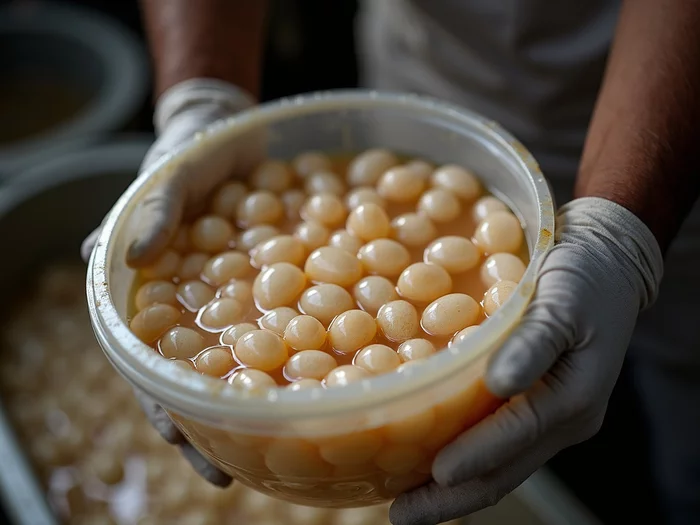
Collect fertilised eggs within 2-4 hours of spawning for optimal viability. Handle eggs gently using soft plastic containers or bowls, never metal implements that can damage the delicate chorion. Rinse eggs briefly in clean water at the same temperature as your incubation system to remove excess milt, debris, and unfertilised eggs that appear white or opaque.
Transfer eggs to your incubation system immediately after cleaning. For hatching jars, add eggs slowly whilst water is flowing to prevent clumping and ensure even distribution. Start with low flow rates and gradually increase to optimal levels over 30 minutes, allowing eggs to adjust to the circulation pattern.
Innovative Tools for Small Batches
Mesh tea balls provide an excellent solution for incubating small egg batches or testing new breeding combinations. These stainless steel balls, available in Nigerian kitchen supply stores for 200-500 naira each, hold 2,000-5,000 catfish eggs whilst allowing perfect water circulation. Suspend tea balls in flowing water using fishing line or plastic cord, creating gentle movement that prevents fungal growth.
Plastic colanders work effectively for slightly larger batches, holding 10,000-20,000 eggs when suspended in tanks with adequate water flow. Choose colanders with 2-3mm holes and smooth surfaces that won't damage eggs. Position them in tanks with gentle aeration or water circulation, ensuring water flows through the colander continuously.
Floating mesh baskets, constructed from aquarium netting and plastic rings, offer another economical option for small-scale incubation. These baskets float at the water surface whilst allowing natural water movement to circulate through the eggs. They're particularly useful for farmers wanting to incubate eggs in existing tanks or ponds without installing separate equipment.
Temperature Control and Timing
Maintain water temperature at 26-28°C throughout the incubation period, with 27°C being optimal for most catfish species. Temperature control becomes critical during Nigeria's harmattan season when ambient temperatures drop significantly at night. Simple immersion heaters with thermostatic controls, costing 8,000-15,000 naira, provide reliable temperature management for small to medium operations.
Monitor embryonic development stages to predict hatching timing accurately. At 27°C, African catfish eggs show visible eye pigmentation after 18-20 hours, indicating healthy development. The eggs become increasingly transparent as hatching approaches, and you'll notice slight movement inside the chorion during the final 4-6 hours.
Egg turning becomes necessary only if you notice settlement or clumping in tray systems. Gently agitate settled eggs using a soft brush or plastic rod every 6-8 hours to prevent oxygen depletion and fungal growth. Jar and funnel systems with proper water flow eliminate the need for manual turning, as continuous circulation keeps eggs moving naturally.
| Development Stage | Time (Hours) | Visual Indicators | Action Required |
|---|---|---|---|
| Cell Division | 0-2 hours | None | Monitor closely |
| Neural Tube Formation | 12 hours | None | Monitor closely |
| Eye Pigmentation | 18-20 hours | Visible pigmentation | Prepare for hatching |
| Hatching | 24-36 hours (African) | Movement inside chorion | Transfer fry to rearing tanks |
Improving Hatch Rates
Best Practices for Egg Handling
Handle eggs with extreme care during all stages of incubation to prevent physical damage that reduces viability. Use soft plastic containers rather than metal buckets for egg collection and transfer. Sharp edges or rough surfaces can puncture the chorion, allowing bacterial infections that quickly spread through egg masses.
Remove dead eggs immediately upon detection to prevent fungal infections from spreading to healthy eggs. Dead eggs appear white, opaque, or develop fuzzy fungal growth within 12-24 hours. Use soft plastic tweezers or turkey basters to remove dead eggs without disturbing healthy ones.
Minimise handling frequency by setting up incubation systems properly from the start. Excessive disturbance stresses developing embryos and can cause developmental abnormalities. Plan your egg inspections for specific times rather than constant checking, and combine multiple tasks like dead egg removal, water quality testing, and development monitoring into single sessions every 8-12 hours.
Aeration Systems
Advanced aeration systems like the "Seesaw" incubator create alternating water flow patterns that improve oxygenation whilst preventing egg settling. These systems use timer-controlled valves to switch water flow direction every 10-15 minutes, creating gentle agitation that mimics natural water currents. Construction requires basic plumbing skills and timer mechanisms available from electrical suppliers for 5,000-8,000 naira.
Venturi systems provide efficient oxygenation by drawing air into water lines through pressure differentials. Install venturi valves in your water supply lines to automatically inject air bubbles into the flow. These systems require no electricity and provide consistent oxygenation as long as water pressure remains adequate.
Diffused aeration using air stones provides gentle oxygenation suitable for tray systems and larger incubation tanks. Position air stones beneath egg screens to create upward bubble streams that enhance water circulation without violent agitation. Use aquarium air pumps rated for your tank volume, typically requiring 1 watt per 4 litres of water.
Troubleshooting Common Issues
Fungal infections appear as white, cotton-like growths on eggs and spread rapidly through entire batches if not controlled immediately. Increase water flow rates by 25-50% to improve circulation and remove affected eggs promptly. Preventive treatment using methylene blue at 2-3mg/L concentration can reduce fungal problems, but proper water circulation remains the most effective prevention method.
Low oxygen conditions manifest as sluggish embryonic development, delayed hatching, or high mortality rates just before hatching. Test dissolved oxygen levels immediately and increase aeration if readings fall below 6mg/L. Emergency oxygenation using hydrogen peroxide at 10ml per 100 litres provides temporary relief whilst you address underlying circulation problems.
Temperature fluctuations cause developmental delays, abnormal fry, or sudden mortality spikes. Install backup heating systems and monitor temperature continuously during critical periods. If temperature drops occur, gradually warm water at no more than 1°C per hour to prevent thermal shock.
Economic Implications of Hatch Rates
Hatch rate improvements directly impact your operation's profitability through increased fry production from the same breeding effort. A farmer producing 100,000 eggs per cycle who improves hatch rates from 70% to 85% gains an additional 15,000 fry worth 120,000-225,000 naira at current fingerling prices. Over multiple breeding cycles, these improvements can add millions of naira to annual revenue.
Equipment investment costs must be balanced against production improvements and labour savings. Hatching jars require higher initial investment but reduce labour requirements and provide more consistent results than manual tray systems. Calculate payback periods based on your production volume and local fingerling prices to determine optimal equipment choices for your operation scale.
Consider the cost of egg losses when evaluating incubation methods. Premium breeding stock producing 50,000 eggs represents significant investment in broodstock maintenance, spawning induction, and facility costs. Losing 20% of eggs due to poor incubation techniques wastes this investment whilst reducing your competitive position in fingerling markets.
Post-Hatch Care for Fry
Handling Fry After Hatching
Transfer newly hatched fry to rearing tanks within 24-48 hours of hatching, before they begin active swimming and feeding. During this period, fry survive on their yolk sacs and remain relatively inactive, making transfer less stressful. Use soft plastic containers with smooth edges to move fry, avoiding nets that can damage delicate fins and skin.
Prepare rearing tanks with clean, well-oxygenated water at 27-28°C before fry arrival. Stock fry at densities of 50-100 per litre initially, depending on your tank size and aeration capacity. Higher densities require more intensive management but maximise facility utilisation.
Acclimate fry gradually to rearing tank conditions by floating transfer containers in the tanks for 15-20 minutes before release. This temperature equalisation prevents thermal shock that can cause high mortality rates. Add small amounts of rearing tank water to transfer containers every 5 minutes to help fry adjust to any chemistry differences between systems.
Monitoring Fry Health
Healthy catfish fry display active swimming behaviour, clear body colouration, and rapid response to disturbances. They should begin schooling behaviour within 3-4 days of hatching and start feeding actively when yolk sacs are absorbed. Monitor fry behaviour during feeding times to assess overall health and identify potential problems early.
Watch for signs of stress or disease including erratic swimming patterns, loss of colour, or clustering at tank surfaces. These symptoms often indicate water quality problems or the onset of bacterial infections. Immediate water testing and corrective action can prevent widespread mortality in fry populations.
Conclusion
Successful catfish egg incubation comes down to mastering three fundamentals: maintaining consistent water temperature at 27°C, ensuring continuous gentle water circulation, and removing dead eggs promptly to prevent fungal spread. Whether you choose hatching jars for maximum efficiency, trays for flexibility, or funnel systems for large-scale operations, these principles remain constant. Focus on getting your water quality parameters right—dissolved oxygen above 6mg/L, pH between 6.5-8.0, and zero tolerance for ammonia spikes—and you'll consistently achieve hatch rates above 80%.
You now have the technical knowledge to transform thousands of eggs into healthy fry reliably. Yes, your first few attempts might not reach the 90% hatch rates that experienced farmers achieve, but every breeding cycle teaches you something new about reading egg development, adjusting water flows, and spotting problems early. Start with smaller batches using simple equipment like mesh tea balls or plastic trays—master the fundamentals before scaling up to sophisticated jar systems.
Strong incubation skills set the foundation for everything that follows in your catfish farming operation. Those extra 15,000-20,000 fry you'll gain from improved hatch rates directly translate to increased fingerling sales and higher profits. As you perfect your incubation techniques, turn your attention to developing efficient fry rearing systems and feeding protocols.
Frequently Asked Questions
What is the most critical water parameter to monitor during catfish egg incubation?
Dissolved oxygen levels are absolutely critical and must remain above 6mg/L throughout the incubation period. Catfish eggs consume oxygen continuously, with demand peaking just before hatching, so consistent oxygenation prevents late-stage mortality.
How can I prevent fungal infections from destroying my catfish egg batches?
The most effective prevention method is maintaining constant water movement to prevent stagnant conditions, which fosters fungal growth. Additionally, remove any dead eggs immediately upon detection, as they appear white or opaque and are prone to developing fuzzy fungal growths that spread rapidly.
Why is consistent water temperature so important for successful catfish egg incubation?
Consistent water temperature, ideally 26-28°C, is crucial because fluctuations stress developing embryos and can lead to developmental abnormalities or death. Even a 2-3°C variation can significantly reduce hatch rates and produce weaker fry with higher early mortality.
Can I use simple, low-cost methods to incubate small batches of catfish eggs?
Yes, for small batches, you can use innovative tools like mesh tea balls or plastic colanders suspended in flowing water. These cost-effective solutions (200-1000 naira) allow for excellent water circulation and visibility, making them ideal for testing or small-scale operations.
When should I transfer newly hatched catfish fry from the incubator to rearing tanks?
You should transfer newly hatched fry to rearing tanks within 24-48 hours of hatching. During this period, fry survive on their yolk sacs and are less active, making the transfer less stressful and reducing the risk of damage.


Yomi Adisa Lead Researcher
Yomi Adisa is the lead researcher at Fish Farming Business, where he studies what makes aquaculture ventures profitable across Africa. His research focuses on market patterns, buyer preferences, and the business decisions that determine success or failure in fish farming.